Open-box power tools are worth buying when you confirm the battery platform, check listing photos for wear and missing parts, and verify what is included before checkout. Because The Wise Buy is online only, the listing photos and full condition description are your inspection. Every item is tested and inspected before listing.
Three tools cover most home improvement work: a drill, an impact driver, and a circular saw.
Pick your battery platform first, since switching brands means rebuying batteries and chargers.
Combo kits beat buying separately when you need three or more tools from one brand.
Never defeat a guard, riving knife, or dead-man switch to save time.
Store batteries at room temperature and avoid leaving them on the charger indefinitely.
What Counts as a Power Tool and Which Ones You Actually Need
A power tool is any tool driven by an electric motor, battery, or engine rather than by hand alone. That definition covers everything from a compact drill to a benchtop table saw, and it explains why the category feels so overwhelming to anyone furnishing a first workshop.
The honest answer starts with the work you plan to do. A renter hanging shelves and assembling flat-pack furniture needs a very different kit than a homeowner replacing trim and building a deck.
Three tools cover most home improvement work: a drill, an impact driver, and a circular saw. A drill bores holes and drives screws into wood, drywall, and light metal. An impact driver delivers rotational force in short bursts, which makes it the better choice for long deck screws and lag bolts. A circular saw handles straight cuts in lumber and sheet goods.
Most beginners can start with a drill and add the other two as projects demand. Buying all three at once only makes sense if you already have a project list that needs them.
Sanders, Grinders, and Specialty Tools
Sanders smooth surfaces before finishing. Random orbital sanders are the most forgiving for beginners because they leave fewer swirl marks than a bare pad. Angle grinders cut and shape metal and masonry, and they are the tool most often bought too early by people who never touch steel.
Beyond those, the specialty category includes oscillating multi-tools, reciprocating saws, routers, and heat guns. Each solves a narrow problem well. Our advice: rent or borrow a specialty tool for a one-off job, then buy it only if you find yourself reaching for it a second time.
Cordless Power Tools: Voltage, Battery Platform, and Runtime
Cordless power tools run on rechargeable battery packs, and the platform you choose outlasts every individual tool you buy. Voltage is a nominal power class, not a capability score.
Amp-hour rating is the other half of the story.
Brushless motors change the runtime equation. By replacing carbon brushes with electronic commutation, they cut friction losses, run cooler, and typically deliver more work per charge plus a longer motor life than brushed equivalents.
The Platform Decision Is the Real Purchase
Once you own two or three batteries in one system, switching brands means rebuying batteries, chargers, and often the tools themselves. That single choice controls your long-term ownership cost more than any single sale price. A practical framework:
Count the tools you will realistically own in three years. If the answer is four or more, pick the platform with the deepest lineup in the categories you actually use, drills, drivers, saws, sanders, and outdoor equipment, rather than the one with the best single tool.
Check bare-tool availability. A platform that sells most of its tools as bare tools lets you add capability without paying for batteries you already own.
Check backward compatibility. Some brands let newer batteries run older tools and vice versa; others do not. Confirm before you commit, because a platform that breaks compatibility strands your existing packs.
Weigh charger speed. A fast charger that refills a pack in under an hour changes how you sequence work; a slow charger can leave you waiting even with two packs.
Runtime in Practice
Runtime is not a single number, it depends on load, material, and bit or blade choice. A dull blade or a binding bit can double the current draw and halve the work per charge. The habits that stretch runtime are the same ones that protect the tool: sharp accessories, steady feed pressure, and letting the motor do the work instead of forcing it. If you are comparing two tools on paper, compare them at the same voltage, the same amp-hour pack, and the same task, otherwise the numbers are not comparable.
Key Takeaway Pick the battery platform first, then the tools. Voltage and amp-hours describe the pack; brushless motors and sharp accessories determine what you actually get done per charge.
If you are buying open-box, the listing photos and condition notes are where you confirm which battery platform a tool belongs to and whether batteries and a charger are included, check those before you commit.
Power Tool Sets: When a Combo Kit Beats Buying Separately
A power tool set bundles several tools around one battery platform, usually with batteries and a charger included. Combo kits win when you need three or more tools from the same brand at once, because the bundled batteries and charger often cost less than buying each piece alone.
Buying separately wins when your needs are narrow. If you only need a drill, a kit forces you to pay for tools you will not use.
Watch out: kit batteries are sometimes smaller capacity packs than the ones sold separately, which shortens runtime on heavier jobs. Read the included battery spec before you commit.
Power Tool Safety: Gear, Habits, and the Mistakes That Cause Injuries
Power tool safety is mostly about understanding how a tool fails, then arranging your work so the failure cannot reach you. Most serious injuries come from three mechanisms: kickback, binding, and exposure.
Kickback happens when the blade or bit grabs the material and the tool is thrown back toward the operator.
Binding happens when a drill bit or hole saw grabs and the tool torques in your hands.
Exposure is the slow one. Sanding and cutting generate fine dust; grinding metal throws sparks and hot particles.
Gear That Actually Matters
Safety glasses, non-negotiable for every cut, drill, and sand. Side shields help.
Hearing protection, plugs or muffs for sustained saw and grinder use.
Dust mask, for sanding, cutting, and any work that generates fine particulate.
Gloves, for handling material, never near spinning blades or bits, where they can catch and pull your hand in.
No loose sleeves, jewelry, or drawstrings near a drill press, lathe, or any rotating tool.
Habits That Prevent Most Injuries
Clamp the workpiece instead of holding it by hand, a hand-held piece can move, and the tool follows it. Keep blades and bits sharp; dull edges force you to push harder, and pushing harder is how control is lost. Unplug corded tools or pull the battery before changing accessories.
A common pattern is buying a specialty tool before learning its failure mode, an angle grinder is the clearest example, because a bound grinding wheel can shatter. Learn the guard, the wheel rating, and the kickback direction before the first cut.
Watch Out Never defeat a guard, a riving knife, or a dead-man switch to save time. Those features are designed for the moment the tool binds, and that moment is not predictable.
When you buy open-box, inspect the safety features in the listing photos and condition notes, a missing guard, a cracked housing, or a damaged cord are reasons to pass, and the full description on the posting is where you confirm what is included.
Open-Box Power Tools: What to Check Before You Buy
Open-box power tools are items returned, overstocked, or display units that have been opened but typically see little or no use. Buying them can stretch a budget significantly, but only if you know what to inspect.
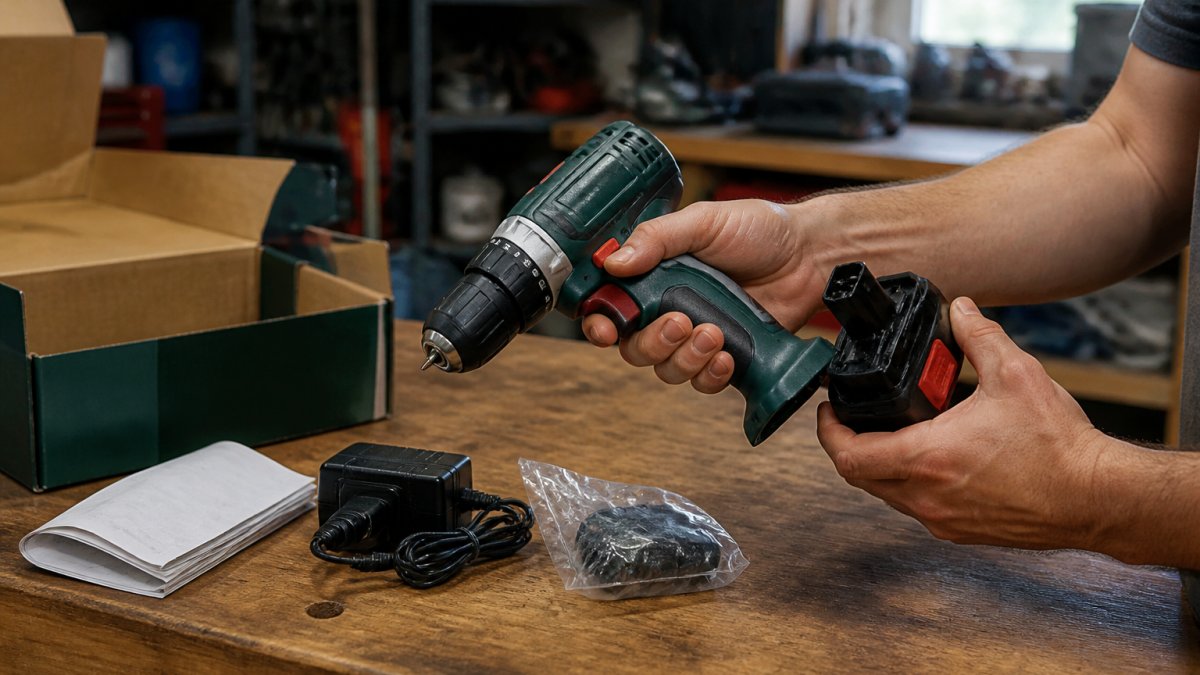
Since we operate online only, the listing itself is your inspection. Look closely at the photos for wear on the chuck, cracks in the housing, and corrosion on battery contacts.
Close-up of hands inspecting a cordless drill on a workbench, checking the chuck and battery contacts, with the tool’s box and manual nearby in a bright garage workshop
Maintenance and Battery Care That Extend Tool Lifespan
Power tools last years longer when you clean them after use and store batteries correctly. Blow dust out of motor vents, wipe saw blades after cutting treated lumber, and check cords for nicks. Store batteries at room temperature, away from freezing garages, and avoid leaving them on the charger indefinitely.
Battery care drives most replacement costs. Lithium-ion packs degrade fastest when stored fully drained or fully charged. A middle charge is healthiest for long storage. If you are weighing whether a refurbished tool is a sound long-term bet, our guide on refurbished tool reliability for DIY covers what to expect.
Create an Account and Browse Current Open-Box Tool Listings
Choosing power tools comes down to matching the tool to the job, committing to one battery platform, and buying with your eyes open. Open-box buying rewards the careful shopper, and the inspection work is already done for you here.
At The Wise Buy, we test and inspect every item, publish detailed photos and condition descriptions on each listing, and stock trusted brand names at a fraction of retail. Create an account to browse current open-box tool listings and see the full condition notes before you buy.
Frequently Asked Questions
What should I check when buying an open-box power tool?
Start with the listing itself: read the full condition description and look at every photo before you buy. Check that the battery, charger, and any included accessories are pictured or listed. Confirm the model number so you can look up the manufacturer’s warranty terms. On arrival, inspect the chuck, trigger, and battery contacts, then run the tool unloaded for a minute. Buying open-box power tools saves money, but the condition notes and photos are what let you judge the item before it ships.
What is the difference between corded and cordless power tools?
Corded tools plug into an outlet and deliver consistent power for long sessions, which suits sanders, circular saws, and bench work near an outlet. Cordless power tools run on batteries, so you trade some runtime for freedom of movement, which matters for drilling overhead, working outdoors, or moving between rooms. If you already own batteries from one brand, staying on that battery platform usually costs less long term than starting fresh with a second system.
How do I choose the right power tool for a project?
Match the tool to the material and the size of the job. A drill-driver covers most assembly and pilot-hole work, an impact driver handles long screws and decking, and a circular saw makes straight cuts in lumber and sheet goods. For sanding and finishing, a random orbital sander does the bulk of the work. If you are unsure, buy the core tool first and add accessories and attachments as projects demand rather than buying a large set upfront.
How do I maintain power tools safely between projects?
Clean dust and debris from vents after each use, check cords and battery contacts for damage, and keep bits and blades sharp, since dull edges force the tool and raise kickback risk. Store batteries at room temperature, away from freezing garages, and recharge them before long storage rather than leaving them fully drained. Follow the manufacturer’s manual for lubrication and brush checks. Pair this routine with basic power tool safety gear, including eye protection and hearing protection, every time you switch the tool on.

 Add more eligible items to your cart to unlock free shipping.