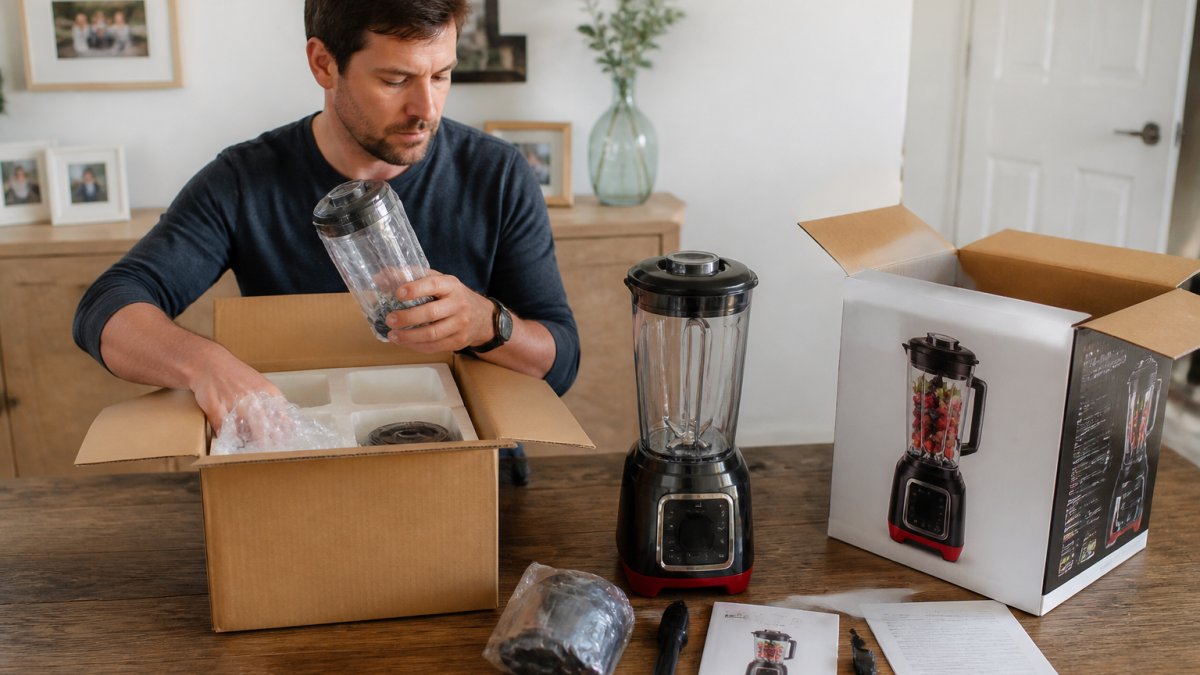
Open box means an item’s original packaging has been opened, but the product itself is typically unused or barely handled. The contents are usually complete, and the discount reflects the broken seal, not a product failure.
No single agency polices the term. An open-box item is merchandise removed from its original packaging, inspected, and resold at a reduced price, often after a customer return or as a display unit, and each retailer applies that definition differently.
Opened Packaging vs. a Used Product
Opened packaging is not the same as a used product. An open-box item may have been unboxed for a photo, returned unopened, or briefly handled on a showroom floor; a used item has been owned and operated, often for months, and its accessories are frequently missing. The line blurs when a returned item was actually used before it came back, which is why the seller’s inspection process, not the label, is what you should trust.
Why Retailers Sell Open-Box Merchandise
Retailers sell open-box merchandise because a broken seal destroys an item’s ability to sell at full price. Once packaging is opened, the product can no longer be sold as new, even if it was never touched, so the retailer recovers part of the value through resale. Customer returns drive most of this inventory, a shopper buys an item, opens the box, decides it is the wrong size or color, and sends it back, leaving the product fine but the packaging no longer pristine.
Open Box vs. Used: What’s the Difference?
Open box vs. used comes down to history and condition. Open-box goods are generally unused or nearly new, with original packaging and most accessories; used goods have been owned, operated, and worn. Here is how the two compare:
Factor
Open Box
Used
Ownership history
Usually none
Prior owner
Cosmetic condition
Like-new or minor handling marks
Visible wear
Included components
Typically complete
Often missing parts
Packaging
Original, opened
May be absent
Typical savings
Moderate
Larger
The savings gap explains the trade-off. A used item costs less because it carries more risk. An open-box item costs a bit more because less has happened to it.
These categories overlap at the edges: a “used” item returned after one use can be cleaner than an “open box” display model that sat out for a year. Condition beats the label every time.
Pro Tip When a listing uses both terms, read the seller’s description line by line. If it says “open box” but mentions scratches or a missing cable, treat it as used and price it accordingly.
Open Box vs. Refurbished: Two Different Paths
Open box vs. refurbished describes two different journeys. An open-box item was opened but not repaired; a refurbished item was returned as defective, then reconditioned to working order by the manufacturer or a third party. That difference shapes your warranty: refurbished products often carry a limited warranty from the refurbisher, while open-box products may carry the full manufacturer warranty if they were never registered, or none at all if the seller resold a returned unit.
How Open-Box Definitions Vary by Retailer and Marketplace
Open-box definitions vary by retailer because there is no universal standard. One seller’s “open box” is another’s “like new,” and a third might call the same item “used.” The label reflects the seller’s own policy, not a regulated category.
Marketplaces make this harder: thousands of independent sellers each apply their own rules.
This is the single biggest risk in the category: you are buying one seller’s judgment about one item, not a standardized product.
At The Wise Buy, we photograph each item and post the full condition and description on the listing, so you can review the actual product before you commit.
Condition Grades You’ll See in Listings
Condition grades are shorthand sellers use to describe an item’s state. Terms differ, but most listings fall into a few buckets:
Like new: No visible wear, complete contents, packaging may be opened.
Excellent: Minor handling marks, all key components present.
Good: Noticeable cosmetic wear, fully functional, some accessories may be missing.
Fair: Clear signs of use, sold as-is, often missing parts.
Read the grade alongside the photos. A “good” grade with honest pictures beats an “excellent” grade with none.
What to Check When Buying Open-Box
What to check when buying open-box starts with one question: does the listing tell you the truth about the item?
A person at a table carefully opening a cardboard box containing a small kitchen appliance, checking the item and its accessories against a printed list, with the original packaging and manual laid out beside it
Start with the seller’s description. A trustworthy listing names the condition, lists what is included, and shows real photos of the actual unit; if the description is vague or the photos look like stock images, slow down.
Use this checklist before you commit to any open-box purchase:
Confirm the item is described as open box, not used or refurbished
Read the full condition description, not just the title
Review photos of the actual item, not stock images
Verify the included components against the original contents list
How Risk Changes by Product Category
The same open-box label carries different risk depending on the category, so match your checks to it:
Electronics. Confirm the serial number matches the listing, check that the power adapter and any proprietary cables are included, and verify the device powers on and connects. Screen and battery condition are hardest to judge from photos, so ask for close-ups if the listing does not show them.
Appliances. Confirm the model number, check for dents or scratches on visible panels, and verify that hoses, filters, and mounting hardware are included, installation and hookup parts are the most commonly missing items.
Furniture. Check for chips, cracks, and joint separation in the photos, and confirm that all hardware and assembly instructions are included. Fabric and upholstery items raise hygiene questions, so review the condition notes carefully.
Small kitchen and personal-care items. Hygiene matters most here. Confirm whether the item was used, and check that any food-contact or personal-contact surfaces are described as clean and unused.
What to Do If the Item Arrives Defective or Incomplete
Even a careful listing can miss something. If your open-box item arrives defective or missing parts, act quickly and in writing:
Document the problem the day it arrives. Photograph the item, the packaging, and the missing or damaged parts before you use anything.
Compare what you received against the listing description. Note exactly where the item differs from what was promised.
Contact the seller within the return window and describe the issue in writing, referencing the listing and your photos.
Ask for a specific remedy, a replacement part, a repair, a return, or a refund, and get the response in writing.
Escalate if needed. If the seller does not resolve it, your payment method’s dispute process and state consumer-protection rules are the next steps.
Watch Out The most common mistake is assuming “open box” guarantees a complete product. If the listing does not explicitly state that all accessories are included, ask before you buy. Missing cables and remotes are the hardest gaps to resolve after delivery.
Pro Tip Before you buy, calculate the real value: compare the open-box price against the new price, then subtract the cost of any missing accessories, the value of a shorter return window, and the risk of no warranty. If the gap is small, the open-box discount may not be worth the trade.
Open-Box Return Policy and Warranty: What to Expect
Open-box return policy and warranty terms depend entirely on the seller, which is why they deserve scrutiny before purchase. Some sellers offer the same return window as new items; others shorten it or exclude open-box goods altogether.
Warranty coverage splits into two cases. If the product was never registered and the manufacturer honors the original warranty, you may get full coverage; if it was sold through a third party without that backing, you may have no manufacturer warranty at all.
How to Verify Coverage Before You Buy
Warranty and return terms are only useful if you confirm them in writing before checkout. Work through these steps:
Find the warranty statement in the listing. Look for who honors it, the manufacturer, the seller, or a third-party service, and how long it runs. If the listing is silent, treat the item as having no warranty.
Check the manufacturer’s warranty terms for resold units. Many publish whether coverage transfers to a second buyer or requires an authorized-seller receipt. Search the brand’s warranty page for language about resale, transfers, and authorized sellers.
Confirm the return window and who pays return shipping. A window is only as good as its terms. Note whether returns are accepted for any reason or only for defects, and whether the buyer covers shipping.
Ask about restocking terms in writing. Some sellers apply a restocking charge on opened-box returns; others waive it for defective items. Get the answer in the listing or in a message you can save.
Save the listing, order confirmation, and any messages. If a dispute arises, the written record is what you rely on.
Return Windows: What Varies
Return windows for open-box goods commonly range from a few days to the same window offered on new items, depending on the seller.
Federal consumer protections still apply to what a seller promises. The FTC’s guidance on advertising and marketing claims requires sellers to describe products accurately, so a listing that misrepresents condition is a problem you can act on.
Watch Out A manufacturer warranty and a seller return policy are two different things. A return window lets you send the item back; a warranty covers repair or replacement over a longer period. Confirm both, and know which party honors each.
Ask three questions before buying: what is the return window, who pays return shipping, and who honors the warranty? If the seller cannot answer all three clearly, that silence is your answer.
Key Takeaway The warranty and return terms matter more than the discount. A slightly higher price with a real return window and a stated warranty is worth more than a deep discount you cannot undo.
Conclusion
Buying open box is a trade: a lower price in exchange for doing your own homework. The category rewards careful readers and punishes anyone who trusts the label alone. Check the condition description, confirm the warranty, and read the return policy before you commit.
At The Wise Buy, we make that homework easier. Every listing includes detailed descriptions and photos of the actual item, and each product is tested and inspected before it ships.
Frequently Asked Questions
Do open-box items mean they are used?
Not usually. An open-box item has had its packaging opened, but the product itself is often unused or only handled briefly. A customer may have bought it, opened the box, and returned it without using the item. The key difference from a used item is wear: open-box products should show no signs of regular use, while used items have been operated and may carry cosmetic wear, missing accessories, or shorter remaining life.
Are open-box products refurbished?
No. Refurbished products have typically been returned as defective, repaired, tested, and restored to working order, sometimes with non-original parts. Open-box products were generally never broken in the first place. They may be customer returns or display models with opened packaging and a broken seal, but the item itself is original. Some retailers blur the line by labeling repaired returns as open box, so read the listing description carefully.
What should you check before buying an open-box item?
Start with the listing itself: read the full condition description, look at the photos, and confirm which accessories and components are included. Then verify the return window, whether a manufacturer warranty still applies, and whether any restocking fee applies to returns. If you can inspect in person, test functionality, check the cosmetic condition, and make sure the included components match what the product needs to work.
Can you return an open-box item if it does not match its description?
That depends on the seller’s open-box return policy. Many retailers offer a shorter return window for open-box purchases than for new products, and some charge a restocking fee. Before buying, confirm the return window length, who pays return shipping, and what condition the item must be in to qualify. Keep the original packaging and all included components, since missing accessories can disqualify a return.
This article is for general information only. Product condition, warranty coverage, and return terms vary by seller and listing, so always review the specific details on the item’s posting before you buy.

 Add more eligible items to your cart to unlock free shipping.