Open box vs factory refurbished comes down to one question: was the item ever repaired, or just returned? An open-box product is a customer return that a retailer inspected and resold, usually with minimal use. A factory-refurbished product went back to the manufacturer or an approved partner, was tested against original specs, and often received replacement parts. At The Wise Buy, we inspect every unit and publish photos and full condition notes on each listing, so buyers can judge the actual item rather than a grade label.
What Does Open Box Condition Meaning Really Cover?
Open box condition means the packaging was opened, but the product itself shows little or no signs of use. Most units are customer returns: wrong size, changed mind, or a gift that missed the mark. The box may be dented or missing inserts while the item inside is untouched.
The condition varies more than the label suggests. Some units are genuinely unused. Others were briefly tested, then returned. A few carry cosmetic wear the first buyer caused.
How Retailers Grade Open Box Items
Grading systems are not standardized. One retailer’s “excellent” is another’s “good,” and there is no industry body enforcing the terms. Most large retailers sort open-box stock into three or four tiers based on visible condition, then price accordingly.
That inconsistency is the biggest risk in this category. Two listings with the same grade can describe very different items. This is why we photograph each unit and note scratches, missing accessories, and packaging condition in the listing itself, so the grade is never the only information you have.
Watch Out Never buy an open-box item from a listing that shows only stock manufacturer photos. If the seller has not photographed the actual unit, you cannot know whether “excellent” means untouched or lightly scuffed.
Factory Refurbished Meaning: What Happens Inside the Plant
Factory refurbished meaning: the product was returned to the manufacturer or a certified partner, tested against original specifications, repaired where needed, cleaned, and repackaged for resale. The process is standardized in a way open-box inspection is not.
A typical refurbishment line checks function, replaces worn or failed components, updates firmware, and verifies the unit meets the same performance standard as new stock. Anything that fails gets pulled.
Manufacturer Refurbished vs Seller Refurbished
The two terms are not interchangeable, and the difference matters at claim time.
Manufacturer refurbished: the original brand or its authorized partner did the work. Parts are genuine, and the unit is verified against factory specs.
Seller refurbished: a third party restored the item. Quality depends entirely on that seller’s process, and parts may be aftermarket.
Both can be good buys. Only one comes with a verifiable standard behind it. When a listing says “certified refurbishment,” look for who certified it and what the certification covers.
Open Box vs Factory Refurbished: Side-by-Side Comparison
The table below summarizes how the two categories compare on the factors that decide most purchases.
Neither column wins outright. Open-box suits buyers chasing near-new condition. Factory refurbished suits buyers who want a tested unit and a defined warranty, even if it has been opened and repaired.
Your Open Box Inspection Checklist Before You Pay
Because open-box grading is loose and no industry body enforces the terms, the listing itself is your inspection. When you buy online, you never hold the item before it ships, so the photos and condition notes on the posting are the only evidence you get. Treat them as the product record, not as marketing.
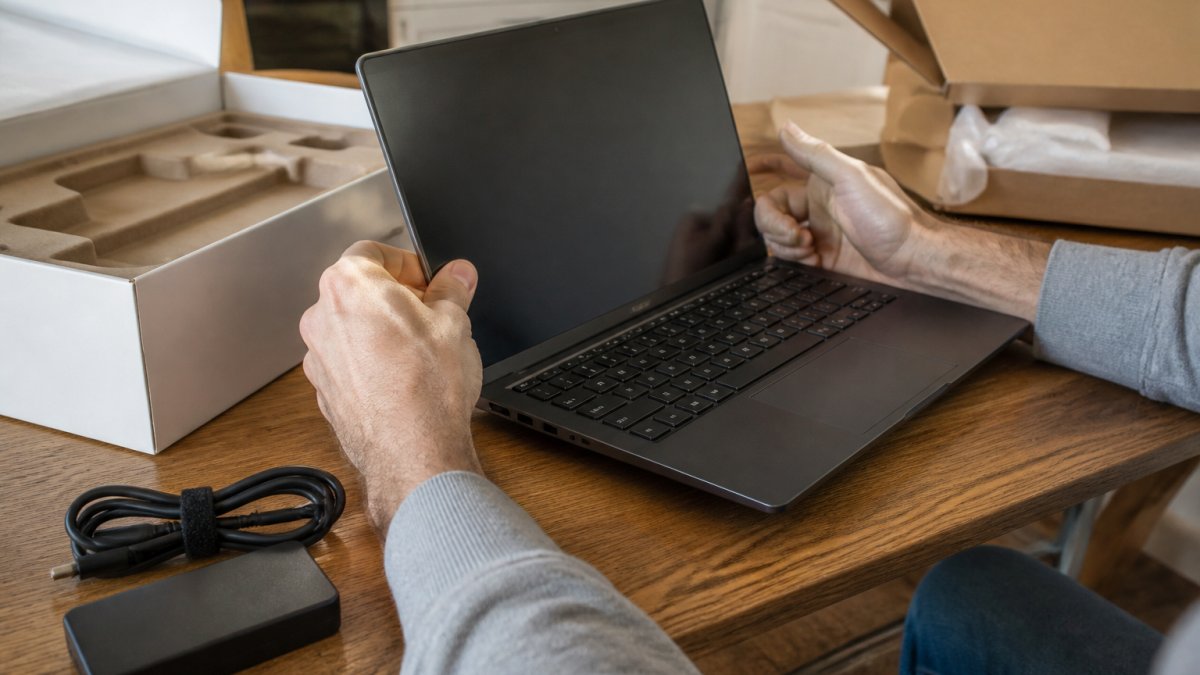
Close-up of hands inspecting an open-box laptop on a kitchen table, checking the screen, ports, and charging cable next to the original box and packing materials
Read the Listing Like an Inspector
Work through the posting in this order, and stop when something does not add up:
Confirm the photos show the actual unit, not manufacturer stock images. Look for the same serial number or distinguishing marks across multiple angles.
Zoom in on the condition notes for scratches, dents, screen marks, or scuffs, and match each note to a photo.
Verify every original accessory is listed by name: cables, chargers, remotes, manuals, mounting hardware.
Confirm whether the original packaging is included, and whether the box is dented or missing inserts.
Read the return window and who pays return shipping.
Check whether the manufacturer warranty transfers to you or stays with the original buyer.
For electronics, look for battery health, cycle count, or usage history in the notes.
Confirm the model number in the listing matches the model number in the photos.
Decode the Grade Before You Trust It
Grading terms are seller-specific, so the same word can mean different things on different postings. A practical approach is to ignore the label and read the description:
“Like new” or “excellent” usually means no visible wear, all accessories present, and original packaging intact. If the notes mention any scratch, the grade is optimistic.
“Good” or “very good” typically allows light cosmetic wear that does not affect function, and may include a missing accessory or a damaged box.
“Fair” or “acceptable” signals visible wear, possible missing parts, or a functional caveat that should be spelled out in the notes.
When a grade and the description disagree, trust the description. When the description is vague, ask for specifics in writing before you pay.
Ask these before you pay, and treat vague answers as a red flag:
Was this item ever used, or only opened and returned?
Are all original accessories included, and are any missing?
What is the exact return window, and who covers return shipping?
Does the manufacturer warranty still apply, or is coverage through you?
Can you send additional photos of any wear you have noted?
A seller who answers these in writing is a seller worth buying from. One who dodges them is not.
Refurbished Product Warranty and Return Window Fine Print
A refurbished product warranty is only as good as its fine print, and the fine print varies by program. Some manufacturer refurbished items carry a limited warranty of 90 days to one year. Others carry none, with coverage provided by the reseller instead. Before you rely on any of it, verify the claim behind the label.
Verify Who Actually Refurbished It
“Factory refurbished” and “certified refurbished” are claims, not guarantees. To check them:
Look for the refurbisher’s name. A manufacturer program names the brand or its authorized partner. If the listing only says “professionally refurbished,” the work was likely done by a third party.
Ask what was replaced. A genuine factory program replaces worn or failed components with original parts and tests against original specifications. A vague answer like “fully serviced” tells you nothing.
Ask for the test record. Many manufacturer programs log functional tests, firmware updates, and cosmetic grading. If the seller cannot describe the process, assume it was minimal.
Check the serial number against the brand’s refurbished program. Some manufacturers let you confirm whether a unit was processed through their own refurbishment line.
Three Details That Decide Whether the Warranty Is Real
Who backs it. A manufacturer-backed warranty is easier to claim than a reseller-backed one that may not outlive the seller.
What it excludes. Batteries, screens, and water damage are commonly excluded even on otherwise solid coverage.
How you claim it. Some programs require original packaging and proof of purchase; keep both.
The return window matters just as much. Open-box items often fall under the retailer’s standard return policy, which is a genuine advantage. Refurbished items sometimes carry a shorter window or a restocking fee. Read both before you buy, not after something goes wrong.
Pro Tip Screenshot the warranty terms and return window at the moment of purchase. If a claim dispute arises months later, the listing page may have changed, and your screenshot is the record of what you were promised.
Compare Total Cost, Not Sticker Price
The discount is only part of the math. A refurbished unit that saves money up front but ships without a charger, carries a 90-day warranty, and charges return shipping can cost more over a year than an open-box unit with a standard return window. Weigh the discount against warranty length, missing accessories, return shipping, and the likely cost of a repair the warranty will not cover.
Which One Should You Pick? A Decision Framework
Use this framework to decide in under a minute:
Choose open box if the item is a recent return, you can see photos of the actual unit, and the return window is standard. Best for home goods, kitchen appliances, and tools where “opened but unused” is common.
Choose factory refurbished if the item is electronics, computer hardware, or anything with a battery, and the listing names who refurbished it and what warranty applies. Best when a repair history is acceptable in exchange for testing and coverage.
Walk away if the seller cannot show the actual unit, cannot state the warranty in writing, or prices the item so close to new that the risk is not worth the discount.
For most electronics, factory refurbished wins on warranty and testing. For most home goods and tools, open box wins on condition and price. If you are unsure, ask the seller directly and compare the answers against this framework.
Frequently Asked Questions
What is the difference between open-box and factory-refurbished products?
An open-box item was bought and returned, usually with opened packaging and limited use, then resold at a discount without repairs. A factory-refurbished item failed a quality check, was returned to the manufacturer, and went through testing, repair, and parts replacement before resale. Open box is closer to new but less predictable; factory refurbished is repaired but standardized. The right choice depends on whether you value near-new condition or a verified repair history.
Is factory refurbished more reliable than open box?
Not automatically. Factory refurbished units pass a documented inspection and any needed repair, which lowers the odds of a hidden fault. Open box units are usually customer returns that were briefly tested, so reliability hinges on the seller’s inspection depth. A rigorous open box inspection checklist, plus detailed photos and condition notes, can make an open box item just as dependable as a factory refurbished one.
What should I check before buying an open-box item online?
Confirm the cosmetic wear and functional condition in writing, and ask whether all accessories and the original packaging are included. Check the return window and who pays return shipping. Look for real photos of the exact unit, not stock images, since open box condition meaning varies by seller. Save the listing description; if the item arrives different, that record supports a return or buyer protection claim.
Do open-box and factory-refurbished products come with a warranty?
It varies. Factory refurbished items often carry a limited warranty from the manufacturer or the refurbishing partner, sometimes 90 days to a year. Open box items may carry the remainder of the original manufacturer warranty or none at all, depending on the seller. Always read the refurbished product warranty terms before checkout, and note the return window, because that is often your only protection on discounted goods.
Which is safer to buy, open box or factory refurbished?
Factory refurbished tends to be safer for electronics and appliances with complex parts, because the unit was tested and repaired under a documented process. Open box is usually safer for simple items, like tools or small kitchen gear, where cosmetic wear is easy to see and function is easy to test. In both cases, buy from a seller that publishes detailed photos, condition descriptions, and a clear return policy.
Buying open box or factory refurbished still carries uncertainty, mostly because condition claims are hard to verify before the item arrives. The Wise Buy removes that guesswork: we test and inspect every item before it is listed, publish detailed descriptions and photos of the actual unit, and stock trusted brand names across home goods, kitchen appliances, tools, and electronics. Create an account and see the exact condition of what you are buying before you pay.

 Add more eligible items to your cart to unlock free shipping.