What “Open Box” Actually Means for Major Appliances
Open box appliances are items that were sold and returned, or used as floor models, then resold at a discount after inspection. They are not used appliances, and that distinction matters.
At The Wise Buy, every open box item goes through testing and inspection before it’s listed. We photograph the actual unit and describe its exact condition in the posting, so you know what you’re buying before checkout.
The category covers a wide range. A refrigerator returned two days after delivery because it didn’t fit a cabinet cutout is open box.
Why Appliances Get Returned in the First Place
Most returns have nothing to do with the appliance being broken. Reliability is usually fine; the fit or the expectation is what failed.
Common reasons include:
Wrong dimensions for the space, discovered after delivery
Buyer’s remorse after a kitchen remodel changed direction
Cosmetic damage found on arrival, like scratches and dents on a side panel
Missing accessories or installation hardware in the box
A change of mind about finish or color
Open Box Appliance Warranty Coverage: What’s Protected
Open box appliance warranty coverage depends on two things: how the unit was classified before listing, and whether it was ever registered to the original purchaser. This is the most misunderstood part of open box shopping.
The two classifications behave very differently:
Customer return, a unit that was sold, delivered, and sent back within the manufacturer’s return window. If it was never registered and the seller is an authorized dealer, the full manufacturer warranty often still applies from the original purchase date, not from your purchase date.
Floor model, a unit that sat on a showroom floor and was never sold to a consumer. Floor models are frequently sold “as-is” with no manufacturer coverage at all, because the unit was never part of a retail sale transaction.
Manufacturer Warranty vs. Extended Protection Plans
Manufacturer warranty coverage typically follows the appliance, not the buyer, as long as the unit was never registered and the sale is from an authorized dealer. The clock starts on the original manufacture or sale date, not the day you buy it open box, so a unit that sat in a warehouse for a year may have a year less coverage than a new one.
How to Confirm Coverage Before You Buy
You can verify most of this yourself with the serial number and a manufacturer’s online warranty lookup tool or phone call:
Get the full serial number and model number from the listing.
Look up the unit on the manufacturer’s warranty status page, or call their customer service line.
Ask specifically: has this serial number been registered to a consumer, and what is the remaining coverage window?
Ask whether the seller is an authorized dealer for that brand. Authorized-dealer status is what keeps the manufacturer warranty intact.
Get the answer in writing, an email or a line on the receipt, before you pay.
Watch Out Never assume a warranty transfers. A unit with an already-registered warranty may have no coverage left, and repairs on major appliances can run into the hundreds. Confirm coverage in writing before purchase, and check the serial number against the manufacturer’s records.
What the Seller’s Own Policy Covers
Even when the manufacturer warranty is gone, most open box sellers offer a limited return or exchange window. That policy is not a warranty, it’s a return right, and it usually expires in days, not years. Ask three questions:
How long is the return window, and does it start on delivery or on order date?
Does the policy cover functional defects only, or cosmetic issues too?
Who pays return shipping or haul-away if the unit has to come back?
How to Inspect Open Box Appliances Online Before You Buy
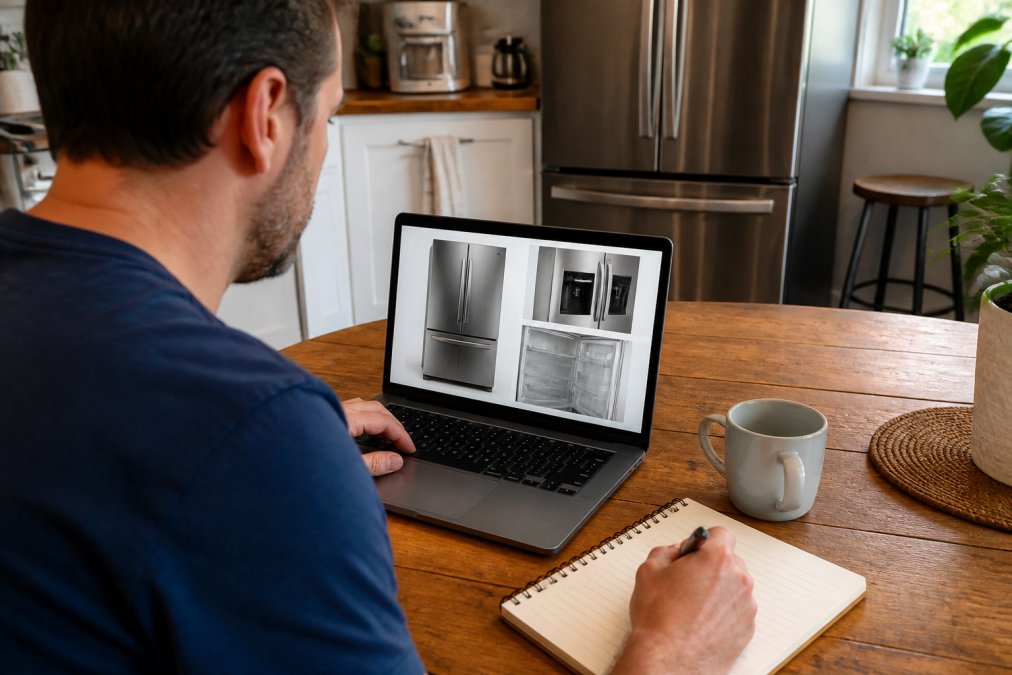
Inspecting open box appliances online comes down to three things: the photos, the condition grade, and the written description. If a listing is thin on any of them, walk away.
Steps for inspecting open box appliances by reviewing digital product photos and taking notes
Reading Condition Grades: Excellent, Good, and Fair
Grading systems vary by seller, which is exactly why you should read the description rather than trust the label alone.
Grade
Typical Condition
What to Expect
Excellent
Like new, often unused
No visible cosmetic damage, full accessories
Good
Lightly used or handled
Minor scratches, fully functional
Fair
Visible wear
Noticeable cosmetic damage, tested working
What to Check Before Buying Open Box: A Pre-Purchase Checklist
Run through this list before you add anything to your cart. It takes five minutes and prevents most regrets.
Confirm the exact model number and compare it to the new version
Check dimensions against your actual space, including door swing
Read every line of the condition description
Zoom in on all photos, especially corners and control panels
Confirm which accessories and installation hardware are included
Ask whether the manufacturer warranty is still active
Review the return policy and any restocking fee
Confirm the delivery window and who handles damage claims
Pro Tip Measure your space twice, including doorways and stairwells. The most common open box return is a fit problem, not a defect, and returning a large appliance is far more work than measuring first.
The Real Savings: Open Box Pricing vs. New Retail
Open box pricing typically lands well below new retail, and the gap widens on larger appliances. The discount reflects depreciation from the item no longer being factory-sealed, not a drop in performance.
Comparing to retail isn’t enough, because the model number on the open box listing often doesn’t match the model currently on the showroom floor. Manufacturers refresh model numbers every year or two, and a one-generation-old unit can look like a huge discount when it’s really last year’s model at last year’s price.
A more reliable method:
Search the exact model number from the listing, not the brand and category.
Find the current street price for that exact model from at least two retailers.
If the model is discontinued, find the closest current equivalent and compare against that.
Subtract the cost of anything missing from the box, accessories, hardware, manuals.
Subtract the value of the warranty coverage you’re giving up, if any.
The Total Cost of Ownership Nobody Adds Up
The sticker price is not the full cost. Several expenses sit underneath it, and most buying guides skip them entirely.
Key Takeaway The true cost of an open box appliance is the price plus delivery, installation, any missing parts, the risk of a restocking fee, and the cost of any warranty coverage you’re giving up. Compare that total against the new price, not the sticker against the sticker.
When the Math Works in Your Favor
The open box math works best when three things line up: the unit is a customer return rather than a floor model, the manufacturer warranty is still active and unregistered, and the seller documents the exact condition with photos and a written description. When all three are true, you’re often getting a functionally new appliance at a real discount.
Hidden Costs and Risks Nobody Talks About
The sticker price is not the full cost. Several expenses and risks sit underneath it, and most buying guides skip them entirely.
Which Appliances Are Safest to Buy Open Box
Some appliances carry far less risk than others. The safest open box buys have fewer moving parts, simpler installation, and lower stakes if something goes wrong.
Safest to buy open box:
Microwaves and range hoods, simple, low-cost, easy to replace
Dishwashers, standard sizing and straightforward hookup
Ranges and cooktops, fewer electronics than refrigerators
Washers and dryers, widely serviced and easy to inspect
Buy with more caution:
French-door refrigerators, complex electronics and tight fit tolerances
Built-in appliances, installation is expensive and errors are costly
Units with proprietary parts that are hard to source later
Frequently Asked Questions
Do open box appliances come with a manufacturer’s warranty?
It depends on how the item was sold. If an appliance was never registered and remains within its original warranty period, the manufacturer’s coverage usually still applies. However, some retailers sell open box items as-is with no manufacturer warranty. Always confirm the warranty status in writing before purchase. Open box appliance warranty coverage varies widely, so ask specifically whether the manufacturer or the seller handles defects after the sale.
How much can you typically save on open box appliances?
Savings vary by appliance type, condition grade, and how long the item has been on the floor. Open box discounts can offer significant value, with deeper cuts often found on floor models or items with visible cosmetic damage. The biggest savings tend to appear on large appliances like refrigerators and ranges, where retail markup is highest. Check the seller’s website for current pricing and compare the condition description carefully before deciding.
What should I look for when inspecting open box appliance photos?
Zoom in on scratches, dents, and discoloration on all visible surfaces. Check that all original parts, accessories, and installation hardware are shown or listed. Look for the serial number in the photos to confirm the unit’s age and warranty eligibility. If the listing shows only one angle or stock images instead of real photos, ask for additional pictures before buying. Detailed, real photos are the best way to judge product condition online.
Are there specific types of appliances that are safer to buy open box?
Appliances with fewer mechanical components tend to carry less risk. Microwaves, dishwashers, and ranges generally have simpler repair profiles than refrigerators with complex sealed systems. Small countertop appliances are also lower-risk because replacement costs are modest. For any open box appliance, verify functional integrity through the seller’s inspection process and confirm what testing was performed. Ask whether the item was powered on and cycle-tested before listing.
Open box shopping rewards buyers who do the homework. The savings are real, but so are the risks if you skip the inspection and warranty questions. The Wise Buy tests and inspects every item, publishes detailed photos and full condition descriptions on each posting, and carries trusted brand names at a fraction of retail. Create an Account to browse current inventory and see the exact condition of every unit before you buy.

 Add more eligible items to your cart to unlock free shipping.