Where Should You Shop for a DIY Home Improvement Store?
Homepage Where Should You Shop for a DIY Home Improvement Store?
Last Updated: November 5, 2026
Quick Summary
Shop for a diy home improvement store by matching its strength to your project: big-box stores win on inventory depth, neighborhood hardware shops win on convenience, and online sellers win on price and selection breadth when the listing shows the actual item. At The Wise Buy, we sell open-box and overstock tools and home goods online, so our listing photos and full condition description are where you judge an item before buying.
Four criteria decide most purchases: inventory depth, real-time stock accuracy, project support, and return policy.
A listing showing available without a store-specific count is usually a regional estimate, not a shelf count.
Beginners should spend on tools used weekly and save on tools used twice a year.
Inspect open-box tools by confirming all parts, smooth operation, no damage, and a working battery.
Add 10 percent to consumables like screws, blades, tape, and caulk to avoid a second trip.
Choosing the right DIY home improvement store comes down to matching the store’s strength to your project. A store that stocks every fastener and fitting is not the same as one built for quick repairs, and picking wrong costs you time on every trip. At The Wise Buy, we sell open-box and overstock tools and home goods online, so the listing photos and full condition description on each posting are where you judge an item before buying.
Four criteria decide most purchases: inventory depth, real-time stock accuracy, project support, and return policy. A big-box store wins on depth. A neighborhood hardware shop wins on convenience. An online seller wins on price and selection breadth, provided the listing shows the actual item. Knowing which criterion your project depends on is half the decision.
Inventory Depth vs. Convenience
Inventory depth means a store carries the full range of a category: every screw gauge, every pipe fitting, every blade type. Convenience means you can get in, find the item, and get out fast.
Ask yourself one question before you drive anywhere: will this project need a second trip no matter what? Renovations almost always do. Repairs usually do not. That single answer tells you whether to trade convenience for selection.
Use Store Inventory Tools Before You Drive
Watch out: a listing that shows ‘available’ without a store-specific count is usually a regional estimate, not a shelf count, and it is the most common reason a planned trip comes up empty.
Match the Store to Your Skill Level
Beginners get the most from clear product descriptions and photos they can review before buying. Intermediate DIYers should weigh whether a tool is worth owning or whether a lower-cost option fits a one-time job. Advanced users often prioritize selection and condition detail above all.
A simple rule: if you cannot describe the project in one sentence, shop where someone can help you plan it. If you can, shop where the inventory is deepest and the pickup is fastest.
Check the Return Policy Before You Buy
Return windows vary by category, and the differences matter more than the headline policy. Major appliances, power tools, and opened paint often carry shorter windows or restocking conditions than general merchandise. Read the category-specific terms before checkout, keep the receipt and original packaging, and confirm whether the store accepts returns without a receipt. For online orders, confirm who pays return shipping on a heavy item before you click buy.
Four criteria decide most purchases, and each store type wins on a different one.
Criterion
Store type that wins
Key difference
Inventory depth
Big-box store
Carries the full range of a category
Convenience
Neighborhood hardware shop
Get in, find the item, get out fast
Price and selection breadth
Online seller
Listing must show the actual item
Project support
Store where someone can help you plan
Best if you cannot describe the project in one sentence
Big-Box Stores for Building Materials and Appliances
For appliances specifically, compare the model number, not just the brand, and review the full condition description and photos in each posting before you buy.
Affordable Power Tools for Beginners: Where to Save
Beginners should spend on the tools they will use weekly and save on the ones they will use twice a year. That single rule prevents most wasted tool money.
Affordable power tools can make occasional use sensible. Durability varies compared with professional-grade equipment, which is the trade you are making: a lower price for lighter-duty internals.
Where not to save: anything that cuts or spins at speed near your hands. A cheap drill bit or saw blade is a false economy. Buy the budget tool body, then put the money into quality blades and bits.
If you are starting from zero, our budget DIY starter guide covers the tools worth buying first. Consumer Product Safety Commission guidance on power tool safety is worth reading before your first cut.
How to Inspect Open-Box Tools Before You Buy
Inspect an open-box tool by confirming four things: that all original parts are present, that the motor or mechanism runs smoothly, that the housing and cord show no damage, and that the battery or charger works if included. Skip any of those checks and you are guessing.
Here is the checklist we would run through, in order:
Confirm the model number matches the listing
Check that all accessories, manuals, and batteries are in the box
Look for cracks, dents, or scorch marks on the housing
Inspect the cord and plug for fraying or bent prongs
Run the tool for 30 seconds and listen for grinding or rattle
Test every switch, trigger, and speed setting
Check the chuck, blade guard, or bit holder for play
Verify the battery charges and holds if cordless
A common mistake is testing a tool for two seconds and calling it good. Run it under light load. Grinding that only appears under load is the failure you most want to catch.
Every project needs the same five planning steps: define the scope, list the materials, confirm tool availability, set a realistic timeline, and price the list before you leave the house. Skipping the materials list is the most common cause of repeated store runs.
Scope: Write down exactly what gets built or replaced, including dimensions.
Materials: List every item, including fasteners, adhesives, and consumables.
Tools: Separate what you own from what you need to buy or rent.
Timeline: Add buffer for drying, curing, and delivery delays.
Budget: Price the materials list before you leave the house.
Rate the Project Before You Buy Anything
Difficulty ratings are the step most DIYers skip, and they are the fastest way to avoid a project that stalls halfway. Use a three-tier rating and be honest about which tier you are in.
Beginner: painting, caulking, swapping hardware, replacing a faucet or a light fixture, installing shelving into studs. These need hand tools, a stud finder, and patience. Any store with a stocked hardware aisle works.
Intermediate: tile work, installing a vanity or a toilet, hanging drywall, replacing a dimmer switch, building simple shelving. These need specialty tools, a wet saw, a level, a drill/driver with the right bits, and a store that rents or stocks them. Plan for at least one return trip.
Advanced or licensed: anything touching structural walls, gas lines, panel upgrades, or waterproofing membranes in a wet area. These belong with a licensed professional, not a weekend plan. A store cannot substitute for a permit or an inspection.
Build the Materials List Like a Shopper
Walk the project in your head, room by room, and write the list in the order you will install. Group items by department so a single trip covers hardware, lumber, and finish in one pass. Add 10 percent to consumables, screws, blades, tape, caulk, because running short mid-project is the most common reason for a second trip.
For anything that must match, paint color, tile dye lot, cabinet hardware, write the exact SKU or color code on the list. Matching by eye across two stores is where projects go wrong.
Time the Project Around Store Capabilities
Store hours, delivery windows, and rental return times shape the schedule more than most people plan for. If you are renting a tool, confirm the return time before you start, because a late return usually costs an extra day’s rental. If you are ordering lumber or appliances, confirm the delivery window before you schedule help, since a missed window can push the whole project a week.
Online open-box and overstock listings can offer brand-name tools, appliances, and home goods at lower prices. The trade-off is that you cannot handle the item before it ships.
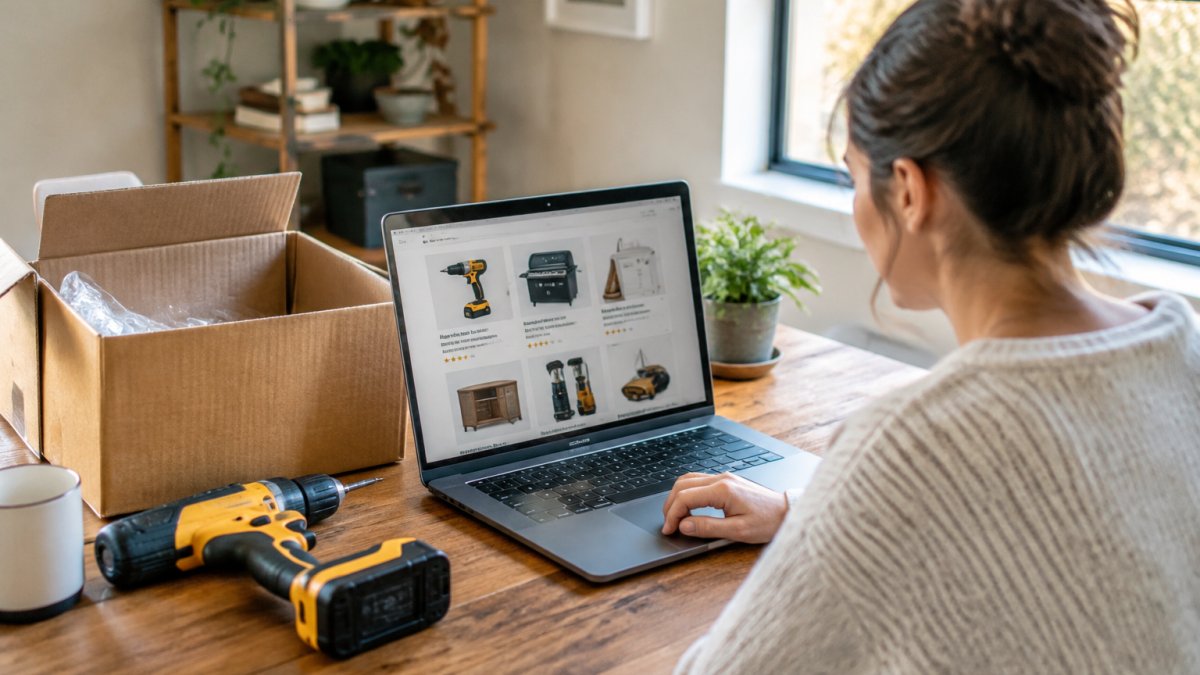
Woman browsing a diy home improvement store on a laptop next to a cordless drill and shipping box
That is why condition details matter more online than in any store aisle. Look for listings with clear photos of the actual item, a written condition description, and a stated inspection process. A listing that shows one stock photo and says “like new” tells you nothing.
Watch out: listings without photos of the actual unit are where surprises come from. Ask for images of the exact item, including any cosmetic flaws, before you buy.
At The Wise Buy, every listing includes detailed photos and a full condition description so you can judge the item before it ships. Our guide to finding the best open-box deals covers how to compare listings across retailers.
Create an Account and Start Your Project
The right DIY home improvement store is the one that matches your project, not the one with the biggest sign. Big-box chains win on building materials and appliances. Online overstock sellers win on brand-name tools and home goods at lower prices, provided you check the condition details first.
Build your materials list, then review the photos and full condition description on each listing before you buy.
At The Wise Buy, we publish detailed photos and condition notes on each posting, and offer a wide selection of trusted brand names across tools, appliances, and home goods. Browse the current inventory, review the full description on each posting, and create an account to start your project.
Frequently Asked Questions
What are the most essential tools for a beginner DIYer?
Start with a cordless drill, a tape measure, a level, a claw hammer, screwdrivers, pliers, and a utility knife. Add a stud finder and safety glasses before your first wall project. You do not need every tool on day one; buy as projects demand. Shopping a DIY home improvement store for open-box or overstock versions of these basics can stretch a starter budget further, and you can confirm condition details in the listing photos and description.
Is it better to buy new or open-box tools for DIY projects?
Open-box tools usually cost less and work the same when the item has been inspected and the condition is documented. Buy new when you need a full manufacturer warranty or a tool you will use daily for years. For occasional projects, open-box is often the practical choice. Check the posting for what is included, such as batteries, chargers, and manuals, before you order.
How can I save money on home improvement tools?
Buy combo kits when you need several tools, and skip features you will not use. Watch for loyalty programs and seasonal sales. Online overstock listings often show detailed photos and condition notes, which helps you judge value without paying full retail.
What should I look for when buying pre-owned power tools?
Check the battery platform and whether a charger is included, inspect the chuck and cord for wear, and confirm the tool powers on through all speed settings. Ask about return terms. For online purchases, read the full condition description and zoom in on the listing photos to spot cracks, missing parts, or heavy wear before you buy.
Your next project is already on your list. Create an account with The Wise Buy to browse inspected open-box and overstock tools, compare full condition details on every posting, and get brand-name equipment without the retail markup.

 Add more eligible items to your cart to unlock free shipping.