Best Budget Friendly Home Improvement Tools at a Glance
The best budget friendly home improvement tools handle the jobs you actually have, not the ones a brochure says you need. Shoppers often buy a giant kit, use four pieces, and leave the rest in the box.
Most guides rank tools by brand prestige instead of by the job. A cheap tape measure and an expensive one both measure; what matters is whether the tool survives regular use.
Essential tools for homeowners cover four jobs: measuring, fastening, gripping, and cutting. If a tool does one of those, it belongs in the starter kit; everything else is a project purchase.
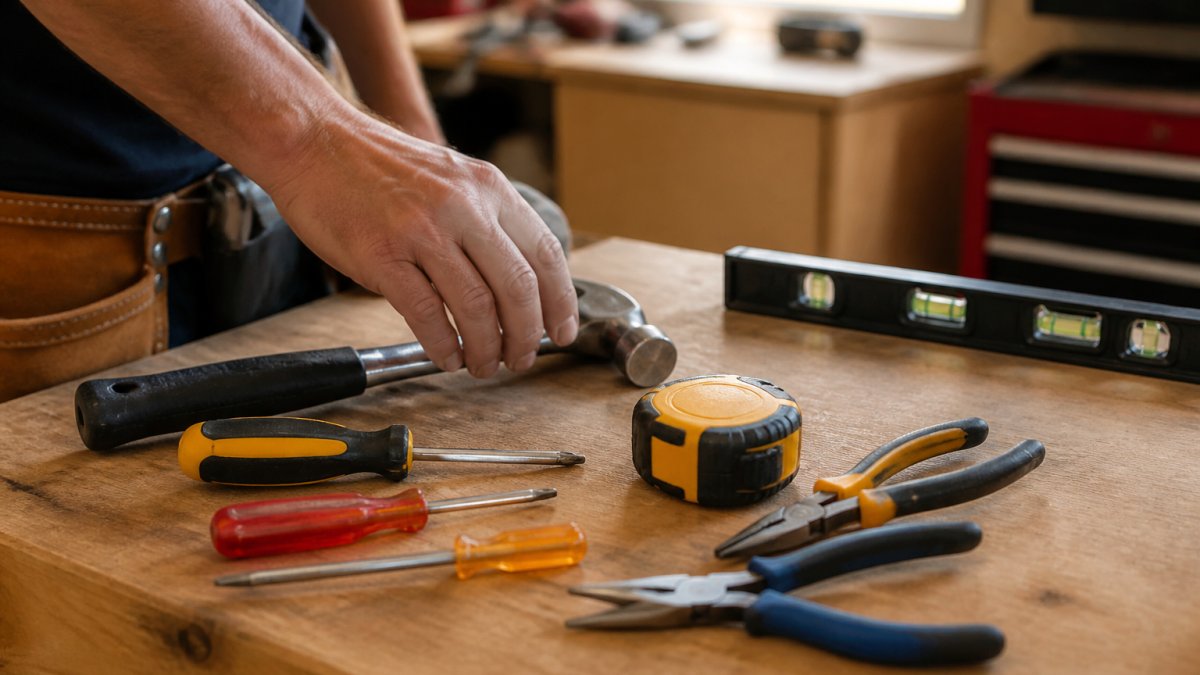
A neatly arranged set of hand tools on a wooden workbench, including a claw hammer, screwdrivers, a tape measure, and pliers, with a homeowner’s hands reaching for a tool in a bright garage
Hand Tools That Earn Their Keep
Start with these five, and you can hang a shelf, tighten a loose hinge, or assemble flat-pack furniture without a trip to the store:
Claw hammer for driving and pulling nails
Tape measure (25-foot is the practical size)
Screwdriver set with Phillips and flathead bits in several sizes
Pliers, including a locking pair
A common mistake is buying a screwdriver set with 40 bits and one handle. The handle strips under pressure. Buy fewer drivers with solid grips instead.
Power Tools Worth the Spend
One cordless drill/driver does more for a beginner than any other power tool: it drives screws, drills pilot holes, and mixes small batches with the right attachment. Buy one with two batteries so you never stop mid-project.
A circular saw is the second purchase, and only when a project calls for cutting lumber. Corded saws cost less than cordless and never run out of charge.
Best Tools for Beginner DIY Projects
The best tools for beginner DIY projects match small, low-risk jobs: shelf installation, furniture assembly, picture hanging, and basic repairs. Buy for the project in front of you, not a future you haven’t planned, that rule separates a kit that gets used from one that sits in the box.
Here’s how common first projects map to tools, so you buy only what the job requires:
A few patterns fall out of that table. The drill/driver, tape measure, level, and screwdriver set repeat across nearly every project, so they belong in the first purchase.
A practical starter approach:
Pick your next project and list the tools it requires.
Cross off anything you’ll use once and can borrow or rent.
Buy the rest, favoring tools you’ll reach for again.
Add one tool per project until the kit feels complete.
Pro Tip Buy a 25-foot tape measure with a wide blade. Narrow blades sag over distance and give you a crooked line. It’s the cheapest upgrade you’ll make.
Where Starter Kits Fall Short
Prepackaged starter kits are the fastest way to get a lot of tools at once, but most share the same gaps. Knowing them before you buy keeps you from paying twice.
Screwdriver bits over handles. Many kits include dozens of bits and one handle. The handle strips under pressure, so the bits outlive the tool that drives them.
A single battery and charger. A drill that stops mid-project because the only battery is drained is a drill you stop reaching for. Two batteries is the practical minimum.
No stud finder. Almost every wall-mounted project needs one, and most kits leave it out.
Thin tape measures. A 12-foot tape with a narrow blade is common in kits and frustrating on anything wider than a doorway.
If a kit covers the repeat tools and you add the missing pieces individually, you usually come out ahead of buying everything separately. If the kit skips the repeat tools and pads the count with one-use items, buy the core tools on their own instead.
Hand Tools Versus Power Tools for Beginners
Hand tools are the right first purchase: they cost less, need no batteries, and teach you how a material responds before you add speed.
Power tools earn their place when a job involves repetition or hard material. A cordless drill/driver is the first power tool for most beginners, handling most assembly and mounting work.
The practical sequence is hand tools first, drill/driver second, saw third, and everything else as a project demands it.
How to Choose Home Improvement Tools on a Budget
Learning how to choose home improvement tools comes down to three questions: how often will you use it, how hard will you push it, and what happens if it fails?
Does the tool come with the accessories I need, or are they sold separately?
Are replacement parts and bits easy to find?
Does the grip feel secure in my hand?
Value isn’t the lowest sticker. It’s the lowest cost per use. A cheap drill that dies in a year costs more than a mid-range one that lasts five. Durability and build quality matter more than the badge on the handle.
Price and Value Comparisons That Actually Matter
Budget shopping rewards comparing the right things. Sticker price is only one line in the comparison, and often not the most important one.
Bare tool versus kit. A bare-tool listing has no battery or charger. If you already own batteries in that tool’s system, a bare tool is the better buy. If you don’t, the battery and charger can cost more than the tool itself, so the kit wins.
Consumables. Drill bits, saw blades, sandpaper, and utility knife blades wear out. A tool with hard-to-find or expensive consumables costs more over its life than one with common, cheap replacements.
Battery platform lock-in. Once you buy into a cordless battery system, every later tool in that system shares the batteries and charger. Choosing a platform with a broad tool lineup saves money on every future purchase.
Corded versus cordless. Corded tools cost less, run indefinitely, and suit occasional use. Cordless tools cost more but go where there is no outlet. For a budget kit, corded is often the smarter first saw.
Total Cost of Ownership
Total cost of ownership is the purchase price plus what you spend keeping the tool running: batteries, bits, blades, and replacements. A budget tool with expensive consumables can cost more over time than a better-built one. To estimate it, add the purchase price to the consumables you expect to replace in the first few years, then divide by the projects you expect to finish, that per-project figure is worth comparing, not the shelf price.
Tool Care and Maintenance
Care extends lifespan more than brand does:
Wipe tools down after use and store them dry
Keep drill bits and blades sharp; dull edges strain the motor
Store batteries at room temperature, not in a freezing garage
Oil adjustable wrenches and pliers occasionally
Keep everything in one toolbox so nothing goes missing
A simple tool roll or a sturdy box protects your investment. Storage is part of the cost, not an afterthought.
Watch Out Never buy an open-box power tool without confirming the battery and charger are included. A “bare tool” listing is common, and replacing a battery separately can wipe out your savings.
Key Takeaway The cheapest tool is the one you buy once. Spend on the tools you use weekly, save on the ones you use twice a year.
Open-Box Tools: Stretch Your Budget Further
Open-box tools are items returned, overstocked, or discontinued, inspected and resold at a lower price than new retail. They’re one of the most overlooked ways to build a kit without paying full price.
At The Wise Buy, we offer open-box and overstock tools alongside home goods and electronics, and every item is tested and inspected before it’s listed. Because we’re online only, the full condition and description live on each product posting, with detailed photos so you can see exactly what you’re getting before you commit.
What to check on any open-box listing:
Condition notes: what’s included, what’s missing, any cosmetic wear
Photos: look for the actual item, not a stock image
Accessories: confirm batteries, chargers, and cases are listed
Return terms: read them before checkout
Project-Based Buying: Match Tools to the Job
Project-based buying means letting the job decide the tool list, not the other way around, the best way to avoid overspending on a starter kit.
Project
Tools You Need
Tools You Can Skip
Hanging shelves
Drill/driver, level, tape measure, stud finder
Circular saw
Assembling furniture
Screwdriver set, hex keys, hammer
Power saw
Fixing a squeaky door
Screwdriver, adjustable wrench, lubricant
Drill
Patching drywall
Taping knife, sanding block, utility knife
Pliers
This keeps spending tied to real outcomes. The same few tools repeat across projects; those are the ones worth buying well.
Total Cost of Ownership and Tool Care
Total cost of ownership is the purchase price plus what you spend keeping the tool running: batteries, bits, blades, and replacements. A budget tool with expensive consumables can cost more over time than a better-built one.
Care extends lifespan more than brand does:
Wipe tools down after use and store them dry
Keep drill bits and blades sharp; dull edges strain the motor
Store batteries at room temperature, not in a freezing garage
Oil adjustable wrenches and pliers occasionally
Keep everything in one toolbox so nothing goes missing
A simple tool roll or a sturdy box protects your investment. Storage is part of the cost, not an afterthought.
Conclusion
Building a capable tool kit on a budget takes planning, not luck. Start with the core hand tools, add a cordless drill when a project calls for it, and let each job guide the next purchase. For open-box and overstock tools, browse our current listings, where every item is inspected and photographed with full condition details. Create an account with The Wise Buy and start building a kit that lasts.
Frequently Asked Questions
What tools should every homeowner have?
Every homeowner should start with a hammer, tape measure, level, utility knife, screwdriver set, adjustable wrench, and pliers. These hand tools cover most simple repairs and assembly tasks. A cordless drill is the first power tool to add for shelf installation and furniture assembly. Building a core kit of essential tools for homeowners first, then adding specialty tools as projects come up, keeps spending controlled.
How can I choose reliable tools on a budget?
Focus on build quality over brand name: look for forged steel in wrenches, hardened tips on screwdrivers, and comfortable grips. Read the full condition and description on any listing, especially for open-box tools, and check what accessories are included. Buying a starter set often costs less than individual pieces, and open-box or overstock options can stretch your budget further without sacrificing quality.
Is it better to buy a tool kit or individual tools?
A tool kit is usually the better starting point for beginners because it bundles the essentials at a lower total cost and keeps everything organized in one case. Individual tools make sense once you know which pieces you reach for most and want to upgrade. Many kits include filler items you may never use, so check the contents against the projects you actually plan to tackle.
How can I check the condition of an open-box tool before buying?
Review the listing photos carefully and read the full condition and description on the posting. Look for notes on wear, missing accessories, or cosmetic damage, and confirm what is included in the box. Reputable sellers test and inspect items before listing them. If anything in the description is unclear, ask before you buy so you know exactly what to expect.

 Add more eligible items to your cart to unlock free shipping.