7 New vs Used Kitchen Appliance Truths Every Renter Should Know
Homepage 7 New vs Used Kitchen Appliance Truths Every Renter Should Know
Last Updated: November 3, 2026
Quick Summary
Used kitchen appliances cost less upfront but usually come with no warranty, so you absorb the diagnostic work and any repair bills. Buy used when the failure mode is cheap and local, such as electric coil ranges, range hoods, and basic microwaves, and buy new when a failure would be catastrophic or need a licensed trade.
A used unit that costs half as much but needs a repair in year two can erase the savings.
Inspect used units in about fifteen minutes each with a flashlight, phone charger, and checklist.
Open-box units are new but returned, display, or overstock models sold at a discount with cosmetic damage disclosed.
Used appliances from private sellers are almost always sold as-is with no warranty.
Clean condenser coils twice a year, the highest-return maintenance task on a fridge.
New vs Used Kitchen Appliances for Renters: The Core Trade-Offs
Choosing between new vs used kitchen appliances for renters comes down to one question: do you want to pay for certainty up front or manage risk to keep more cash in hand? The answer depends less on budget than on how long you plan to stay put.
A used kitchen appliance is any previously owned unit sold second-hand, whether it came from a prior tenant, a liquidation lot, or an open-box return. The category covers everything from a scratched microwave to a fridge that looks new but arrived in a damaged carton.
Here is the honest trade-off:
New: full manufacturer warranty, no unknown history, highest upfront cost, and the biggest loss if you move in a year.
Used: lower upfront investment, faster replacement if it dies, but you absorb the diagnostic work and any repair bills.
Open-box: a middle path, typically a new unit that was returned or overstocked, sold with cosmetic flaws disclosed.
Renters move more often than owners, so depreciation hits harder. For a broader look at stretching a rental budget, see our affordable kitchen appliances for renters guide. A new appliance loses value the moment it is delivered, and you cannot take that loss with you.
Upfront Cost vs Long-Term Maintenance: A Cost-Benefit Analysis
The cheapest sticker price rarely wins over five years. Run a simple cost-benefit analysis before you commit.
Add three numbers: purchase price, expected repairs, and replacement timing. A used unit that costs half as much but needs a repair in year two can erase the savings. Our open box vs new price comparison guide lays out the numbers side by side. A new unit with a warranty protects you but ties up cash you may need for a security deposit.
Factor
New Appliance
Used Appliance
Open-Box Appliance
Upfront investment
Highest
Lowest
Middle
Warranty coverage
Full manufacturer term
Usually none
Varies by seller
Expected repairs
Rare in early years
Unpredictable
Low to moderate
Depreciation risk
High
Already absorbed
Moderate
Best for
Stays of 3+ years
Short leases, tight budgets
Renters wanting near-new
For a broader look at stretching a rental budget, our guide to affordable kitchen appliances for renters frames the decision around total cost rather than sticker price.
How to Inspect Used Kitchen Appliances Before You Buy
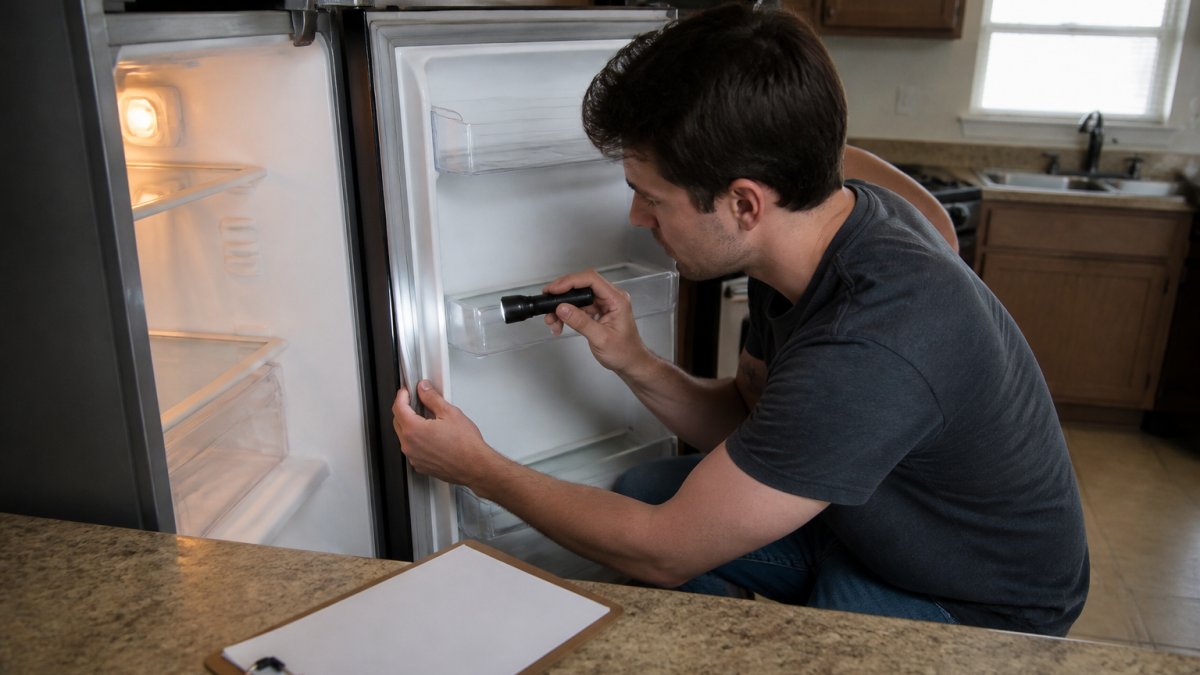
Learning how to inspect used kitchen appliances takes about fifteen minutes per unit and saves months of regret. Bring a flashlight, a phone charger, and a short checklist.
Work through these steps in order:
Open and close every door twice. Hinges should hold position without sagging.
Check the gasket seal. Run a finger along the fridge or oven door gasket for cracks or stiffness.
Look for rust and water stains. Rust at the base of a fridge usually means a leak.
Plug it in and listen. A compressor that rattles or clicks repeatedly is a warning sign.
Test every burner, knob, and light. Small failures hint at bigger ones.
Smell the interior. Persistent odors can mean mold in the insulation.
Ask for the age and service history. A unit past its expected lifespan is a stop sign.
Renter using a flashlight to inspect the gasket seal of used kitchen appliances with a checklist nearby
Watch out: buying from a listing with one blurry photo and no condition notes. If the seller cannot show you the interior, the cord, and the model plate, walk away. If you are weighing refurbished units instead, our breakdown of whether buying refurbished kitchen appliances is safe covers what the grading terms actually mean.
Open-Box Kitchen Appliances: A Middle Path Worth Considering
Open-box kitchen appliances are new units that were returned, display models, or overstock, sold at a discount with any cosmetic damage disclosed. They sit between new and used because the unit is technically new but the box is not.
The appeal for renters is obvious. You get a current model, often with the manufacturer warranty intact, and you skip the depreciation hit. The catch is that condition varies wildly, so the inspection matters more than the label.
Best for: renters who want a near-new unit and are willing to read condition notes carefully. Skip if: you need a matching set delivered fast and cannot wait for the right model to appear.
Appliance Warranty for Renters: What Actually Transfers and What Doesn’t
An appliance warranty for renters is rarely as simple as the box claims. Manufacturer coverage usually follows the appliance, not the buyer, but the terms depend on how the unit was sold, and on whether the manufacturer treats you as the original purchaser or a downstream owner.
Start with how coverage is structured:
New retail: full manufacturer warranty, typically one year parts and labor, with extended coverage on sealed systems (compressor, sealed refrigeration system) that can run five to ten years. You are the original purchaser, so registration is straightforward.
Open-box: often the remaining manufacturer term, sometimes shortened by the seller. The unit may already be registered to the original buyer, which can complicate a claim until ownership is transferred.
Used from a private seller: almost always no warranty, sold as-is. Any promise made in the listing text is a contract term you would have to enforce yourself.
Used from a dealer: may include a short store warranty, so ask in writing and confirm whether it covers parts, labor, or both.
What voids coverage. The common exclusions are consistent across brands: missing or altered serial numbers, unauthorized repairs, cosmetic damage, improper installation (for example, a dishwasher plumbed without a proper air gap or a range plugged into the wrong voltage), and damage from power surges or water.
The liability angle most guides skip. If a used appliance you installed causes water damage or a fire, your renter’s insurance may treat it differently than a landlord-supplied unit, some policies exclude damage from appliances the tenant brought in, and a landlord may require written approval before any swap. For a deeper explanation of whether open-box items have warranties, read our dedicated guide.
Watch out: a seller who says “warranty included” but cannot produce the registration card, the original receipt, or a serial number that matches the unit. Without those, the warranty is a story, not coverage.
Appliance Lifespan and Replacement: Planning Your Upgrade Cycle
Appliance lifespan and replacement planning is where renters gain the most control, and where a single decision matrix beats a generic “ten to fifteen years” rule. Expected service life varies sharply by appliance type, and so does the cost of getting it wrong.
Use these typical service-life ranges as planning anchors, not guarantees:
Refrigerator: about 10 to 15 years. Compressor and sealed-system failures are the expensive ones; a fridge that fails can also spoil food, which is a cost most guides ignore.
Electric range: about 13 to 15 years. Simple heating elements and coil burners are cheap and widely available, which makes used ranges a lower-risk buy.
Gas range: about 15 years, but ignition modules and safety valves are the failure points, and gas work should be done by a licensed technician.
Dishwasher: about 9 to 12 years. This is the highest-risk used purchase because a failed pump or door seal can leak into flooring and cabinets, turning a cheap appliance into a repair bill.
Microwave: about 7 to 10 years. Cheap enough that used is usually fine if the door seal and turntable are intact.
Range hood: about 10 to 15 years. Mostly a motor and fan; low risk used.
The decision matrix. Buy new when the failure mode is catastrophic or the repair requires a licensed trade: dishwashers (leak risk), gas ranges (safety valves and ignition), and any refrigerator with an ice maker routed to a water line.
Plan around your lease. Track three numbers: the age of the unit when you buy it, the expected remaining years for that appliance type, and your lease length. If the remaining life is shorter than your lease, you are buying someone else’s replacement problem. If it is longer, you are paying for years you will not use, which is why used and open-box units often win for renters who move every two to three years.
Watch out: a used dishwasher or fridge with no service history and a price that looks too good. The appliance may be at the end of its life, and the leak or compressor failure will land on you, not the seller.
The Angles Most Renters Miss: Disposal, Smart Tech, and Liability
Three angles rarely make it into a buying guide, and each one can cost a renter real money.
Disposal and environmental impact. Old appliances do not belong at the curb. Refrigerants and electronic components need proper handling, and many municipalities run appliance pickup programs. Ask about haul-away before you buy, because removal is often the hidden cost of upgrading.
Smart appliance integration. A used smart fridge may not connect without the original owner’s account being unlinked. Confirm the app works and the device can be factory reset before you pay.
Liability and insurance. If a used appliance you installed causes water damage, your renter’s insurance may treat it differently than a landlord-supplied unit. Check your policy and get your landlord’s permission in writing before swapping anything out. The U.S.
Browse the Current Inventory and Check the Condition Details
Every renter faces the same fork: pay more for certainty or save now and manage the risk yourself. Neither choice is wrong, but the wrong unit at the wrong time is expensive.
At The Wise Buy, we list open-box and overstock kitchen appliances with detailed product descriptions and photos. Because we are online only, the photos and condition details on each website posting are what you should review, so read them closely and check the full description before you commit. Create an account to get started.
Get started with The Wise Buy and furnish your rental kitchen for less.
Frequently Asked Questions
Should renters buy new or used kitchen appliances?
It depends on how long you plan to stay and how much risk you can absorb. New appliances come with full manufacturer warranties and predictable lifespans, but cost more upfront. Used kitchen appliances cost far less but carry no guarantee and may need repairs sooner. Renters who move frequently often come out ahead buying used or open-box units, while long-term tenants in one place may prefer new for the warranty coverage.
What should renters check before buying a used appliance?
Test every function in person or review the seller’s condition notes closely: run the burners, open and close the oven door, listen for unusual compressor noise, and check door seals for cracks. Confirm the model number, ask about age, and request any service records. If shopping online, read the full condition description and photos before ordering, since you cannot test the unit yourself.
Do used kitchen appliances come with a warranty?
Most do not. Manufacturer warranties typically apply only to the original purchaser and may not transfer, so a second-hand unit is usually sold as-is. Open-box items sometimes retain the balance of the original warranty, but policies vary by brand and seller. Always ask in writing what coverage, if any, comes with the appliance before you pay.
How long do kitchen appliances typically last?
Refrigerators generally last around 10 to 15 years, ranges and ovens about 10 to 15, dishwashers roughly 9 to 12, and microwaves about 7 to 10. A used appliance that is already 8 years old may have only a few years left, which matters if you plan to stay long-term. Factor remaining lifespan into the price before deciding.

 Add more eligible items to your cart to unlock free shipping.