Understanding Discounted Appliances and Why They Cost Less
Discounted home appliances fall into several distinct categories, each with different price points and condition levels. Open-box items represent products that were returned after minimal use or display, while clearance appliances are typically older model-year inventory that retailers need to move. Floor models have been used for demonstrations on showroom floors. Understanding why these items cost less helps you evaluate whether the savings justify any potential trade-offs.
The primary reason for the discount is simple: these appliances don’t carry the “new” premium that retail stores charge. A manufacturer’s suggested retail price includes overhead for the retailer’s showroom, staff, and marketing. Once an appliance leaves the sealed box or spends time on display, that new-product markup disappears. The appliance itself functions identically to its full-price counterpart, but the economics have shifted.
At The Wise Buy, we rigorously test and inspect every item, providing detailed product descriptions and photos so customers can shop with confidence. We offer a diverse inventory ranging from home goods and kitchen appliances to tools and electronics, all curated to provide exceptional value at a fraction of retail prices.
Build quality and durability don’t change based on price. A discounted Samsung dishwasher is built to the same specifications as the full-price version. What changes is the warranty coverage, the return policy, and your ability to verify the appliance’s history before purchase.
Open-Box Appliance Buying Guide: What You Need to Know
Open-box items are products customers purchased, used briefly, and returned to the retailer. They may have been used for a few weeks, a few days, or never at all. The box has been opened, which disqualifies them from being sold as new, but the appliance itself is typically in working condition.
Why Open-Box Items Are Discounted
Retailers must clear these items quickly because they can’t be sold as new inventory once the box is opened. The discount typically ranges based on how much the item was used and how visible any wear is. A refrigerator that was delivered, plugged in for a week, and returned looks nearly identical to a new unit but costs substantially less.
The key insight: open-box discounts aren’t about hidden defects. They’re about classification. A retailer can’t legally sell an opened box as “new” regardless of condition. This creates opportunity for buyers willing to inspect carefully.
Red Flags During the Inspection Process
Certain warning signs indicate that an open-box appliance may have underlying issues. Dents or dings on the exterior suggest rough handling during delivery or storage. If the appliance was dropped or knocked over, internal components may have shifted out of alignment even if they still function.
Discoloration inside the unit, particularly in refrigerators or ovens, can indicate spills, leaks, or prior use that the seller hasn’t disclosed. Rust spots or corrosion inside suggest moisture exposure. Burn marks inside an oven suggest heavy cooking use, contradicting claims of minimal use.
Listen carefully when you power on the appliance.
Watch Out If the seller cannot provide documentation of what was replaced or repaired, avoid the appliance. Unknown repair history means you’re buying uncertainty.
How to Inspect Used Appliances Before You Buy
Inspecting a used or discounted appliance before purchase is your best defense against problems. Physical inspection reveals issues that photographs cannot capture. Most importantly, you’ll understand the actual condition rather than relying on the seller’s description.
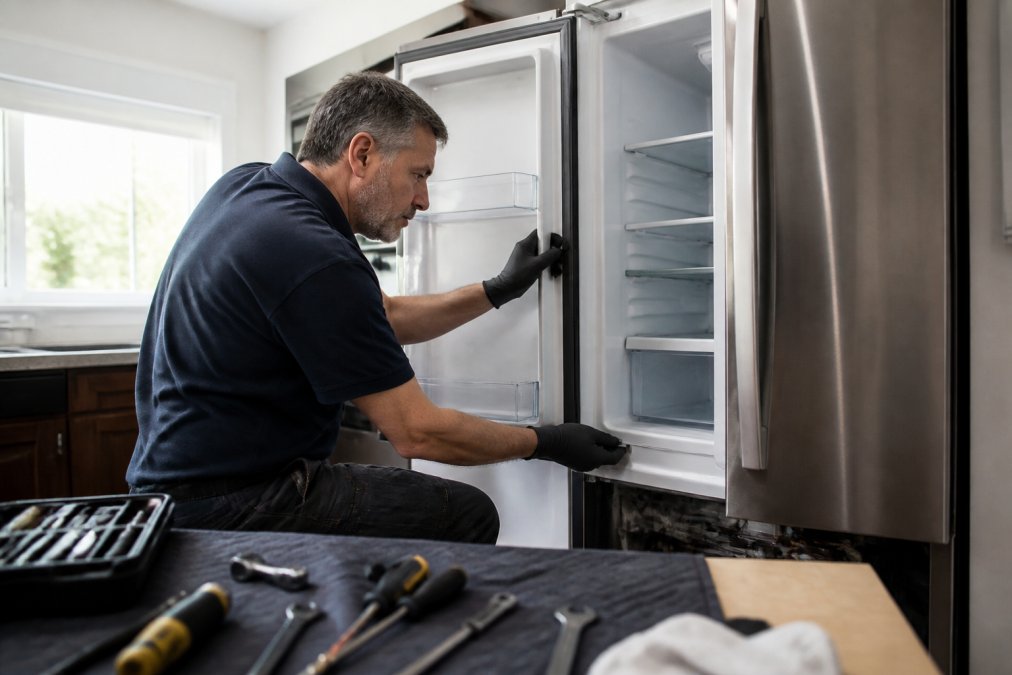
Technician inspecting the door seals and interior of discounted home appliances in a bright, modern kitchen
Checking Mechanical Seals and Components
For refrigerators, the door seal is the most critical component to evaluate. Press your hand against the seal and feel for firm resistance. Open and close the door several times. The seal should create a consistent, audible “pop” when the door breaks the seal. If the door opens silently or with minimal resistance, the gasket is worn and replacement is likely needed soon.
Evaluating Build Quality and Durability
Open the appliance and examine the interior construction. Quality appliances use thicker gauge steel, solid hinges, and components that feel substantial when you touch them. Cheap construction involves thin plastic parts, flimsy hinges, and lightweight materials that flex or bend easily.
Pro Tip Check the model and serial number against the manufacturer’s website. You can verify the manufacturing date, confirm the warranty status, and identify any known issues with that specific model year.
Best Time to Buy Appliances: Seasonal Timing and Sales Cycles
Appliance retailers follow predictable sales patterns tied to seasons and holidays. Understanding these cycles helps you time your purchase for maximum discounts.
Warranty Coverage and Consumer Protection for Discounted Items
Warranty coverage is fundamentally different for discounted appliances compared to new purchases. Manufacturer warranties typically transfer to second owners, but the coverage period and terms may differ.
Key Takeaway Extended warranties on discounted appliances are often worth the cost. The lower purchase price means you’re protecting a smaller investment, making the warranty premium more affordable.
Delivery, Installation, and Hidden Costs to Factor In
The advertised price of a discounted appliance is only part of the total cost. Delivery, installation, and removal of old appliances add significant expenses that many buyers overlook.
Negotiation Strategies and Price Verification Tools
Negotiation is possible with discounted appliances, particularly if you’re buying multiple items or the appliance has been in inventory for a long time. Sellers are motivated to clear old stock, and you have use if you’re a serious buyer.
Return Policies and Your Rights as a Buyer
Return policies for discounted appliances are typically more restrictive than policies for new items. Understand the specific terms before purchasing, as they vary significantly between sellers.
Frequently Asked Questions
What should I look for when buying open-box appliances?
Start by examining the exterior for dents, scratches, or discoloration. Check mechanical seals on refrigerators and dishwashers to ensure they’re intact and functioning. Test all buttons, dials, and electronic controls. Look inside for signs of rust, water damage, or debris. Ask for detailed photos and condition descriptions before purchasing. Review the seller’s inspection documentation to understand what testing was performed. Check that all original parts and accessories are included. Verify the appliance’s energy efficiency rating and power consumption specifications match the original specifications.
What is the best time of year to buy home appliances?
Appliance prices typically drop during seasonal promotions in January, May, and September. Major holiday shopping periods like Black Friday and Cyber Monday offer significant discounts on major appliances. End-of-month and end-of-quarter clearance events often feature reduced inventory prices. Appliance manufacturers release new models in spring and fall, making previous-year models discounted. Avoid peak seasons like March through April and November through December when demand is highest. Renovation loan promotions and financing offers are common during spring and early summer. Monitor price tracking tools and set alerts for your target appliance models to catch the best deals.
Are overstock appliances covered by manufacturer warranties?
Most overstock and open-box appliances retain their original manufacturer warranty if they’re brand-name items and haven’t been used. The warranty period typically runs from the original purchase date or the date you buy the discounted item, depending on the manufacturer. Some manufacturers require proof of purchase to honor warranties on discounted items. Extended warranty options may be available at additional cost. Check the warranty coverage details before purchasing to understand what repairs or replacements are included. Verify that the appliance’s serial number is registered with the manufacturer. Contact the manufacturer directly if you’re unsure whether a specific discounted item qualifies for warranty protection.
Can you negotiate the price on discounted appliances?
Many retailers offer some flexibility on already-discounted appliance prices, especially on floor models or open-box items with minor cosmetic damage. Bundle deals are often negotiable, buying multiple appliances together may qualify for additional discounts. If you’re paying cash or can arrange quick pickup, you may have leverage for further price reductions. Seasonal clearance items are sometimes negotiable as retailers want to clear inventory. However, already-discounted items have less room for negotiation than full-price products. Get quotes from multiple sellers to use as comparison points. Ask about price matching policies and whether the retailer will honor competitor pricing on similar items.
What are the hidden costs of buying discounted appliances?
Delivery fees can add significantly to your total cost, especially for major appliances like refrigerators or washing machines. Installation charges may apply if you need professional setup or connection to existing plumbing or electrical systems. Haul-away fees for removing old appliances can range from $50 to $200 depending on the item. Extended warranty purchases add to the upfront cost but provide peace of mind for long-term protection. Financing options may include interest charges if you don’t pay in full immediately. Some retailers charge restocking fees if you need to return or exchange an item. Warranty limitations may require you to pay out-of-pocket for repairs not covered by the manufacturer’s plan.
How do I verify the condition of discounted appliances online?
Request detailed photos from multiple angles, including the interior, exterior, control panel, and any visible wear areas. Ask the seller for a written condition report that documents all testing performed and any minor cosmetic damage. Check product reviews and ratings for the specific model to understand common issues or longevity concerns. Verify the appliance’s energy efficiency rating and compare its operating costs to similar new models. Look for the original product manual or specifications sheet to confirm all features are functional. Ask about the appliance’s age and how long it was in use before being discounted. Request information about the inspection process, including what mechanical components were tested and verified as working.
What’s the difference between open-box and refurbished appliances?
Open-box appliances are typically brand-new items that were returned unopened or used minimally by the original buyer, then inspected and repackaged for resale. Refurbished appliances have been used, returned, professionally restored to working condition, and tested before resale. Open-box items usually retain the full manufacturer warranty, while refurbished items may have limited or no warranty coverage. Open-box appliances generally cost less than refurbished because they’ve had minimal use. Refurbished items may show more signs of wear but have undergone professional restoration. Both options provide significant savings compared to purchasing brand-new retail items. Check the seller’s documentation to understand which category applies to your specific purchase.

 Add more eligible items to your cart to unlock free shipping.