Power Up Your Kitchen: Selecting the Right Range Cord Amperage and Prongs
Homepage Power Up Your Kitchen: Selecting the Right Range Cord Amperage and Prongs
Why Electric Range Power Matters for Your Kitchen Safety
A 50 amp range cord is a heavy-duty power cable designed to safely deliver electricity from your home’s electrical outlet to a high-powered electric range or cooktop. Here’s what you need to know:
Quick Answer for Selecting a Range Cord:
Your Situation
Cord Type Needed
Key Details
Range rated 8.75 kW or more
50 amp, 4-prong (NEMA 14-50P)
Uses 6-gauge wire for hot conductors; modern homes (post-1996)
Range rated under 8.75 kW
40 amp, 4-prong (NEMA 14-50P)
Uses 8 or 10-gauge wire; check manufacturer specs
Older home with 3-prong outlet
3-prong cord (NEMA 10-50P)
Only if code permits; 4-prong is safer
New installation
Always use 4-prong
Separate ground wire for safety
Your electric range is one of the most power-hungry appliances in your home. Unlike a toaster or microwave that plugs into a standard outlet, an electric range pulls serious wattage—often 12,000 watts or more. That’s why it needs a dedicated circuit and a specialized cord rated for high amperage.
Getting the wrong cord isn’t just inconvenient. It’s a genuine safety hazard. An undersized cord can overheat, melt, or even start a fire. A mismatched plug won’t fit your outlet. And using an adapter to force a connection? That’s asking for trouble.
The good news is that understanding range cords isn’t complicated once you know the basics. The two most important factors are amperage (how much current the cord can handle) and prong configuration (whether you need 3 or 4 prongs). Modern homes built after 1996 require 4-prong cords for safety reasons, while older homes might still have 3-prong outlets.
This guide will walk you through everything you need to know about selecting the right range cord for your kitchen. Whether you’re replacing an old range, moving into a new home, or upgrading your electrical setup, you’ll learn how to match your cord to your appliance, your outlet, and your electrical circuit—safely and correctly.
Understanding the Basics: What is a Range Cord?
At its core, a range cord is a heavy-duty electrical cable designed to power your electric cooking appliance. Its primary function is to safely deliver the high current and voltage required by electric ranges, ovens, and cooktops from your home’s dedicated electrical circuit to the appliance itself. Think of it as the lifeline for your kitchen’s culinary powerhouse!
These cords aren’t your average extension cords. They are specifically constructed with robust components to handle significant electrical loads. A typical range cord consists of multiple insulated conductors (wires) encased in a durable outer jacket. The key specifications include:
Conductors: These are the individual wires inside the cord that carry the electrical current. They are made of conductive materials, usually copper, known for its superior conductivity.
Wire Gauge (AWG): This refers to the thickness of the individual conductors. A lower AWG number indicates a thicker wire, which can safely carry more amperage. For a 50 amp range cord, we’re typically looking at 6-gauge wire for the hot conductors and 8-gauge wire for the neutral and ground.
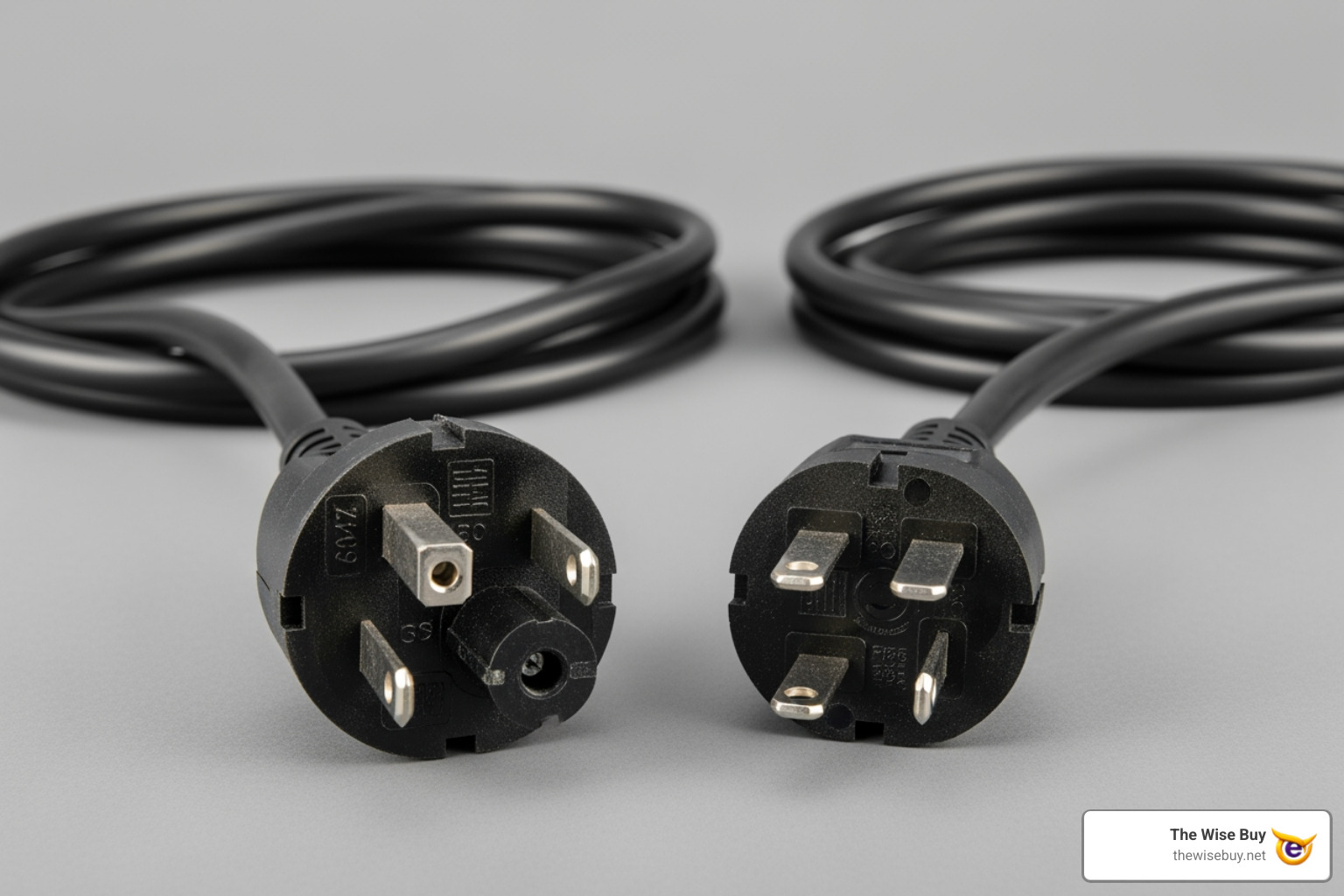
Plug Types: The end of the cord features a specialized plug that matches the receptacle (outlet) in your home. The most common types are NEMA 14-50P (4-prong) and NEMA 10-50P (3-prong). The “P” stands for plug, indicating it’s the male end that inserts into an outlet.
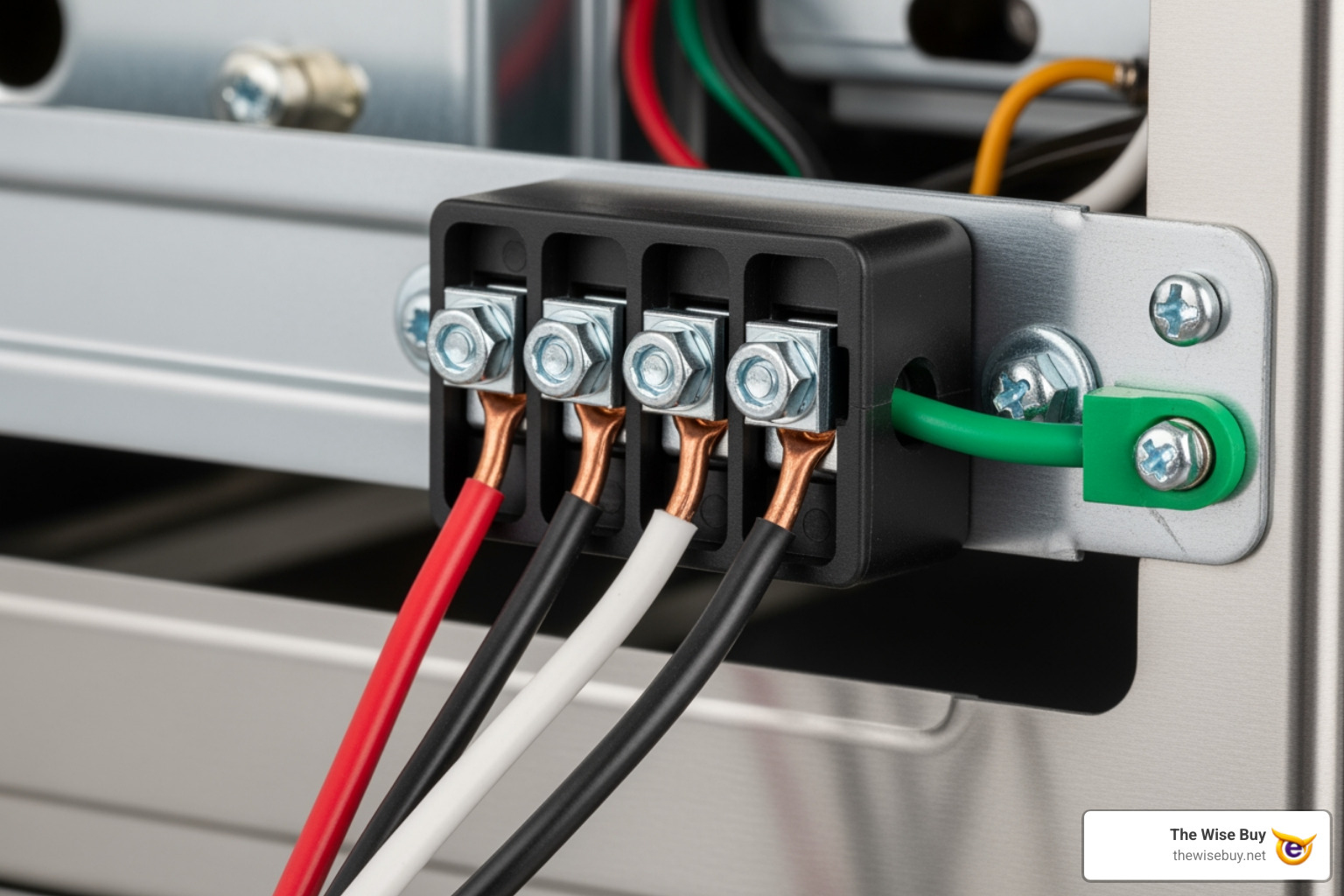
Ring Terminals: On the appliance end, the individual wires often terminate in “ring terminals” which are metal loops designed to be securely fastened under screws on the range’s terminal block. This ensures a solid, low-resistance connection, critical for high-current applications.
When we talk about appliance connection, it’s not just about plugging it in. It’s about creating a secure, reliable, and safe electrical pathway that can endure the demanding electrical needs of your range.
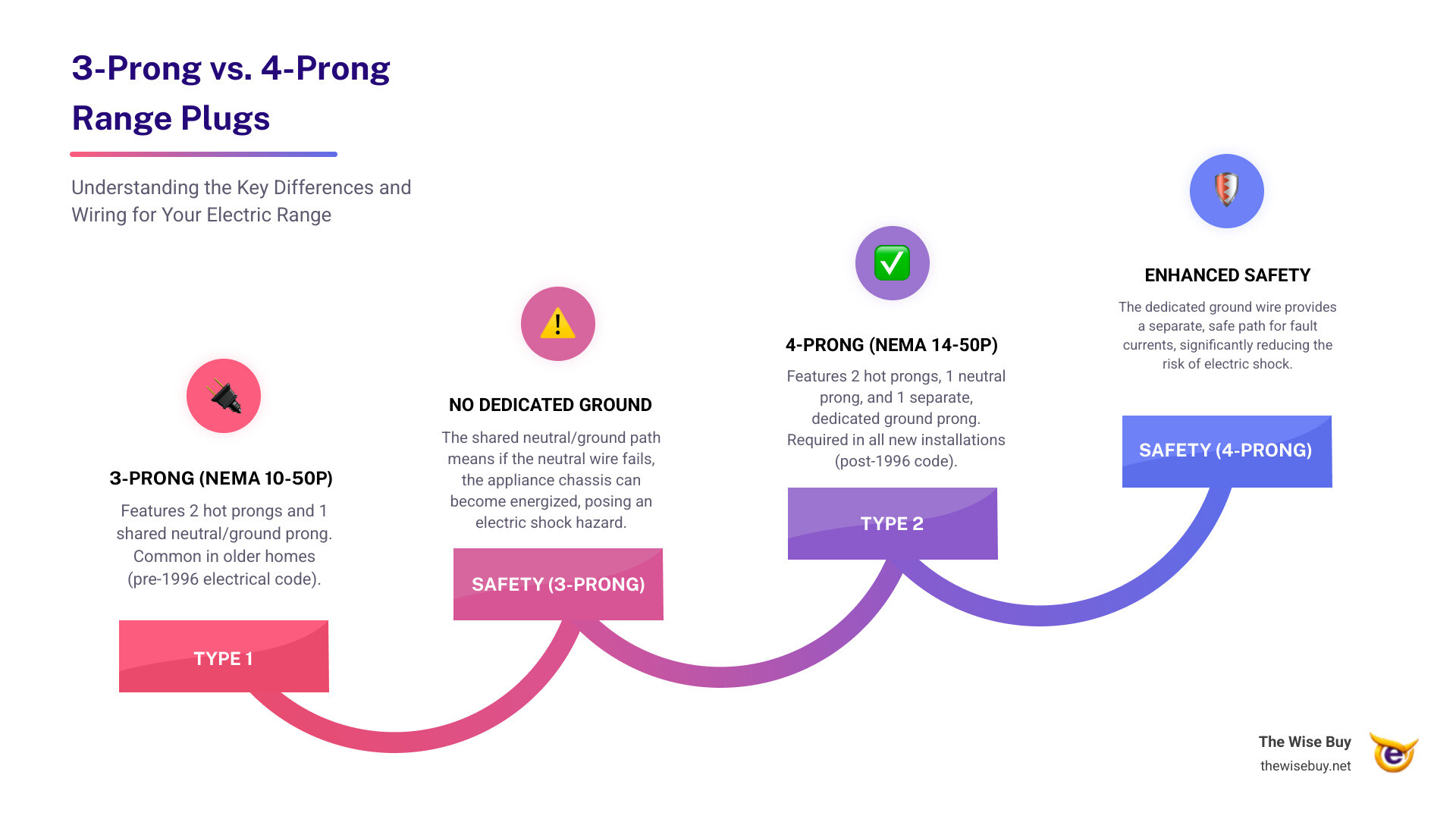
3-Prong vs. 4-Prong Cords: A Critical Difference
The difference between a 3-prong and a 4-prong range cord is more than just an extra pin; it’s a fundamental shift in electrical safety standards.
3-Prong Cords (NEMA 10-50P): Standard in homes built before 1996, these cords combine the neutral and ground wire. This outdated design poses a shock risk if a fault occurs, as the appliance’s metal frame could become energized. New installations of 3-prong range circuits are no longer permitted by the National Electrical Code (NEC).
4-Prong Cords (NEMA 14-50P): The modern standard required for all new installations since 1996. These cords feature two hot wires, a dedicated neutral, and a separate ground wire. This design provides a safe path for fault current, tripping the breaker and dramatically reducing shock risk. If you have a 4-prong outlet, always use a 4-prong cord for improved safety and code compliance.
40 Amp vs. 50 Amp Cords
Both 40-amp and 50 amp range cords power electric ranges, but they are not interchangeable. The correct choice depends on your appliance’s power needs and your home’s wiring.
Feature
40 Amp Range Cord
50 Amp Range Cord
Wire Gauge
Typically 8 or 10 AWG (copper)
Typically 6 AWG (copper) for hot, 8 AWG for neutral/ground
Typical Range Wattage
Up to 9,600 Watts (W)
Up to 12,000 Watts (W) or more
Breaker Size
40 Amp double-pole breaker
50 Amp double-pole breaker
Common Use Cases
Many standard electric ranges, older models
High-power electric ranges, convection ovens, induction cooktops
The key difference is the wire gauge and amperage capacity. A 40A cord uses thinner wire (often 8 or 10 AWG) for lower-power ranges. A 50 amp range cord uses thicker 6-gauge wire for its main conductors to safely handle the higher current of powerful ranges without overheating. It is crucial to match the cord’s amperage to your range’s requirements and your circuit breaker. Always check the manufacturer’s specifications to avoid safety hazards.
All About the 50 Amp Range Cord: When and Why You Need It
So, when exactly do you need a 50 amp range cord? The answer primarily revolves around the power demands of your electric cooking appliances. High-power electric ranges, especially those with advanced features like convection ovens, multiple large burners, or induction cooktops, often require a 50 amp circuit.
The critical factor to look for is the appliance’s Kilowatt (kW) rating. If your new range, oven, or cooktop has a rating of 8.75 kW or more, it will likely require a 50 amp circuit and thus a 50 amp range cord. Always consult the manufacturer’s specifications for your specific appliance. These instructions are not just suggestions; they are part of the UL/CSA/ETL listing and are vital for safe operation.
Choosing a 50 amp cord, even if your current range only strictly requires 40 amps, can also be a smart move for future-proofing your kitchen. As appliances become more powerful, having the capacity for a 50 amp connection ensures you’re ready for upgrades down the line. It’s like having a highway ready for more traffic, even if it’s not at peak capacity today!
Key Specifications of a 50 Amp Range Cord
Let’s dive deeper into what makes a 50 amp range cord tick. Understanding these specifications is key to ensuring safety and performance:
Wire Gauge: For a 50 amp circuit, the standard wire gauge for the hot conductors is 6-gauge (6 AWG). The neutral and ground conductors are typically 8-gauge (8 AWG). This larger wire size is essential to safely carry the high current (up to 50 amps) without overheating.
Conductor Materials: Quality range cords use 100% copper wiring. Copper is an excellent electrical conductor, ensuring minimal resistance and heat generation during operation.
Insulation: Each conductor is individually insulated, and then all conductors are encased in a tough, heat-resistant outer jacket. This protects against electrical shorts and physical damage.
Plug Configuration: Almost universally, a 50 amp range cord will feature a NEMA 14-50P plug. This is the 4-prong configuration, ensuring a dedicated neutral and ground for maximum safety. The prongs themselves should be robust and well-constructed, designed for continuous high-current use.
Cord Length: Common lengths range from 4 to 6 feet, designed to allow some flexibility in appliance placement without creating excessive slack. Longer cords are available but should be chosen carefully to avoid voltage drop issues, especially with high-draw appliances.
When selecting a cord, look for features like ring terminals for easy and secure installation, and potentially a right-angle plug if your range will be pushed close to the wall, to prevent kinking and strain on the cord.
The Role of the Reduced Neutral Conductor
You may notice that in a 50 amp range cord, the neutral and ground wires (often 8-gauge) are thinner than the hot wires (6-gauge). This is an intentional and safe design permitted by the National Electrical Code (NEC).
The main heating elements in a range use 240V, drawing power across the two hot wires without using the neutral. The neutral wire’s job is to carry the much smaller “unbalanced load” from 120V components like the clock, lights, and control panel.
Since the neutral wire carries significantly less current than the hot wires, it can be a smaller gauge. This “reduced neutral” design is a cost-effective and efficient way to build a cord that remains fully compliant with strict safety standards.
Installation and Safety Best Practices
Installing a 50 amp range cord isn’t just about plugging it in; it’s about ensuring a safe and reliable connection that will serve your kitchen for years to come. While some homeowners might feel comfortable with DIY electrical work, for high-amperage appliances like ranges, we often recommend professional installation. An electrician can ensure everything is up to code and safely connected.
Here are some essential safety considerations and best practices:
Match Breaker to Cord and Appliance: This is non-negotiable. The circuit breaker’s amperage rating, the cord’s amperage rating, and the appliance’s required amperage must all align. The breaker provides overcurrent protection, tripping if the current exceeds its rating, preventing damage and fire. Never replace a lower-rated breaker with a higher-rated one without verifying the wiring can handle it.
UL and ETL Certifications: Always look for cords that are UL Listed (Underwriters Laboratories) or ETL Certified (Electrical Testing Laboratories). These certifications indicate that the product has been tested to meet specific safety and performance standards. This is a critical indicator of cord quality and reliability.
Cord Quality Matters: Don’t skimp on your range cord. The quality of materials, construction, and internal connections (especially within the molded plug head) significantly affects its performance and safety. A poorly constructed cord, even if UL listed, can have high internal resistance, leading to overheating.
Right-Angle Plugs: If your range sits flush against the wall, a right-angle plug can be a lifesaver. It reduces strain on the cord where it exits the wall and allows the appliance to sit closer, preventing kinking or damage to the cord.
Secure Connections: Whether you’re doing it yourself or hiring a pro, ensure that the ring terminals on the appliance end are securely fastened to the range’s terminal block. Loose connections are a common cause of overheating and electrical issues.
Can You Use a 50 Amp Cord on a 40 Amp Circuit?
This is a common question. While a 50 amp range cord (NEMA 14-50P) will physically plug into a matching 50-amp style receptacle on a 40-amp circuit, safety depends on the entire system.
Breaker and Wiring are Key: The circuit breaker is your primary safety device. A 40-amp breaker protects the in-wall wiring, which is also rated for 40 amps (typically 8 AWG wire). Using a 50-amp cord (thicker 6 AWG wire) on this circuit is acceptable only if your appliance requires 40 amps or less. The 40-amp breaker will still provide the correct protection.
The Real Danger: The hazard occurs if you connect a range that requires 50 amps to this 40-amp circuit. The appliance will try to draw more current than the wiring and breaker can handle, leading to tripped breakers or, worse, overheating wires in your walls—a serious fire risk.
Follow the Rules: Always follow the manufacturer’s instructions. If your range specifies a 50-amp circuit, you must have a 50-amp breaker and the corresponding 6 AWG wiring. Using a lower-rated circuit is unsafe and violates electrical codes.
Bonding Jumper Strap: When installing any cord, handle the bonding jumper correctly. For a 4-prong cord, this strap (which connects neutral to the range’s frame) must be removed. For a 3-prong cord, it must be left in place.
In short, the entire system—breaker, wiring, cord, and appliance—must be properly matched. The lowest-rated component determines the circuit’s true capacity.
Common Issues with a 50 Amp Range Cord
Even with proper installation, 50 amp range cords can develop problems. Early detection is key to safety.
The most common issue is an overheating plug, often caused by poor internal connections in the plug or a worn-out wall receptacle. This high resistance generates dangerous heat, which can lead to:
Voltage Drop: Reduced voltage can impair appliance performance.
Discoloration and Melting: Look for scorch marks or deformed plastic on the plug or outlet.
Burning Smell: A smell of burning plastic is a clear warning sign.
Loose Connections: A plug that doesn’t fit snugly can cause arcing and heat.
Here’s a list of steps to troubleshoot a hot plug:
Unplug Immediately (if safe to do so): If the plug is burning hot or you smell smoke, disconnect the power at the circuit breaker first, then carefully unplug the cord.
Inspect Visually: Look for any signs of discoloration, melting, or damage on both the plug and the receptacle.
Check for Looseness: Feel if the plug fits snugly into the receptacle. A loose fit can cause arcing and heat.
Consider the Source: If the problem persists with a new cord or receptacle, the issue might be further upstream in your home’s wiring or electrical panel.
Call a Professional: For any persistent overheating, visible damage, or uncertainty, always consult a qualified electrician. They can diagnose the root cause and ensure repairs are made safely.
A properly functioning plug should not get excessively hot. If yours does, it’s a sign of a problem that needs immediate attention.
Beyond the Kitchen: Other Uses for 50 Amp Cords
While our focus has been on powering your kitchen range, the robust nature of 50 amp cords means their utility extends far beyond the culinary world. The NEMA 14-50 outlet has become a versatile standard for other high-power applications, particularly in the field of recreation and modern transportation.
RV Power: Many larger recreational vehicles (RVs) require 50-amp service. These RVs often have multiple air conditioning units, larger refrigerators, and other high-draw appliances that necessitate a 50 amp connection (typically 125/250 volts). A 50 amp RV power cord is essential for plugging into campground pedestals or home hookups, providing the juice needed for comfortable living on the road.
EV Charging: Electric vehicle (EV) charging has significantly boosted the popularity and awareness of the NEMA 14-50 outlet. Many Level 2 EV chargers come with a NEMA 14-50 plug, allowing homeowners to install a dedicated 50 amp circuit in their garage or driveway for faster charging. A properly rated 50 amp RV extension cord, such as a 10 AWG cord, can even be adapted for EV charging, providing substantial range per hour for vehicles like a Tesla Model Y (approximately 29 miles per hour).However, it’s crucial to understand the difference between continuous vs. intermittent loads. Electric ranges are generally considered intermittent loads; they draw high power for short periods. EV charging, on the other hand, is a continuous load, often drawing maximum current for hours. This continuous demand puts more stress on the electrical connections. For EV charging, we highly recommend using high-quality, industrial-grade plugs and receptacles (like those from Bryant) as they offer thicker blades and more robust internal connections, which are better suited for sustained high-current flow compared to some consumer-grade molded plugs.
The versatility of the NEMA 14-50 outlet means that if you have one installed for your range, you might already have the infrastructure in place for other high-power needs, be it an RV or an EV. Just ensure the wiring and components are appropriate for the intended continuous load.
Frequently Asked Questions about Range Cords
We know choosing the right range cord can spark a few questions. Here are some of the most common ones we hear:
Do all new electric ranges need a 50 amp cord?
No, not all new electric ranges necessarily require a 50 amp range cord. While many high-end or larger capacity ranges do, especially those with advanced features like convection or induction, some standard models might only require a 40-amp circuit. The key is to always check the manufacturer’s specifications for your specific appliance. Look for the Kilowatt (kW) rating of the range; if it’s 8.75 kW or more, it will typically need a 50-amp circuit. If it’s less, a 40-amp circuit might suffice. Always defer to the appliance’s manual and the rating on its data plate.
Can I replace a 3-prong cord with a 4-prong cord?
Yes, if your home has a 4-prong outlet available, replacing a 3-prong cord with a 4-prong cord on your range is not only possible but also a significant safety upgrade. Modern electrical codes (since 1996) mandate 4-prong outlets for new range installations because they provide a separate ground wire, drastically reducing the risk of electrical shock. When making this switch, you must remove the bonding jumper strap that connects the neutral to the chassis of the range. This strap is only used for 3-prong connections. However, you should never attempt to adapt a 4-prong cord to a 3-prong outlet using an adapter, as this bypasses critical safety features. If you only have a 3-prong outlet, consult an electrician about upgrading your wiring to a 4-prong system.
How do I know if my range cord is bad?
Your range cord is a workhorse, but like any electrical component, it can degrade over time. Here are the signs that your range cord might be bad and needs to be replaced:
Visible Damage: Look for fraying, cuts, cracks, or exposed wires on the outer jacket of the cord. Any physical damage compromises its integrity.
Overheating Plug or Receptacle: If the plug or the wall outlet feels excessively hot to the touch (beyond just slightly warm) during or after use, it’s a major red flag indicating high resistance and a potential fire hazard. You might also see discoloration or melted plastic around the prongs or outlet.
Burning Smell: A distinct smell of burning plastic or electrical components emanating from the cord or outlet is a clear sign of overheating.
Intermittent Power to the Range: If your range suddenly loses power, flickers, or certain elements stop working sporadically, a faulty cord could be the culprit.
Arcing or Sparks: Any visible arcing or sparks when plugging in the cord or during operation is extremely dangerous and requires immediate attention.
If you notice any of these signs, disconnect power to the range at the circuit breaker immediately and replace the cord, or have a qualified electrician inspect your setup. Safety first, always!
Conclusion
Choosing the correct 50 amp range cord for your electric range is a critical step in ensuring both the optimal performance of your appliance and, most importantly, the safety of your home. We’ve journeyed through the essential differences between 3-prong and 4-prong cords, digd into the specific requirements of 40-amp versus 50-amp connections, and explored the nuances of wire gauge and the clever design of reduced neutral conductors.
Remember these key takeaways:
Safety First: Always prioritize safety by using the right cord for your appliance and electrical system. Modern 4-prong cords are the safest standard.
Match Amperage: Your range’s kW rating dictates whether you need a 40-amp or 50 amp range cord. Always consult the manufacturer’s specifications.
Quality and Certifications: Look for UL or ETL certified cords to ensure they meet stringent safety standards.
Installation Matters: Whether DIY or professional, ensure secure connections and proper handling of bonding jumpers.
Beyond the Kitchen: The versatile NEMA 14-50 outlet and 50 amp cords are also vital for RVs and EV charging, but remember the distinction between intermittent and continuous loads.
At The Wise Buy, we believe in smarter shopping for home safety. We’re here to help you make informed decisions that protect your family and your investments. For all your electrical needs and beyond, we’ve got you covered.

 Add more eligible items to your cart to unlock free shipping.