Homepage Mattress Toppers: 2026 Ultimate Guide for Comfort
Why Mattress Toppers Matter for Better Sleep
Mattress toppers are separate comfort layers (typically 1-4 inches thick) that sit on top of your existing mattress to adjust its feel, add cushioning, and improve sleep quality without the expense of buying a new bed.
Quick Answer: What You Need to Know
Purpose: Add softness, firmness, cooling, or pressure relief to your current mattress
Cost Range: $50-$1,000+ depending on material and quality
Common Materials: Memory foam, latex, down alternative, wool, polyfoam
Lifespan: 3-5 years on average with proper care
Best For: Making firm mattresses softer, adding cooling, relieving pressure points, or extending mattress life
As one tester put it: “When I was in college, I slept on a mattress that was so thin I could feel the springs poking me in the ribs. A kind aunt heard me lamenting about my woeful sleeping situation and sent me a fluffy mattress topper. It was a game changer.”
That experience captures what makes toppers valuable. They’re affordable solutions when your mattress isn’t quite right but doesn’t need replacing yet.
The global mattress topper market was valued at $918.6 million in 2022 and is expected to reach $1.7 billion by 2031—and for good reason. With 50 to 70 million Americans struggling with chronic sleep issues, a topper can provide pressure relief, temperature control, and improved comfort for a fraction of the cost of a new mattress.
But the selection can be overwhelming. Memory foam offers motion isolation but may trap heat. Latex provides bounce and cooling but costs more. Down alternative feels plush but may lack support for heavier sleepers.
This guide breaks down everything you need to compare mattress toppers effectively—from materials and firmness to cooling features and durability—so you can find the right option for your sleep style and budget.
I’m Ally Wise, Sales Manager at TheWisebuy.net, where I help customers steer product selections including sleep essentials like mattress toppers. My focus is connecting shoppers with quality solutions that deliver real value for their homes.
Understanding Mattress Toppers: Benefits and Key Differences
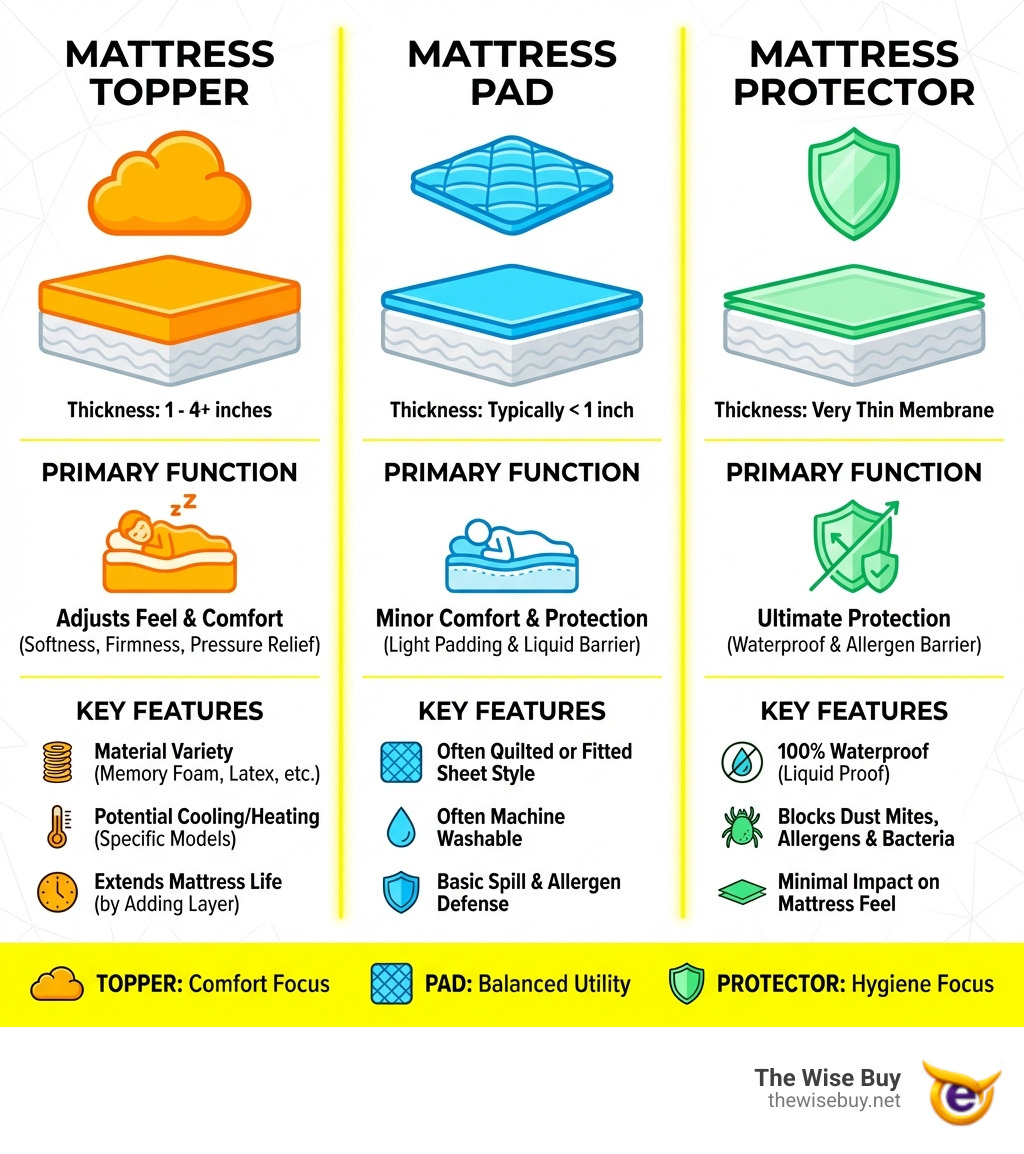
Before we dive into the nitty-gritty of materials, we need to clear up a common point of confusion. We often see shoppers using the terms “topper,” “pad,” and “protector” interchangeably. However, these three items serve very different purposes on your sleep surface.
A mattress topper is a substantial layer of cushioning designed to significantly alter the feel of your bed. Whether you want to soften a rock-hard mattress or add a bit more support to one that’s starting to age, the topper is your heavy lifter.
In contrast, a mattress pad is a thin, quilted layer primarily meant to add a touch of softness and protect the mattress from light wear. A mattress protector is even thinner—often waterproof—and its sole job is to shield your mattress from spills, allergens, and bed bugs without changing the feel of the bed.
If you are looking for a real change in comfort, you need a topper. For those still on the fence, learning How to Choose a Mattress Topper involves assessing whether your current mattress is still structurally sound. Remember: a topper can’t fix a mattress that is “cratering” or sagging in the middle.
Primary Benefits of Mattress Toppers
Why are so many of us adding that extra layer? The benefits go beyond just “feeling fluffy.”
Pressure Relief: By adding a layer of memory foam or latex, you can alleviate pressure on sensitive areas like the hips and shoulders.
Spinal Alignment: A great topper should keep your spine aligned—horizontal for side sleepers and maintaining a natural curve for back sleepers.
Mattress Longevity: Toppers act as a buffer, taking on the nightly wear and tear that would otherwise degrade your mattress.
Temperature Regulation: Modern toppers often feature cooling gels or breathable natural fibers like wool to help “hot sleepers” stay comfortable.
The Low-Rebound Effect: This is a fancy way of saying the material (usually memory foam) holds the shape of your body, providing a “hugged” sensation.
Motion Isolation and Partner Disturbance
If you share a bed with a restless sleeper, you know the struggle of waking up every time they toss or turn. This is where mattress toppers—specifically those made of memory foam—shine.
Memory foam is a low-rebound material. When you press into it, it recovers slowly and absorbs energy rather than bouncing it back. This vibration reduction means that when your partner moves on their side of the bed, the motion doesn’t travel across the surface to wake you up. It’s one of the most cost-effective ways to improve “relationship harmony” in the bedroom!
Comparing Mattress Topper Materials and Certifications
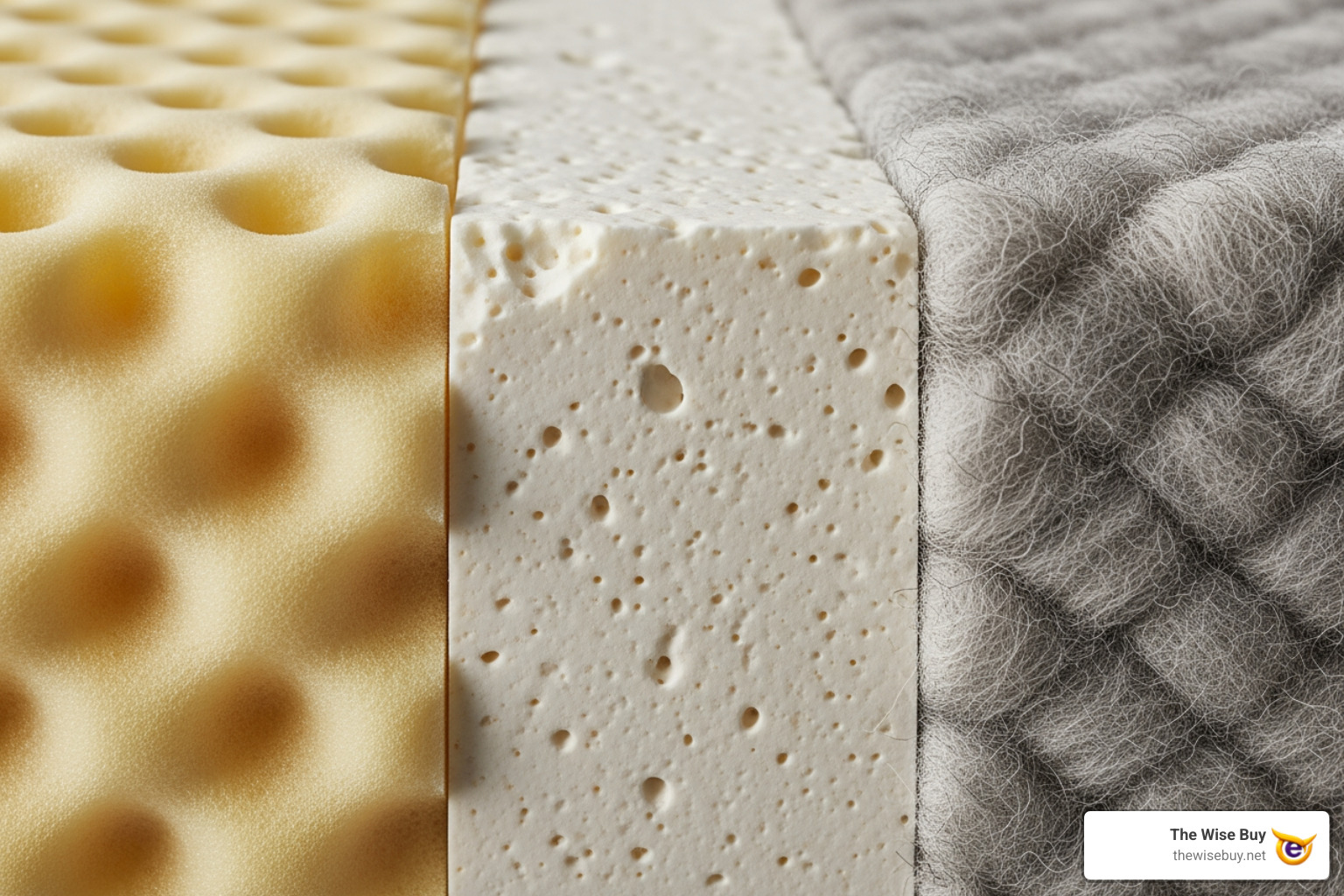
Choosing a material is the most important decision you’ll make. Each has a unique “feel” and performance profile.
Pros: Excellent contouring, pressure relief, and motion isolation.
Cons: Can trap body heat. Look for “gel-infused” or “graphite-infused” versions to help dissipate warmth.
Natural Latex:
Pros: Extremely durable, eco-friendly, and naturally breathable. It offers a “buoyant” feel rather than a “sink-in” feel.
Cons: More expensive than foam; may be too bouncy for those who want to feel “enveloped.”
Down and Down Alternative:
Pros: Provides a “sleeping on a cloud” luxury feel. Down alternative is hypoallergenic and machine-washable.
Cons: Offers very little support for spinal alignment; requires frequent fluffing.
Wool:
Pros: Superior temperature regulation (stays cool in summer, warm in winter) and naturally fire-retardant.
Cons: Usually quite expensive and doesn’t provide deep pressure relief.
Polyfoam:
Pros: The most budget-friendly option.
Cons: Less durable and may lose its shape faster than high-density memory foam or latex.
Eco-Friendly Certifications and Standards
If you’re looking for an organic or sustainable sleep environment, don’t just take the manufacturer’s word for it. Look for these “gold standard” certifications:
GOLS (Global Organic Latex Standard): Ensures the latex is truly organic and sustainably sourced.
GOTS (Global Organic Textile Standard): The leading standard for organic fibers like cotton and wool.
CertiPUR-US: Guarantees that the foam is made without ozone depleters, heavy metals, or formaldehyde.
GREENGUARD Gold: Ensures the product has low chemical emissions, improving your indoor air quality.
OEKO-TEX: Certifies that every component of the product is free from harmful substances.
How to Choose the Best Mattress Topper for Your Sleep Style
Your preferred sleeping position and body weight should dictate the firmness and thickness of your topper.
Impact of Thickness on Comfort and Support
Most mattress toppers measure between 1 and 4 inches thick. Here is how to choose:
1-2 Inches: Best for subtle adjustments. If your mattress is just a tiny bit too firm, a 2-inch memory foam topper can provide the benefit of pressure relief without making you feel like you’re sinking into quicksand.
3-4 Inches: Necessary for significant changes. If you are a side sleeper on a very firm mattress, you likely need at least 3 inches of material to cushion your hips and shoulders and keep your spine horizontal.
Cooling Features for Hot Sleepers
Heat retention is the #1 complaint regarding foam toppers. If you sleep hot, look for “high permeability” materials that allow for better airflow.
Ventilated Latex: Features small pin-holes that move air away from the body.
Phase Change Materials (PCM): Fabrics or infusions that actively absorb and release heat to keep you at a steady temperature.
Copper or Graphite Infusion: These minerals are naturally conductive and help pull heat away from your skin.
Advanced Tech: For those who need extreme control, systems like the BedJet 3 or Eight Sleep Pod Cover offer active cooling and heating via air or water.
Addressing Back Pain and Pressure Points
A supportive mattress surface maintains the natural curves of your spine. If you wake up with lower back pain, your mattress might be too soft, causing your midsection to sink. In this case, a firmer latex topper can provide “zoned support” to keep your hips liftd.
Conversely, if you feel “pins and needles” in your shoulders or hips, your surface is likely too firm. A plush, high-density memory foam topper will conform to these pressure points, distributing your weight more evenly.
Investment Guide: Pricing, Longevity, and Maintenance
What should you expect to pay? Prices for a queen-size topper typically range from $50 to $200 for standard foam, but luxury organic latex or high-tech smart covers can soar to $1,000 or even $3,000.
When we talk about “good value,” we mean finding a balance between price and longevity. A $50 egg-crate foam topper might feel good for six months, but a $300 high-quality memory foam or latex topper will usually do its job well for at least three to five years.
Care and Maintenance for Longevity
To get the most out of your investment, follow these simple steps:
Rotate Monthly: Just like your mattress, your topper should be rotated 180 degrees every month to prevent permanent indentations.
Use a Cover: Opt for toppers with removable, machine-washable covers. This makes hygiene much easier.
Spot Clean Only: Most foam and latex cannot be submerged in water. If a spill occurs, use a mild soap and a damp cloth, then let it air dry completely away from direct sunlight.
Avoid Heat: Never put a foam topper in the dryer, as high heat can break down the cellular structure of the material.
Typical Lifespan and Durability Factors
A high-quality mattress topper will typically last about half as long as a mattress. While some premium models come with warranties lasting up to 10 years, most will begin to soften or lose their supportive “snap” after 4 years of nightly use. Factors like body weight (heavier sleepers compress the material more) and usage frequency will influence this timeline.
Frequently Asked Questions about Mattress Toppers
Can a mattress topper fix a sagging or old mattress?
The short answer is: No. If your mattress has a deep indentation or “crater” in the middle, a topper will simply follow the curve of that sag. While it might add a bit of surface cushioning, it won’t provide the structural support your spine needs. If your mattress is structurally compromised, it’s time for a new one.
How do I determine the right thickness for my weight?
As a general rule:
Under 130 lbs: A 2-inch topper is usually sufficient to provide comfort.
130–230 lbs: A 2.5 to 3-inch topper offers the best balance of comfort and support.
Over 230 lbs: Look for 4-inch, high-density toppers (especially latex) to prevent “bottoming out” against the firm mattress below.
Are mattress toppers machine washable?
Most foam and latex toppers are not machine washable. However, many fiber-fill (down alternative) and wool toppers can be laundered in large-capacity machines. Always check the care label first!
Conclusion
At The Wise Buy, we believe that “smarter shopping” means making informed choices that improve your daily life. Sleep is the foundation of your health, and you shouldn’t have to spend thousands of dollars to get a restful night.
Whether you need to cool down, soften a firm bed, or find relief for your aching back, there is a mattress topper designed for your specific needs. By focusing on quality materials and the right thickness for your sleep position, you can transform your bedroom into a sanctuary.

 Add more eligible items to your cart to unlock free shipping.