According to U.S. Census Bureau data on renter households, millions of renters move each year, and most face the same hard truth: the apartment is empty, the budget is tight, and everything feels urgent. Learning how to furnish apartments on budget starts with one rule. Buy the pieces you use every single day first, and let the rest wait.
The Core Four: Bed, Seating, Table, Storage
Four pieces carry almost all of your daily life:
Bed. A bad mattress ruins your sleep and your back. Buy this first.
Seating. One comfortable sofa or chair beats three cheap ones.
Table. A small dining table doubles as a desk and a prep surface.
Storage. Without it, clutter wins in a week.
Everything else is optional for now.
What You Can Wait to Buy
Rugs, artwork, side tables, and lamps can all wait. Buy them as you find deals, not on day one. A common mistake is rushing to fill every corner, then replacing it all within a year.
Budgeting Strategies and Spending Tiers
A budget turns a stressful move into a plan. Most people overspend on the wrong items, then run out of money for the ones that matter. The fix is not a single number, it is a tiered structure that tells you what to buy first, what to buy when cash allows, and what to skip entirely until you have lived in the space for a month.
How Much Money Is Needed to Furnish an Apartment?
Costs depend on your metro, your square footage, and how much you buy used. Rather than guess, anchor your total to the number of rooms you are actually filling and the quality tier you are targeting:
Space
Lean (mostly used)
Mid (mix of used and new)
Comfort (mostly new)
Studio
Lowest tier
Middle tier
Highest tier
One-bedroom
Slightly higher
Slightly higher
Slightly higher
Two-bedroom
Roughly double studio
Roughly double studio
Roughly double studio
The 50/30/20 Rule for Furniture
Apply a simple split to your furniture fund:
Tier
Share of Budget
What It Covers
Must-have pieces
50%
Bed, sofa, table, storage
Soon pieces
30%
Lighting, textiles, rugs
Flexible decor
20%
Art, accents, extras
Adjusting the Tiers When Money Is Tight
If your total furniture fund is under a few hundred dollars, invert the usual advice: push 70% into Tier 1 and let Tier 2 wait. A mattress on a metal frame beats a stylish sofa with no bed. If your fund is larger, keep the 50/30/20 split but move the 20% into a “replacement reserve”, a small cash pool for the first item that breaks.
Pro Tip Buy your must-have pieces used or open-box, then spend the savings on a better mattress. You sleep on it every night, and it is the one item worth paying more for.
The Sinking-Fund Method for Slow Furnishing
Instead of buying everything in month one, set aside a fixed amount each pay period and buy one Tier 2 or Tier 3 item per cycle. This spreads the cost across several months, keeps you from financing furniture on a credit card, and gives you time to spot better deals.
Where the Money Actually Goes
Most first-time renters underestimate three line items: delivery fees, assembly tools, and the small stuff (shower curtain, trash can, dish rack, extension cords). Budget a flat contingency, even a modest one, for these before you buy any furniture. They are not glamorous, but skipping them is why so many budgets blow up in week two.
Best Places to Buy Affordable Furniture
The best places to buy affordable furniture are online marketplaces, overstock and open-box retailers, local thrift stores, and estate sales. Each has trade-offs in price, quality, and how fast you get the item.
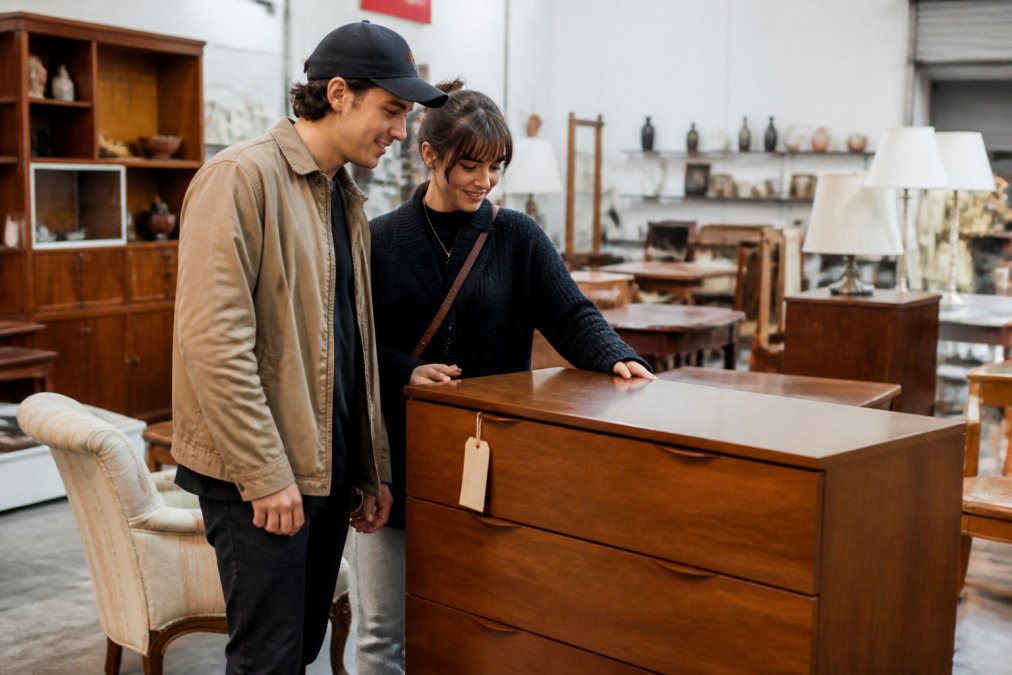
A young couple shops for a mid-century dresser at a thrift store to furnish their apartments on budget.
Online Marketplaces and Overstock Retailers
Online marketplaces offer the deepest selection of pre-owned furniture, often at a fraction of retail. Overstock and open-box retailers sell brand-name goods that were returned or over-ordered. At The Wise Buy, every item is tested and inspected before it ships, and listings include detailed photos and descriptions so you can judge condition before you buy.
Local Thrift Stores and Estate Sales
Thrift stores and estate sales are where the real finds live. Go early on restock days, bring a tape measure, and know your room’s dimensions. Estate sales often include solid wood pieces built decades ago, which frequently outlast new flat-pack furniture.
How to Find Open-Box Furniture Deals
Open-box furniture is a returned or overstock item that has been inspected and resold at a lower price. The savings come from the box being opened, not from the item being broken. That distinction matters when you shop, because the discount you can negotiate depends on which category the item falls into.
Retailers typically price open-box goods in one of three ways: a flat percentage off the original retail price, a percentage that scales with cosmetic condition, or a clearance price set by the store manager. The first two are predictable; the third is where the real deals live.
What to Inspect Before You Buy
Check these before you commit:
Frame joints for wobble or cracks
Drawers and doors for smooth movement
Upholstery for stains, tears, or odors
Hardware for missing screws or bolts
Return policy and warranty terms
Matching the Item to the Return Policy
Before you pay, confirm three things in writing: the return window, whether returns are accepted for “change of mind” or only for defects, and who pays return shipping. A deep discount on a final-sale item is not a deal if a leg snaps in month two. If the policy is restrictive, treat the purchase as a one-way transaction and inspect twice as carefully.
Negotiation Tactics for Private Sellers
Private sellers expect offers. A few tactics work well:
Ask if the price is firm, then make a polite lower offer
Point out specific flaws you found in person
Offer to pick up the same day
Bundle two items for one price
A Simple Offer Script
Open with a question, not a number: “Is the price firm, or is there any flexibility?” If the seller says flexible, name a figure modestly below asking and justify it with a specific flaw you observed, a scuff, a missing shelf pin, a wobbly leg. If the seller says firm, ask whether they would include a second item at no extra cost.
Timing Your Offers
Listings that have been up for more than a week, or that were posted on a Sunday evening, tend to have more flexible sellers. End-of-month moves are another window: people relocating often need items gone by a specific date and will accept a lower offer to avoid hauling furniture themselves.
Watch Out Never pay a private seller in full before you see the item in person. Photos hide water damage, pet odors, and structural cracks that only show up under real light. Pay in cash on pickup, or use a payment method with buyer protection if the platform offers one.
Maintenance and Longevity of Open-Box Finds
Open-box and used pieces last longer when you treat them as repairable rather than disposable. Tighten screws and bolts every few months, keep wood furniture out of direct sun, and use felt pads under legs to protect floors. For upholstered pieces, vacuum crevices monthly and spot-clean spills immediately.
DIY and Upcycling Projects for Rental-Friendly Decor
Upcycling is the practice of upgrading a used item with paint, new hardware, or fresh fabric instead of replacing it. It is the cheapest way to make a rental feel like yours.
Simple Upgrades for Thrift Store Finds
Swap dated knobs for new ones
Paint a worn dresser in a single bold color
Re-cover a chair seat with new fabric
Add peel-and-stick contact paper to shelves
Flat-Pack Assembly Tips
Flat-pack furniture is sturdy when built right. Sort hardware first, tighten screws only after all pieces align, and keep the instructions for future moves. A common mistake is over-tightening early, which strips the fittings.
Apartment Furnishing Checklist for a Curated Living Space
A curated living space is one where every piece earns its place. Use this apartment furnishing checklist room by room, and add items only when they solve a real problem.
Room-by-Room Essentials
Bedroom: bed frame, mattress, two pillows, storage bins
Living room: sofa, coffee table, floor lamp, throw blanket
Kitchen: dishes, cookware, small appliance, trash can
Small apartments need vertical storage. Use tall bookshelves, over-door hooks, and stackable bins. Room dividers can split a studio into zones without a single nail in the wall.
Key Takeaway Vertical space is free square footage. Every wall you leave empty is storage you are not using.
Maintenance and Longevity of Budget Items
Budget furniture lasts when you care for it. Tighten screws every few months, keep furniture out of direct sun, and use felt pads under legs to protect floors. For wood pieces, a light polish twice a year prevents drying and cracking. These habits add years to items that cost you very little.
Frequently Asked Questions
What is the cheapest way to furnish an apartment?
The cheapest route combines second-hand marketplace finds, thrift store donations, and open-box deals from trusted retailers. Focus first on essentials: a bed, a place to sit, a table, and storage. Many items can be free or deeply discounted through local ‘buy nothing’ groups, estate sales, and college move-out seasons. For open-box furniture, retailers like The Wise Buy inspect items and sell them at a fraction of retail, giving you brand-name quality without the full price tag.
Is $5,000 enough to furnish an apartment?
Yes, $5,000 is a workable budget for a one-bedroom apartment if you prioritize essentials and mix new and used pieces. Allocate roughly 40% to the bedroom (mattress, frame), 30% to living room seating and tables, 20% to storage and lighting, and 10% to decor. Shopping open-box and overstock can stretch that budget further. Actual costs depend on your city, style, and how many items you can source second-hand.
What are the first things you should buy for a new apartment?
Start with a bed and mattress, a sofa or seating option, a dining table or desk, and basic storage like shelving or bins. These four categories make the space functional. Next, add lighting fixtures and textiles (curtains, rugs) to soften the space. You can live without a coffee table, accent chairs, and wall art for a few weeks while you hunt for deals. A checklist helps you avoid impulse purchases.
How can I find open-box furniture deals?
Check retailer websites for open-box or overstock sections, sign up for email alerts, and visit local stores that sell returned items. Inspect everything in person or read the condition notes carefully online. Look for items with minor cosmetic damage that does not affect function. The Wise Buy tests and inspects every open-box item, provides detailed photos, and offers a seamless return process so you can buy with confidence.
Furnishing a first apartment on a tight budget is a test of patience, not spending power. The Wise Buy makes that easier by offering rigorously tested open-box and overstock home goods at a fraction of retail value, with detailed product photos and descriptions so you can buy with confidence. Create an Account today and start building a home that lasts.

 Add more eligible items to your cart to unlock free shipping.