From Garden to Plate: Essential Tools for Stripping Herbs and Pitting Cherries
Homepage From Garden to Plate: Essential Tools for Stripping Herbs and Pitting Cherries
From Garden to Plate: Essential Tools for Stripping Herbs and Pitting Cherries
Why Fresh Herb Preparation Matters in Your Kitchen
A herb stripper tool is a small kitchen gadget with multiple holes designed to quickly remove leaves from herb stems. Here’s what you need to know:
Quick Comparison: Top Herb Stripper Options
Tool Type
Best For
Price Range
Key Feature
Chef’n ZipStrip Herb Zipper
Woody herbs (rosemary, thyme)
$7-8
Integrated measuring bowl
Herb Scissors
Tender herbs (parsley, cilantro)
$9-10
Multi-blade cutting
Kitchen Shears + Chef’s Knife
All herb types
$17-175
Versatile, multi-purpose
If you love cooking with fresh herbs but find yourself frustrated by the tedious task of pulling individual leaves off stems, you’re not alone. The reality is that de-stemming herbs can take up valuable prep time, especially when you’re working with woody herbs like rosemary or thyme for fall dishes and herb-roasted recipes.
The good news? Several tools claim to solve this problem, ranging from specialized herb strippers to multi-purpose kitchen scissors. But do they actually work, and are they worth adding to your kitchen drawer?
Most herb stripper tools work by threading stems through different-sized holes that catch and remove leaves as you pull. They typically cost between $7 and $12, making them an affordable option for home cooks. However, testing reveals they work best on woody herbs and struggle with tender varieties like parsley or cilantro.
I’m Ally Wise, Sales Manager at TheWisebuy.net, where I help customers find practical kitchen tools that deliver real value. Through coordinating with vendors and customer feedback, I’ve gained insight into which herb stripper tools actually perform as promised and which end up as drawer clutter.
What is a Herb Stripper Tool and How Does It Work?
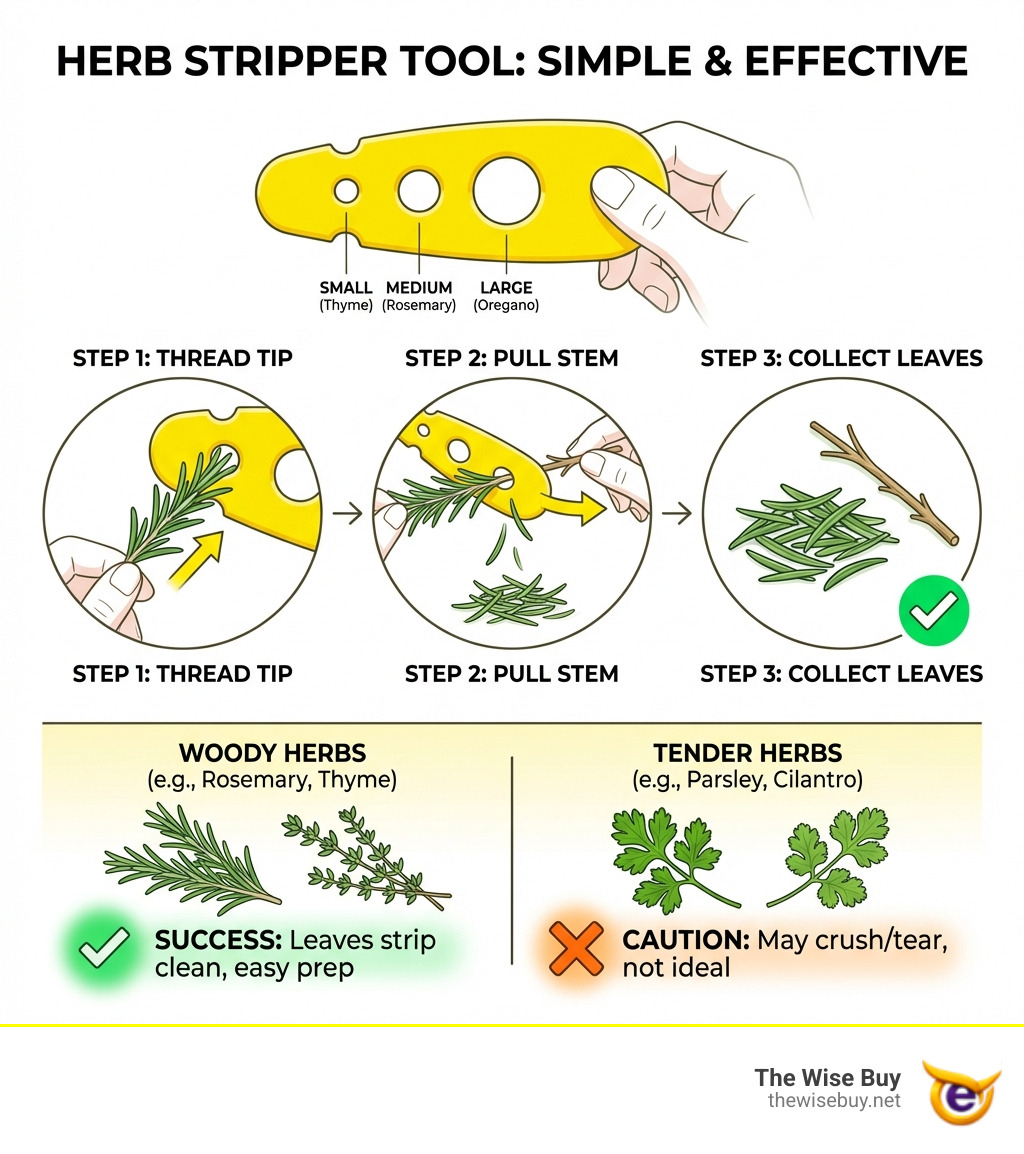
A herb stripper tool is a simple yet ingenious kitchen gadget designed to make the often-fiddly task of de-stemming herbs much quicker and easier. Imagine a small, often flat, piece of plastic or metal, typically round or paddle-shaped, with a series of graduated holes along its edge or surface. That’s essentially a herb stripper!
The core idea behind a herb stripper is mechanical leaf removal. You take an herb stem, like a sprig of rosemary or thyme, and thread it through one of the holes. The holes are designed to be just large enough for the stem to pass through, but small enough to catch and strip the leaves off as you pull the stem. It’s a bit like pulling a string through a bead – the bead stays, and the string goes.
How to Use a Herb Stripper Tool: A Step-by-Step Guide
Using a herb stripper is straightforward, but a few tips can make all the difference for optimal results:
Select Your Herb: As we’ll discuss, these tools shine with woody herbs.
Choose the Right Hole: Look at your herb stem. Find the hole on the stripper that is slightly larger than the stem but smaller than the leaves. This is crucial for effective stripping. If the hole is too big, the leaves won’t come off; too small, and you might struggle to pull the stem through or damage it.
Thread the Stem: Insert the herb stem through the chosen hole. For woody herbs, a common and highly effective technique is to thread the herb “against the grain,” meaning from the tip of the stem towards the base. This helps the leaves release more easily.
Pull and Strip: With a firm but gentle grip on the herb stripper, pull the stem through the hole. The leaves should detach cleanly and fall into a container below or onto your cutting board.
Repeat: Continue with the rest of your herb sprigs until you have all the leaves you need.
This de-stemming process is particularly efficient for herbs with sturdy stems and small, numerous leaves. The various hole sizes accommodate different stem thicknesses, ensuring you can tackle a range of woody herbs.
Key Benefits of Using a Herb Stripper Tool
We’ve all been there: carefully plucking individual leaves from a handful of thyme, watching precious minutes tick by. This is where a herb stripper tool truly shines, offering several compelling benefits for the home cook:
Time-Saving Efficiency: The most immediate and noticeable benefit is the sheer speed. What might take minutes of manual plucking can be done in seconds with a stripper. This is especially valuable when you’re preparing larger quantities of herbs for a recipe or batch cooking. As one reviewer noted, when used on rosemary, the stripper can “definitely cut down on prep time.”
Uniform Results: Manual stripping can sometimes leave small pieces of stem attached or bruise delicate leaves. A well-designed herb stripper, when used correctly, can provide a more uniform separation of leaves from stems, leading to a cleaner, more professional-looking end product.
Integrated Measuring: Some modern designs, like the Chef’n ZipStrip Herb Zipper, incorporate a small collection bowl with measuring markers. This is a clever secondary benefit, allowing you to strip your herbs directly into a measured amount, simplifying recipes and reducing the need for extra measuring spoons.
Affordability: Most herb strippers are incredibly budget-friendly. The Chef’n ZipStrip Herb Zipper, for example, costs around $8. This makes it a low-risk investment for anyone curious about improving their herb prep game. At such an accessible price point, it’s a small gadget that offers significant value for home cooks looking to streamline their kitchen tasks.
Common Limitations of the Herb Stripper Tool
While a herb stripper tool can be a fantastic helper, it’s not a magical wand for every herb in your garden. Like any specialized tool, it comes with its own set of limitations that we’ve finded through extensive testing and user feedback:
Struggles with Tender Herbs: This is perhaps the biggest drawback. Herbs with soft, delicate stems and leaves, such as parsley, cilantro, mint, or basil, are generally not well-suited for strippers. The stems are often too pliable and simply bend or break rather than passing cleanly through the holes, leaving leaves behind or bruising them. As one user lamented, “it’s not of much use when it comes to tender herbs like cilantro or parsley.”
Stem Breakage and Frustration: Even with woody herbs, if the hole size isn’t perfectly matched or the stem is particularly brittle, it can break mid-strip. This leads to frustrating stops and starts, and you might find yourself resorting to manual de-stemming anyway. One tester found the process “more frustrating than if I had simply plucked the leaves from the stem” when dealing with sage.
“Single-Use” Gadget Concern: Many home cooks are wary of tools that only perform one very specific task, fearing they’ll just add clutter to already packed kitchen drawers. While a herb stripper is excellent at what it does, its utility is limited to de-stemming. If you don’t frequently cook with large quantities of woody herbs, it might not earn its coveted spot in your gadget drawer.
Leaf Bruising: If the hole is too tight or you pull too forcefully, the leaves can get crushed or bruised during the stripping process. This is particularly problematic for herbs where visual appeal and fresh aroma are key.
While a herb stripper tool can be a time-saver for specific tasks, its effectiveness is highly dependent on the type of herb you’re working with.
Comparing Strippers to Traditional Kitchen Methods
When it comes to preparing fresh herbs, the trusty old knife and cutting board, or even just our fingers, have been the go-to methods for generations. So, how does a specialized herb stripper tool stack up against these traditional approaches? Let’s break down the pros and cons to help you decide which method best suits your cooking style.
Method
Best For
Price Range
Pros
Cons
Herb Stripper Tool
Woody herbs (rosemary, thyme, sage)
$7-$12
Fast, uniform stripping for woody herbs, integrated measuring on some models
Ineffective for tender herbs, can bruise leaves, “single-use” gadget
De-stemming can be slow and tedious, requires skill for efficiency
Kitchen Shears
Tender herbs (snip from stem), quick chopping
$10-$30
Quick for tender herbs, safer than a knife for some, good for snipping directly into dishes
Not ideal for woody herbs, can bruise leaves if not sharp, less precise than a knife for fine chopping
Manual Plucking
Delicate herbs (basil, mint), small quantities
Free
Gentle on delicate leaves, no special tools needed, good control
Very slow and tedious for larger quantities, can be messy
Herb Stripper Tool: Speed for Woody Herbs
As we’ve explored, the herb stripper tool excels at quickly removing leaves from woody-stemmed herbs. Its main advantage is speed and consistency for this specific task. For about $8 (like the ZipStrip Herb Stripper), it’s an affordable shortcut. However, its limitations with tender herbs mean it’s not a universal solution.
Chef’s Knife: The Versatile Workhorse
A good chef’s knife is arguably the most essential tool in any kitchen. While its primary role for herbs is chopping, it can also be used for de-stemming. For instance, you can run a knife along a rosemary stem to remove leaves, or simply chop off the leafy tops of parsley. The Mac Professional Hollow Edge Chef’s Knife, a high-quality option, costs around $155.
Pros: Incredible versatility, precise control for chopping, essential for countless other kitchen tasks.
Cons: De-stemming can be slower than a stripper for woody herbs, requires good knife skills, and can be more dangerous (the majority of accidents in the kitchen involve knives and sharp objects).
Kitchen Shears: Quick Snips and Safety
Kitchen shears are fantastic for quickly snipping herbs, especially tender ones like chives, cilantro, or parsley, directly into a dish. They offer a safer alternative to a knife for quick cuts. The Oxo Good Grips Multipurpose Kitchen & Herbs Scissors are a popular choice, costing around $17. We also found dedicated Herb Scissors for about $9.90, specifically designed for quick herb chopping.
Pros: Fast for tender herbs, relatively safe, good for small quantities, easy to clean.
Cons: Not effective for stripping woody herbs, can bruise delicate leaves if not sharp, less precise for very fine mincing compared to a sharp knife.
Manual Plucking: The Original Method
Our fingers are the original herb de-stemmers! This method is gentle and effective for delicate herbs like basil or mint, where bruising is a concern, or when you only need a small amount.
Pros: Free, gentle on delicate leaves, offers complete control.
Cons: Extremely time-consuming and tedious for larger quantities, can get sticky, and definitely not efficient.
For everyday cooking, a combination of tools often works best. While a herb stripper tool can be a handy specialized gadget for woody herbs, a good chef’s knife and a pair of sharp kitchen shears will always be indispensable for all your herb preparation needs. As one expert suggests, “Instead, opt for a good [chef’s knife] and the [best set of kitchen shears] for de-stemming and chopping your herbs to perfection.”
Best Herbs and Techniques for Efficient Stripping
Not all herbs are created equal when it comes to the herb stripper tool. To get the most out of this clever gadget, it’s crucial to know which herbs will cooperate and the best techniques to employ. We’ve found that the herb stripper truly shines with specific types of herbs, making your prep work faster and more enjoyable.
Herbs Best Suited for a Herb Stripper
The golden rule for herb strippers is: woody stems reign supreme. These tools are designed to grip and pull leaves from sturdier stalks. Our top picks for optimal herb stripper performance include:
Rosemary: This is perhaps the poster child for the herb stripper. Its stiff, needle-like leaves and robust stem make rosemary an ideal candidate. Whether you’re stripping rosemary leaves for cocktails, roasted vegetables, or savory breads, the tool will make quick work of it.
Thyme: Similar to rosemary, thyme sprigs have small, numerous leaves and a relatively firm stem that yields beautifully to the stripper.
Sage: While sage leaves are larger and softer than rosemary or thyme, their stems are typically sturdy enough to be effectively stripped. However, some users note that larger sage leaves might require a slightly larger hole and careful technique to avoid tearing.
Essential Techniques for Effective Stripping
Getting those leaves off cleanly isn’t just about picking the right herb; it’s also about using the right technique. Here are our top tips:
The “Against the Grain” Technique: This is a game-changer, especially for rosemary. Most product photos show threading the herb from base to tip, but experienced users swear by threading from tip to base (or “against the grain”). This means you insert the delicate tip of the stem through the hole first, then pull the thicker base through. This method helps the leaves release more easily and prevents stem breakage.
Match the Hole Size Precisely: Take a moment to select the hole that is just slightly larger than your herb’s stem. A hole that’s too big won’t strip effectively, and one that’s too small will cause the stem to break or the leaves to get jammed.
Firm, Steady Pull: Once the stem is threaded, use a firm, steady pull. Avoid jerky movements, which can cause stems to snap or leaves to bruise.
Consider the “Bunching Method” for Tricky Stems: If you’re working with slightly less rigid woody herbs, or if stems are breaking, try bunching several sprigs together and pulling them through one of the larger holes. This can provide more resistance against the stripper and help release the leaves.
By understanding which herbs work best and employing these smart techniques, your herb stripper tool will become a valuable asset in your kitchen, making quick work of your favorite woody herbs for all your culinary adventures.
Beyond Herbs: Multi-Functional Tools for Fruit and Veg
While our focus has been on the marvelous herb stripper tool, kitchen gadgets extends far beyond de-stemming herbs. Many affordable tools can significantly upgrade your meal prep, often costing less than your weekly coffee budget. We’re all about smart shopping at TheWiseBuy.net, and sometimes, even the smallest tool can make the biggest difference in your kitchen efficiency.
Let’s explore some other under-$12 marvels that can transform your cooking experience, turning mundane tasks into quick, enjoyable steps:
Cherry Pitters: If you love baking pies, making jams, or simply enjoying fresh cherries without the hassle of pits, a cherry pitter is a must-have. These simple devices quickly push the pit out, leaving the fruit intact.
Garlic Choppers (e.g., Garlic Zoom): Say goodbye to garlic-scented fingers! Gadgets like the Garlic Zoom (around $11.35) are wheeled choppers that allow you to quickly mince garlic by rolling them back and forth. It’s a clever way to get finely chopped garlic without the lingering odor.
Potato Brushes and Eye Removers (e.g., Tater Mate): Who knew a potato brush could be exciting? The Tater Mate Potato Brush and Eye Remover (about $8.28) features tough bristles for cleaning and a pointed tip to effortlessly remove those pesky potato eyes. It’s about “turning any questionable potato into something amazing.”
Citrus Spritzers (e.g., Quirky Easy Citrus Spritzer): Imagine fresh lemon or lime juice sprayed directly onto your food or drink without slicing and squeezing. The Quirky Easy Citrus Spritzer (around $5.10) jabs right into the fruit, allowing you to spritz fresh flavor instantly.
Vegetable Spiralizers (e.g., Cucumbo Spiral Vegetable Slicer, Veggetti): Transform vegetables like cucumbers, zucchini, and carrots into beautiful spiral strands or “noodles.” The Cucumbo Spiral Vegetable Slicer (about $6.49) and Veggetti Spiral Vegetable Cutter (around $9.99) are fantastic for adding a fun twist to salads, creating healthy pasta alternatives, or garnishing dishes.
Wooden Muddlers: For cocktails or dishes that require releasing the essential oils from herbs, fruits, and spices, a wooden muddler (around $7) is indispensable. It’s perfect for crushing ingredients to “release maximum flavor.”
Multi-Use Measuring Spoons (e.g., Pinch Dash Smidgen Measuring Spoons): For those who cook by feel, or just love quirky kitchen tools, these spoons (about $7.17) offer “unofficial” measurements like ‘pinch,’ ‘dash,’ and ‘smidgen,’ helping you visualize those tiny additions.
Cut-Resistant Gloves (e.g., NoCry Cut Resistant Gloves): Safety first! For just under $11, these gloves offer peace of mind when handling sharp knives or mandolines, especially for those new to intensive prep work.
Adjustable Measuring Scoops (e.g., Levoop): The Levoop Adjustable Level Measuring Scoop (around $9.95) features a built-in leveling system, ensuring precise measurements for dry ingredients without needing to scrape off excess with a knife.
Ground Meat Choppers (e.g., OXO Good Grips Ground Meat Chopper): This tool (about $11.99) has a fan-like design that makes breaking up ground meat in a hot pan quick and easy, preventing it from clumping.
These gadgets prove that you don’t need to spend a fortune to significantly improve your kitchen workflow and enjoy cooking more. A great cook knows how to improve their efficiency, and these tools are perfect examples of that philosophy.
Frequently Asked Questions about Herb Stripping
We get a lot of questions about kitchen gadgets, and herb stripper tools often spark curiosity. Let’s tackle some of the most common inquiries we hear from home cooks.
Is a herb stripper worth the investment for a home cook?
This is the million-dollar (or rather, $8) question! Based on our research and user feedback, our answer is: it depends on your cooking habits.
If you frequently use woody herbs like rosemary, thyme, or even sturdy sage in your cooking – perhaps you’re a fan of herb-roasted chicken, hearty stews, or homemade herb breads – then a herb stripper is absolutely a worthwhile investment. For about $8, it’s an incredibly affordable tool that can genuinely save you time and frustration during prep. It performs one very specific task exceptionally well for these particular herbs.
However, if your herb usage leans heavily towards tender varieties like cilantro, parsley, basil, or mint, or if you only use herbs occasionally, then a dedicated herb stripper tool might end up gathering dust. For these herbs, a good chef’s knife or a pair of kitchen shears will be more versatile and effective. In such cases, we’d suggest skipping it and investing in quality multi-purpose tools instead.
Can you use a herb stripper for leafy greens like kale?
In short, no, a herb stripper tool is not designed for leafy greens like kale or collard greens. While kale does have a central rib that many people remove, its structure is fundamentally different from that of small-leafed herbs.
Kale leaves are typically much larger, and their ribs are tougher and more fibrous than herb stems. Trying to force a kale rib through the small holes of a herb stripper would likely damage the leaf, be ineffective at removing the rib, and potentially break the tool itself. For kale, the most effective method is still to manually strip the leaves from the rib by hand or to use a sharp knife to cut along either side of the rib.
What is the best way to clean and maintain these tools?
Cleaning and maintaining your herb stripper tool is generally very simple, ensuring it stays hygienic and ready for its next use.
Most herb strippers are made from plastic or metal and are dishwasher safe. If you prefer handwashing, a quick rinse under warm, soapy water immediately after use is usually sufficient to remove any lingering herb residue. Use a small brush or sponge to get into the crevices of the holes if needed.
For maintenance, there’s not much to do! Since they have no moving parts (unless it’s a more complex, multi-function gadget), they don’t require sharpening or lubrication. Simply ensure they are thoroughly dried before storing to prevent water spots or, in the case of metal strippers, potential rust. Store them in a drawer or hang them on a hook where they are easily accessible but won’t get damaged by other kitchen tools. With proper care, your herb stripper should last for years.
Conclusion
From the vibrant greens of parsley to the aromatic needles of rosemary, fresh herbs lift our cooking from good to gourmet. While the prep work can sometimes feel like a chore, we’ve seen how a simple yet effective gadget like the herb stripper tool can revolutionize how we handle woody herbs, saving precious time and effort in the kitchen.
We’ve explored how these tools work, their undeniable benefits for efficiency and uniform results, and acknowledged their limitations with more delicate herbs. We’ve also put them in perspective against traditional methods like the trusty chef’s knife and versatile kitchen shears, recognizing that often, a combination of tools offers the best approach. And let’s not forget the array of other affordable gadgets that can bring joy and efficiency to various kitchen tasks, proving that smart upgrades don’t have to break the bank.
At TheWiseBuy.net, our mission is to help you make informed decisions for your home and lifestyle. We believe in “smart deals” and “smarter shopping,” ensuring you get quality products that truly deliver value. Whether you’re stripping herbs, pitting cherries, or simply looking for ways to make your time in the kitchen more enjoyable, we’re here to guide you toward tools that work.
For more insights into optimizing your culinary space and finding helpful kitchen innovations, explore our wider range of More info about kitchen small appliances. Happy cooking, and may your herb prep always be swift and fragrant!

 Add more eligible items to your cart to unlock free shipping.