Is Buying Used Power Tools Worth It? A Buyer’s Guide
Homepage Is Buying Used Power Tools Worth It? A Buyer’s Guide
Last Updated: November 15, 2026
Quick Summary
Used power tools are worth buying when you know what to check and how you plan to use them. For occasional DIY projects, a well-kept used drill or saw often does the same job as a new one at a lower price. Review the photos and full condition description on the product posting before you buy.
Lower price is the main advantage of buying used power tools.
Battery wear is the most common weak point on used cordless tools.
Skip used tools for safety-critical jobs or when you need reliability on a deadline.
Check the return terms before buying, since warranty may not transfer to used tools.
Compare the all-in cost of tool, battery, charger and accessories against a new kit.
Is a used power tool right for your next job?The Wise Buy lists open-box and overstock tools with photos and full condition details.
Used power tools can be a smart buy when you know what to check and what you plan to use the tool for. For occasional DIY projects, a well-kept used drill or saw often does the same job as a new one at a lower price. Open-box and overstock tools can be a good value when you can review the full condition and description on the product posting and the photos on our website.
Whether a used tool is worth it depends on three things: how you will use it, how much you know about the tool, and how the seller backs the purchase. A homeowner tackling a few weekend projects has very different needs from a contractor running a tool through daily work.
Pros and Cons of Buying Used Power Tools
The main advantage is price. A used tool in good condition can cost noticeably less than the same model sold new, and that gap matters most for higher-end cordless kits.
The drawbacks are real. You may not know how hard the previous owner ran the tool. Batteries are the most common weak point, since their capacity fades with age and charge cycles. Accessories can be missing, and some older models lack current safety features.
Pros: Lower price, access to higher-end models within a budget, often good value on open-box stock
Cons: Unknown usage history, battery wear, possibly missing accessories, limited manufacturer support on older units
When Buying Used Is Not Worth It
Skip used tools when the job is safety-critical or when you need reliability on a deadline. A worn saw or a drill with a damaged cord can fail at the worst moment. Tools that take heavy daily use also tend to wear faster, so a discount may not cover the cost of an early replacement.
Avoid used purchases when the tool lacks a clear return option or when the listing gives little detail on condition. If the seller cannot show you the tool clearly, move on.
Used vs. New Power Tools: Comparing Cost, Condition and Warranty
Buying used and buying new trade off different things. A new tool gives you a full manufacturer warranty, a fresh battery, and a known history. A used tool costs less but asks you to accept more uncertainty.
Factor
Used Power Tool
New Power Tool
Purchase price
Usually lower
Full retail
Condition
Varies by listing
Factory fresh
Battery health
Often reduced
Full capacity
Warranty
Limited or none
Manufacturer warranty
Best for
Budget-conscious DIY
Heavy or professional daily use
Warranty coverage deserves a close look. Check the return terms on the product posting before you buy, since the manufacturer warranty may or may not transfer to a used or open-box tool. Read the listing and the return terms before you buy, and confirm what happens if the tool fails within the first few weeks.
Factory-Reconditioned Power Tools: How They Differ From Used
Factory-reconditioned tools are returned units that the manufacturer or an authorized service center inspects, repairs if needed, and resells. They differ from a typical used tool that changed hands privately or through a marketplace, because the reconditioning process follows a defined standard before resale.
Reconditioned tools often come with some warranty coverage, while a private used tool usually does not. That makes reconditioned stock a middle option for buyers who want a lower price without taking on all the risk of an unknown history.
Used Power Tool Inspection Checklist by Tool Type
A generic “looks fine” inspection is how buyers get burned. Each tool family fails in predictable ways, so judge condition against specific pass/fail signals rather than overall appearance. Since you are buying online, ask for close-up photos of the exact wear points below and read the full condition description on the listing before you commit.
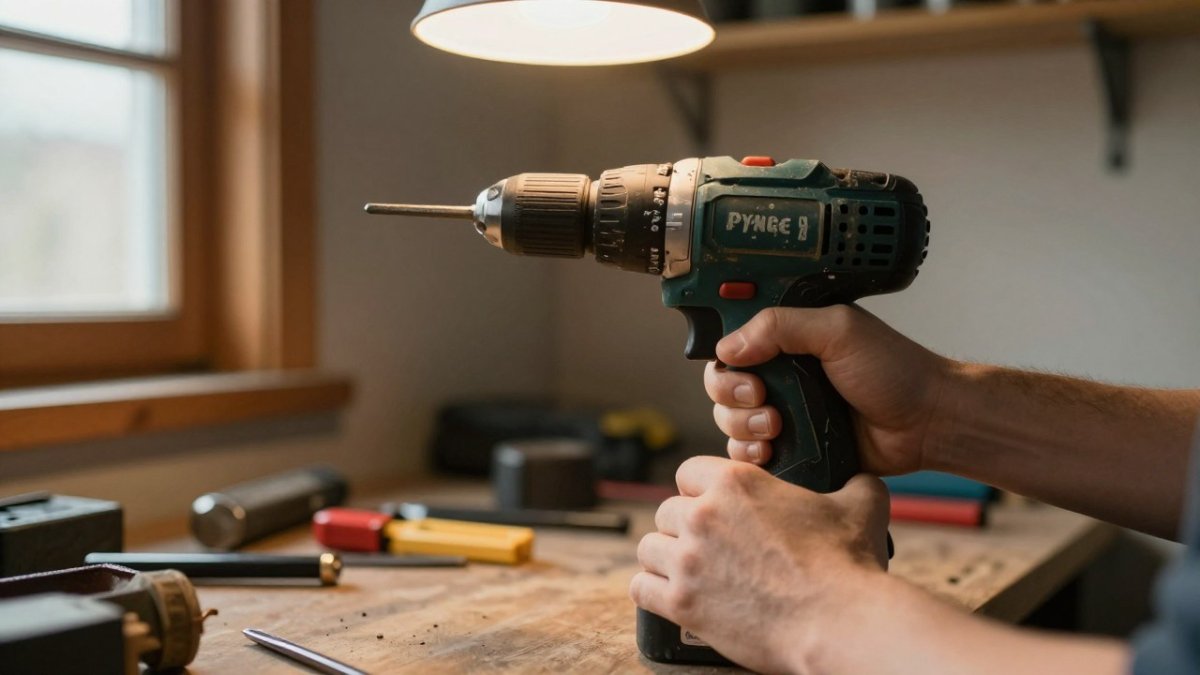
Hands inspecting the chuck and housing of used power tools on a workbench in a garage
Cordless drills and impact drivers
Chuck: Spin it by hand and watch the jaws. A chuck that wobbles, sticks, or will not hold a bit concentric is a fail, replacement chucks are inexpensive but signal a hard-used tool.
Trigger and clutch: The trigger should respond smoothly through its full travel with no dead spots. Cycle the clutch through every setting; a clutch that slips or will not engage points to internal wear.
Housing and vents: Look for cracks near the battery foot and heat discoloration around the vents. Melted or browned plastic means the motor has been overheated.
Motor sound: A brief run should be smooth and even. Grinding, rattling, or a burnt smell is a stop sign.
Circular and miter saws
Blade guard: The retracting guard must snap back freely and fully cover the blade at rest. A guard that drags, sticks open, or has been removed and not replaced is a safety failure, not a cosmetic issue.
Arbor and blade alignment: Ask for a photo of the blade at rest against a square. Visible runout or a blade that will not sit flat suggests a bent arbor.
Miter detents and bevel locks: Confirm the table locks positively at common angles. Sloppy detents mean cuts that will not stay square.
Cord and strain relief: Check the cord where it enters the housing. Cracks, exposed conductors, or a taped splice are disqualifying.
Sanders and grinders
Pad or disc mount: Rock the pad by hand. Play or a torn hook-and-loop face means the pad needs replacement before first use.
Vibration and bearing noise: Run briefly and listen. A high-pitched whine or heavy vibration points to worn bearings.
Grinder guards and wheel condition: The guard must be present and adjustable. Never accept a grinder with a cracked or chipped wheel.
Corded tools in general
Cord and plug: Run your eyes the full length. Any cut, crush mark, exposed wire, or missing ground pin is a fail.
Switch and lock-on: The switch should click cleanly and the lock-on should release when the switch is pressed again. A sticky lock-on is a kickback hazard.
Housing and heat marks: Cracks, scorching, or a smell of burnt insulation mean the tool has been abused.
Watch out: A tool that runs quietly but has a cracked housing or a damaged cord can still be unsafe, treat any electrical or guard defect as a hard no regardless of price.
Review the photos and the full condition and description on our product posting on the website, which show the tool, battery, cord, and any included accessories. Those photos and notes are your best source of condition information when you cannot handle the tool in person.
How to Test a Used Power Tool Before You Pay
Test the tool before committing whenever the seller allows it. Power it on, let it run under light load, and watch for smoke, burning smells, or unusual noise. Check that all switches, speed settings, and locks work.
If you buy online, use the photos and full condition description on the product posting to confirm condition, and check the return terms before you order. Keep the original packaging if possible, since it helps with returns.
Battery Health, Total Cost and Your Next Used Tool Purchase
On cordless tools, the battery is often the single largest hidden cost, and it is the item most likely to be misrepresented in a used listing. Treat battery condition as a separate purchase decision from the tool itself.
How to judge battery health before you buy
Check whether the listing shows a photo of the battery label. The date code and model number tell you the platform and approximate age. A battery that is several years old has likely lost meaningful capacity even if it still charges.
Ask how it was stored and charged. Batteries left on the charger indefinitely or stored in a hot garage degrade faster than ones cycled and stored at moderate temperature.
Look for physical warning signs. Swelling, a cracked case, corroded terminals, or a case that will not seat firmly are disqualifying, do not buy a swollen lithium-ion pack.
Confirm the charger is included and matches. A tool sold without its charger forces you to buy one, which can erase the savings.
If you can test in person, run the tool under load for a few minutes and watch for a rapid drop in power or a hot pack. A battery that sags quickly under load is near end of life.
The total-cost framework
Compare the used purchase against a new kit on four lines, not one:
Purchase price of the tool as listed.
Battery and charger, add the cost of any missing or worn pack, plus a charger if not included.
Consumables and accessories, blades, bits, pads, and any missing cases or fences.
Repair risk, set aside a realistic allowance for a likely fix (chuck, cord, switch, pad) based on the inspection findings.
If the sum of those four lines lands close to the price of a new kit that includes a fresh battery and a manufacturer warranty, the used tool is not a good deal, the warranty and known history are worth the difference. If the sum stays meaningfully below the new-kit price and the tool passes inspection, used is the better value.
A repeatable price threshold
A practical rule most buyers settle on: a used tool is worth considering when its all-in cost, tool plus any battery, charger, and accessories, is comfortably below the new-kit price, and the tool shows no safety defects. The bigger the gap and the cleaner the inspection, the stronger the case. When the gap is thin, buy new and keep the warranty.
For your next purchase, start with the listing photos and condition details, confirm what battery and charger are included, and run the four-line total-cost comparison before you order. Each open-box and overstock item is described in detail on its product posting on our website, so you can review condition and included accessories before you buy. For current prices, check the product posting or contact us for a quote.
Frequently Asked Questions
Should I buy second hand power tools?
Often yes, if the tool is a brand you trust, the price is clearly below what a new model costs, and you can inspect it in person or review clear photos and a full description. Used tools make the most sense for occasional home projects, where a lightly used drill or saw will last for years. They are a poorer bet for tools you plan to run hard every day, or for cordless tools whose batteries may already be worn. Check the seller’s condition notes, the return policy and whether the tool was tested before listing.
What should I check before buying a used power tool?
Start with the basics: confirm the tool powers on, runs smoothly without grinding or wobble, and has no cracked housing or damaged cord. For cordless tools, check the battery and charger, since battery condition is often the largest hidden cost. Look for missing guards, worn brushes on corded tools and signs of overheating such as discolored plastic. Review the full description and every photo on the listing, and review the product posting’s details if they are unclear.
Is it better to buy used or factory-reconditioned power tools?
Factory-reconditioned tools are a different category from used tools, and warranty terms vary by unit and seller. Check the product posting for the condition and warranty details of any specific tool. If you are comfortable inspecting a tool yourself and want the lowest price, a used tool from a reputable seller can still be a good value.

 Add more eligible items to your cart to unlock free shipping.