Are Refurbished Tools Reliable for DIY? The Short Answer
Yes, refurbished tools can be reliable for DIY work, provided you buy from a seller that inspects and tests each item.
The catch is that “refurbished” means different things at different sellers. Some units get a full teardown and new parts.
Below, we break down how to tell the difference, what to check before you buy, and which refurbished power tools hold up best for home use.
Factory Reconditioned vs. Seller Refurbished: What’s the Difference?
Factory reconditioned means the original manufacturer restored the tool to its own specs. Seller refurbished means a third party did the work, and the quality depends entirely on that seller.
The distinction matters more than most buyers realize.
Factory reconditioned: The maker repairs, tests, and certifies the tool. It usually carries a manufacturer warranty.
Seller refurbished: A reseller or repair shop does the work. Standards vary widely.
Open box: The item was returned unused or barely used. It may never have needed repair at all.
A common mistake is treating all three as the same product. They are not. A factory-reconditioned circular saw and a seller-refurbished one can look identical on a listing page and behave very differently on a job site.
Pro Tip Ask the seller one question before buying: “Who did the reconditioning, and what warranty comes with it?” A seller who can answer clearly is usually the one doing real inspection work.
How to Inspect a Used Power Tool Before You Buy
When you can hold a tool, inspection is straightforward: check the cord, chuck, battery contacts, and trigger, then run it under load for at least a minute. A tool that passes those checks is usually sound.
Online buying removes the hands-on step, so the inspection shifts to the listing itself. You are not evaluating the tool, you are evaluating the evidence the seller provides about it.
What to Look For in Listing Photos
Photos are your substitute for handling the tool. Ask yourself:
Are the photos of the actual unit? Stock images tell you nothing about the specific tool you will receive.
Are all sides shown? A listing that only photographs the clean side of a housing may be hiding cracks or gouges on the other.
Is the wear consistent with the description? Scuffs on a tool described as “light use” are a mismatch worth questioning.
Are the battery, charger, and case pictured? If an accessory is not shown, assume it is not included until the description says otherwise.
What the Condition Description Should Tell You
A useful condition description is specific. It names what was replaced, what shows wear, and what is missing. Vague language like “good condition” or “works great” without detail is a yellow flag.
Look for these elements:
Stated refurbishment level: Was the tool fully reconditioned, or is it open-box with original packaging?
Parts replaced: New chuck, new cord, new brushes, these signal real reconditioning work.
Cosmetic notes: Scratches and scuffs are normal on a refurbished tool and do not affect function, but they should be disclosed.
Functional test results: A seller who ran the tool and reports how it performed is showing their work.
The Pre-Purchase Checklist
Run through this list before you commit:
Housing and casing: Look for cracks, deep gouges, or repaired seams in the photos.
Cord and plug: Check for fraying, tape patches, or bent prongs.
Chuck or blade mount: Confirm it is pictured and described as turning smoothly with no wobble.
Battery contacts: Look for corrosion, discoloration, or bent terminals.
Questions to Ask Before Ordering
If the listing leaves anything unclear, ask directly. A seller who answers with specifics is usually the one doing real inspection work. Useful questions:
Who performed the reconditioning, and what was replaced?
Was the tool tested under load, and what were the results?
What is the exact battery age and charge history, if a battery is included?
What is the return window, and who pays return shipping?
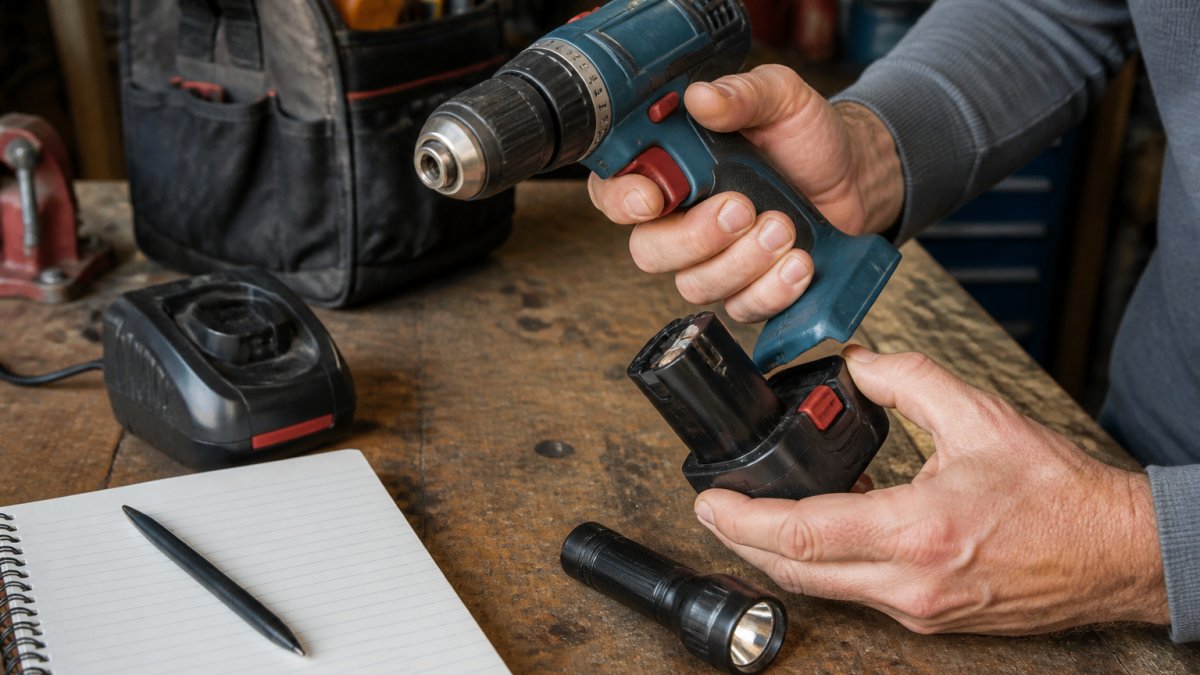
Close-up of hands examining a cordless drill on a workbench, checking the chuck and battery contacts, with a notebook checklist and flashlight nearby in a garage workshop
Pro Tip Compare the photos against the written condition notes line by line. When the two agree, you are looking at a seller who documents honestly. When they do not, ask why before you buy.
Refurbished Tools Pros and Cons for DIY Buyers
The pros of refurbished tools center on value and access to better brands. The cons come down to warranty gaps and the risk of a bad seller. Knowing both sides helps you decide per purchase.
Daily professional use: If the tool runs all day, every day, buy new.
Critical safety gear: For items where failure is dangerous, new is the safer call.
Long warranty needs: New tools carry the longest, simplest coverage.
Latest features: New models get the newest motors, batteries, and safety systems.
Watch Out A cheap refurbished tool from an unknown seller with no return policy is the biggest risk in this category. If the listing has no inspection details and no returns, you have no recourse when it arrives faulty.
Refurbished Power Tools: Which Types Hold Up Best?
Corded tools and simple cordless models hold up best when refurbished. Tools with complex electronics or worn mechanical parts carry more risk. Here is how the common categories stack up for DIY workloads.
Tool Type
Refurb Risk
Best For
Watch Out For
Corded drills and drivers
Low
Occasional and heavy use
Frayed cords
Cordless drills
Medium
Light to moderate use
Weak batteries
Circular saws
Medium
Framing and deck work
Bent base plates
Sanders
Low
Finishing work
Worn pads
Impact drivers
Medium
Driving long fasteners
Worn anvil
Rotary hammers
Higher
Concrete work
Internal wear
Corded tools avoid battery risk entirely, which makes them a strong pick for a first refurbished purchase. Cordless tools depend on battery health, and that is where a careful seller earns their keep.
Refurbished tool warranty coverage varies by seller and by refurbishment type. Factory-reconditioned tools usually carry a manufacturer warranty, often shorter than the new-tool term. Seller-refurbished tools may carry a store warranty or none at all.
Before you buy, compare three things:
Length: How many days or months does coverage last?
What it covers: Parts, labor, or full replacement?
Return window: How long do you have to send it back?
A short warranty is not automatically a dealbreaker. A 90-day return window on a tool you will use twice a year may be plenty. What matters is that the terms are written down and easy to find.
Key Takeaway The warranty matters less than the return policy for most DIY buyers. A clear 30-day return window protects you during the period when a hidden fault would show up.
Batteries, Chargers, and Total Cost of Ownership
Total cost of ownership decides whether a refurbished tool is truly a bargain. The sticker price is only the first line of the equation. A cheap bare tool that needs a new battery and charger can cost more than a new kit that includes both, so add up every part before you compare.
Why the Battery Is the Hidden Variable
On cordless tools, the battery is often the most expensive single component and the one most likely to be worn. A refurbished drill with a tired battery may run for a few minutes under load and then fade, a problem that will not show up in a listing photo.
Ask these questions before buying any cordless refurbished tool:
Battery age: Lithium-ion packs degrade over time regardless of use. A pack that sat unused for years may hold less charge than one used regularly.
Charge cycles: Every full discharge and recharge wears the cells. A pack with many cycles has less life left.
Capacity: A smaller pack means shorter runtime. Match capacity to the job, light drilling needs less than driving long fasteners all afternoon.
Compatibility: Batteries fit one brand’s platform. A tool that locks you into a platform you do not already own means buying into a whole system.
Replacement availability: Confirm the battery model is still sold. A discontinued pack can turn a working tool into a paperweight.
Charger and Accessory Math
A missing charger is easy to overlook and expensive to replace. The same goes for a case, a second battery, or a specialty blade. Work through this list:
Charger included: If not, factor in the cost of buying one separately.
Battery count: One battery means downtime while it charges. Two means you can keep working.
Consumables: Blades, pads, and bits wear out. Check that replacements are still sold and reasonably available.
Platform lock-in: Stay within a battery system you already own when possible. Starting a new platform means new batteries and a new charger for every tool.
Shipping and returns: Factor in any shipping cost and whether returns are free.
Matching the Tool to Your Workload
Expected lifespan should drive the decision. A drill used a few weekends a year will outlast its battery many times over. A tool used on repeated, demanding projects will wear faster, and a shorter warranty or a tired battery matters more.
Occasional DIY: A refurbished tool with one good battery often beats a new tool with none.
Regular DIY: Two batteries and a charger included is worth paying more for upfront.
Heavy or repeated use: Factor in a replacement battery from the start, and weigh whether new coverage is worth the premium.
Key Takeaway Before you compare two listings, write down the tool, battery, charger, and any missing accessories as separate line items. The listing with the lower sticker price is often the more expensive one once the full kit is accounted for.
Conclusion: Buying Refurbished Tools With Confidence
The reliability question comes down to the seller, not the label. A tool that was inspected, repaired, and tested will serve a DIYer well for years.
Shop with a seller who shows you the actual condition. At The Wise Buy, every listing includes detailed photos and a full description of the item’s condition, so you can judge it before you buy.
Frequently Asked Questions
Are refurbished tools any good for occasional DIY projects?
Yes, for most occasional DIY work refurbished tools perform like new when they come from a factory-reconditioned program. The tool was returned, repaired to factory standards, and tested before resale. For light tasks like hanging shelves, assembling furniture, or basic repairs, a refurbished drill or sander handles the job at a lower cost than buying new. Match the tool’s duty rating to your workload, and check the listing photos and condition notes before ordering.
Do refurbished tools come with a warranty?
It depends on the seller and the refurbishment type. Factory-reconditioned tools often carry a limited warranty, typically 90 days to one year, while seller-refurbished tools may include a shorter window or none at all. Before buying, read the refurbished tool warranty terms: what parts are covered, who pays return shipping, and how long the coverage lasts. A written warranty plus a clear return policy is the strongest signal that the seller stands behind the item.
What should I check before buying a refurbished power tool?
Start with the listing: high-resolution photos, a condition description, and the refurbishment type (factory vs. seller). Confirm the tool includes original accessories like the charger, battery, and case, since replacements add cost. Look for signs of prior heavy use such as cracked housings or worn cords. Once it arrives, test the trigger, check for unusual noise or vibration, and verify the battery holds a charge before your first real project.
Is buying factory reconditioned worth it compared with new?
For most DIY buyers, factory reconditioned is worth it because the tool was inspected, repaired, and tested to factory standards before resale. You get the same brand-name quality with real savings over new. The trade-off is a shorter warranty and possible cosmetic wear. If the tool is for heavy daily use, new may be safer. For weekend projects and hobby work, factory reconditioned delivers strong value without compromising performance.

 Add more eligible items to your cart to unlock free shipping.