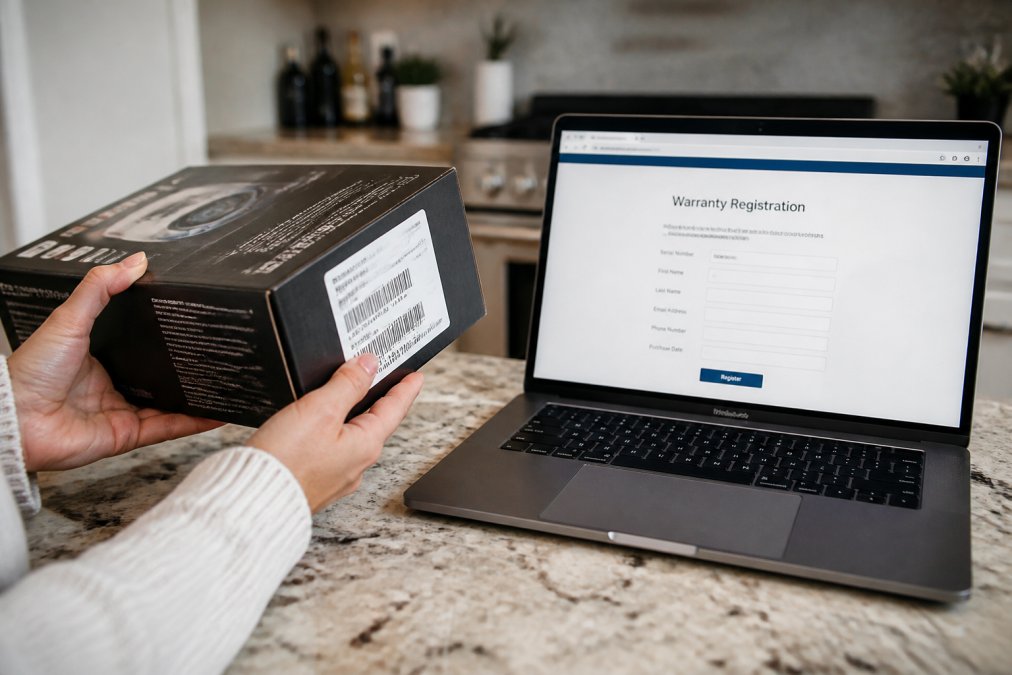
Do Open Box Items Have Warranties? The Short Answer
Yes, many open box items do keep their manufacturer warranty, but not all of them, and the difference matters before you pay. At The Wise Buy, we inspect every unit we sell and publish the full condition and description on each listing, so you know exactly what you are buying. Because we sell online only, we point every customer to our photos and the full condition and description on the listing.
That gap is where buyers lose money.
Three things decide whether your open box purchase is protected:
The reason the item came back
Whether the seller is an authorized reseller
Whether the unit was registered to the first owner
What Does Open Box Condition Mean?
Open box condition means the item was taken out of its packaging, often briefly used or displayed, then returned and resold. The product itself is usually complete and working. The box may be dented, taped, or missing.
Condition Grades You Will See
Grading is not standardized across the resale industry. One seller’s “Excellent” is another seller’s “Good,” which is why you should read the written description, not just the grade.
Grade
Typical Meaning
What to Check
Excellent
Looks new, may be unused
Original packaging, all accessories
Good
Light scratches or scuffs
Photos of cosmetic damage
Fair
Visible wear, fully functional
Missing parts, performance testing
Cosmetic Damage vs. Functional Integrity
Cosmetic damage is surface wear: scratches and dents that do not affect how the item works. Functional integrity is whether the product actually performs as designed.
Watch Out Never accept a grade as proof of function. Ask for a photo of the serial number and a note on how the unit was tested. If a listing skips that, walk away.
Open Box vs Refurbished Warranty: What Is the Difference?
Open box and refurbished warranties differ mainly in who restores the item and who backs it. An open box unit is typically an untouched return. A refurbished unit has been repaired, rebuilt, or reconditioned by the manufacturer or a third party, then resold.
That distinction changes your coverage.
Open box: Often keeps the original manufacturer warranty if the unit was never registered.
Refurbished: May carry a shorter warranty set by the refurbisher, not the brand.
Certified refurbished: Restored and tested to the maker’s standard, usually with a limited warranty.
Certified Refurbished and Service Contracts
Certified refurbished means the manufacturer itself restored the product and backs it with a warranty. That is the strongest version of refurbished coverage you can get.
How to Check Manufacturer Warranty Status Before You Buy
You can check manufacturer warranty status before you buy by finding the serial number and contacting the brand directly. Most makers let you look up coverage online or by phone using that number.
Process for checking if do open box items have warranties by verifying serial numbers on a manufacturer portal
Your Warranty Inspection Checklist
Use this before you commit:
Find the serial number on the listing or ask the seller for a photo
Confirm the brand honors warranties on resold units
Check whether the unit was ever registered to a first owner
Ask if the item is certified refurbished or plain open box
Save the receipt and listing page as proof of purchase
Note the warranty start date, not just the length
Pro Tip Warranty coverage usually starts on the original purchase date, not the day you buy the open box unit. A product returned after a few months may have less coverage left than the box suggests. Always ask when the clock started.
Return Policy Nuances and Hidden Costs to Watch For
Return policies on open box goods are tighter than on new items, and the fine print is where the real cost hides. Many sellers charge a restocking fee on returns, and some exclude open box units from returns entirely. The gap most shoppers fall into is assuming the return window they know from new-item shopping carries over. It usually does not.
The Questions to Ask Before You Commit
Most return disputes trace back to a question the buyer did not ask. Run this list against any open box listing before checkout:
What is the exact return window, and does it start on the ship date or the delivery date?
Is this item returnable at all, or is it marked final sale?
Is there a restocking fee, and is it a flat charge or a percentage of the price?
Who pays return shipping if the item is not defective?
Does the return window change if the item arrives with cosmetic damage versus a functional defect?
What condition must the item be in to qualify for a return, original packaging, all accessories, no installation?
If the item was installed or hooked up, does that void the return option?
Restocking Fees and How They Change the Math
A restocking fee is a percentage or flat amount a seller keeps when you send an item back. The mechanism matters: a percentage fee scales with the price, so it stings more on a higher-ticket unit, while a flat fee hits hardest on a cheap one. Either way, it can turn a good deal into a bad one if the item does not fit your space or your setup.
The real price of an open box item is not the number on the listing. It is the sticker price plus the cost of any missing accessories you have to buy separately, plus the risk of a restocking fee if you return it, plus the cost of coverage if the manufacturer warranty does not apply.
Extended Protection Plans and When They Make Sense
An extended protection plan can fill the gap when a manufacturer warranty does not apply. Just weigh the plan’s cost against the item’s price and the likelihood you will need it. On a deeply discounted open box unit, a plan can erase much of your savings, and on a unit that still carries full manufacturer coverage, the plan may be redundant.
Key Takeaway The real price of an open box item is the sticker price plus any restocking risk plus the cost of coverage plus any missing parts you have to replace. Add all four before you decide.
Installation and Delivery Risks With Open Box Purchases
Installation and delivery carry more risk with open box goods because missing accessories and installation hardware are common. A unit can arrive fully functional and still be unusable if the mounting bracket, hose kit, or power cord is gone. That is the hidden-cost angle most buyers miss: the item works, but you cannot use it until you source the missing piece.
Before delivery, confirm what is included:
All cables, hoses, and mounting hardware
The manual and any registration card
Whether the seller handles delivery or you do
Who pays if the item arrives damaged in transit
Whether the unit qualifies for standard professional installation
The Missing-Parts Problem
Open box units are returns, and returns are often incomplete. The previous owner may have kept the mounting bracket, tossed the remote, or lost the hardware bag. The product itself is fine. The problem is that a refrigerator without its water line fitting or a wall oven without its trim kit is not a finished installation.
Who Owns the Risk in Transit
Delivery risk is a handoff question. If the seller arranges shipping, the seller typically owns the item until it reaches you, and damage in transit is their problem to resolve. If you arrange your own freight or pick up the unit yourself, the risk usually shifts to you the moment it leaves the seller’s possession.
Does Open Box Qualify for Professional Installation?
This is a question most listings do not answer, and it matters. Some installers will not touch an open box unit because they cannot guarantee a product they did not sell. Others will install it but exclude the open box item from their own workmanship warranty.
Ask before you buy:
Will the manufacturer’s authorized installer service an open box unit?
Does the installation warranty cover the labor if the unit fails after install?
If a part is missing, does the installer supply it or do you?
What to Confirm Before the Truck Arrives
Because we sell online only, we point every customer to our photos and the full condition and description on the listing. That is where you confirm exactly what ships and what does not, the accessories shown, the hardware included, and the condition noted. Read the listing the way you would read a contract, because on a delivery it functions as one.
Watch Out Never sign for a delivery before inspecting the unit. Once you sign, transit damage claims get much harder to win. Open the box, check the accessories against the listing, and photograph anything that does not match before the driver leaves.
Conclusion
Open box shopping rewards buyers who check coverage before they pay, not after. The warranty question has a real answer, and you can find it with a serial number and a quick call.
Frequently Asked Questions
Do open box items come with the original manufacturer warranty?
Often yes, but it depends on the seller and the item’s history. Many open box products are customer returns that were never registered, so the original manufacturer warranty may still apply from the date of your purchase. Some retailers, however, sell open box goods with only their own limited guarantee or no coverage at all. Before buying, ask the seller directly whether the manufacturer warranty transfers, and get that answer in writing.
How can I tell if an open box item is still under warranty?
Start with the serial number. Visit the manufacturer’s website and use their warranty lookup tool, or call customer service and provide the serial number and model. Ask when the warranty period began and whether it transfers to a second owner. Keep your receipt, since most manufacturers require proof of purchase date. If the seller cannot confirm warranty status, treat the item as having no manufacturer coverage.
What is the difference between an open box warranty and a store return policy?
A warranty covers defects that appear after purchase, usually for a set period like 90 days or one year. A store return policy only lets you send the item back within a short window, often 14 to 30 days, and may charge a restocking fee. A generous return window is not the same as a warranty. Check both separately, and confirm whether an extended protection plan is available if the manufacturer warranty does not transfer.
Should I purchase an extended protection plan for open box items?
It depends on the item and the price gap. For appliances and electronics with moving parts, an extended protection plan can be worth it when the manufacturer warranty has expired or does not transfer. Compare the plan cost against the discounted pricing you already got. If the plan erases your savings, skip it. If it costs a small fraction of the item’s value, it can protect you against costly repairs.

 Add more eligible items to your cart to unlock free shipping.