Renters move more often than homeowners, and every move puts appliances at risk of damage, loss, or simply not fitting the next kitchen. That makes affordable kitchen appliances for renters less about finding the cheapest unit on the shelf and more about buying smart: the right size, the right durability, and the right price for a space you do not own.
Quick Comparison: Affordable Kitchen Appliances for Renters
The table below maps common renter needs to appliance types, so you can scan before you read the full breakdown.
Appliance
Typical Role
Renter-Friendly Trait
Watch Out For
Countertop multi-function unit
Cooking, toasting, air frying
No installation, moves with you
Limited batch size
Compact refrigerator
Food storage
Fits small footprints
Less freezer space
Over-the-range microwave
Cooking plus ventilation
Saves counter space
Needs venting setup
Portable dishwasher
Dishes
Connects to the sink
Uses counter space
Compact washer
Laundry
Fits closets and corners
Smaller loads
How to Read the Table
Start with the “Renter-Friendly Trait” column. If a trait matches your lease situation, that row is worth a closer look. The “Watch Out For” column lists the tradeoff you accept in exchange, and every appliance has one.
Pro Tip Measure your kitchen before you shop, not after. Note the width of your counter, the height under your cabinets, and the door swing clearance. A unit that fits the space but blocks a cabinet door is still the wrong unit.
Best Food Processor and Countertop Tools for Small Kitchens
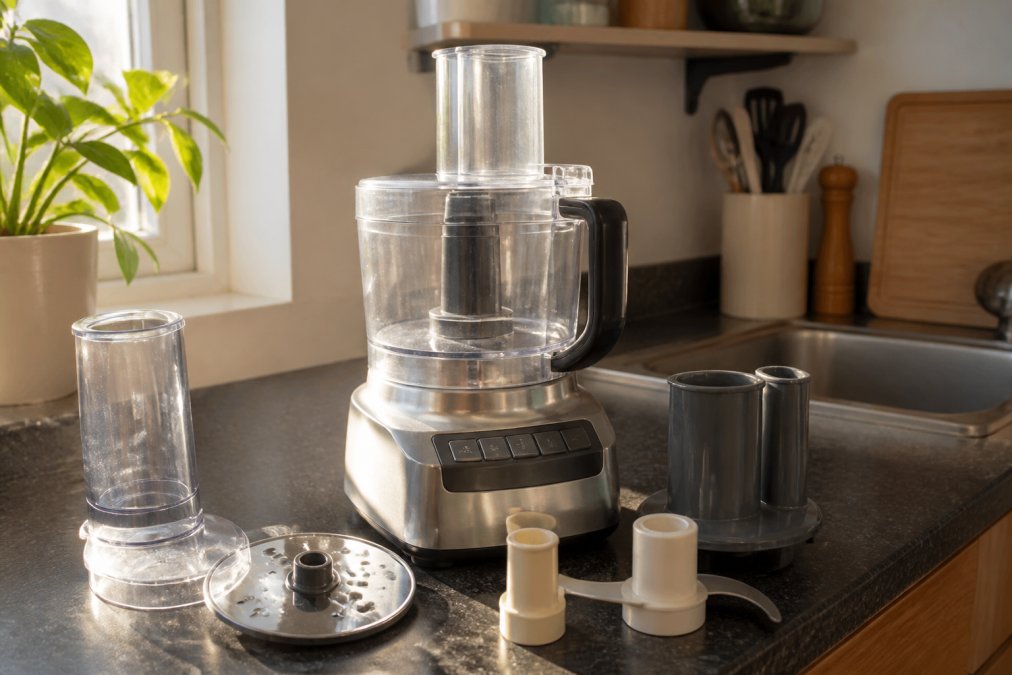
A food processor earns its counter space when it replaces several other tools at once. Look for a model that chops, slices, and mixes, because one multi-function unit beats three single-purpose gadgets in a small kitchen.
Refurbished food processor with blades on a sunny small apartment countertop among affordable kitchen appliances
What to Look For in a Refurbished Food Processor
Check three things before buying refurbished: the motor rating, the warranty terms, and the condition notes in the listing. A refurbished unit from a seller is tested and inspected, which is different from a used unit sold as-is.
Compact Kitchen Appliances for Small Apartments
Compact kitchen appliances for small apartments solve a specific problem: fitting full function into a fraction of the footprint. The trick is buying for your actual cooking habits, not for the kitchen you hope to have someday.
A few categories consistently work well in rentals:
Countertop multi-function units that air fry, bake, and toast in one body
Compact refrigerators sized to a single wall or alcove
Portable dishwashers that connect to a standard faucet
Over-the-range microwaves that free up counter space entirely
Over-the-Range and Under-Cabinet Options
Mounting options save the most space, but they come with strings attached. An over-the-range microwave needs proper venting, and under-cabinet units may require drilling into cabinets you do not own.
Watch Out Never block the only ventilation path in a small kitchen. Stacking appliances in front of a window or vent traps heat and moisture, which damages cabinets and can trip a smoke detector during ordinary cooking.
Open-Box and Overstock Appliances: What Renters Should Check
Open-box and overstock appliances give renters brand-name quality at a lower entry point, but only if you inspect the listing carefully. The savings are real; the risk is buying blind.
Read the full condition description, not just the title
Check the photos for scratches, dents, or missing parts
Confirm which accessories are included
Verify the return window and warranty terms
Confirm the dimensions against your measured space
Check the voltage and plug type against your outlet
Appliance Leasing vs. Buying for Renters
Leasing wins when you need an appliance now and cannot cover a full purchase, but it costs more over time. Buying wins when you plan to keep the unit across multiple moves. The decision comes down to three variables: how long you will stay, what the program bundles, and what happens at the end of the term.
How Appliance Rental Programs Actually Work
Most rental programs follow the same structure. You pick a unit, pay a recurring monthly amount, and the provider handles delivery, setup, and repair. Terms commonly run month-to-month or in fixed blocks of 12, 18, or 24 months. The shorter the term, the higher the monthly rate, because the provider is recovering the cost of the unit over fewer payments.
Delivery and in-home setup
Repair or replacement if the unit fails through normal use
A swap option if you move to a space that needs a different size
Clear terms on what counts as damage versus normal wear
The Total-Cost-of-Ownership Math
Run the numbers before you commit. Multiply the monthly payment by the number of months in the term, then add any delivery, setup, or return fees. Compare that total against the price of buying the same unit outright. In most cases the lease total exceeds the retail price, sometimes by a wide margin, because you are paying for convenience and service on top of the hardware.
Buying wins when you expect to keep the appliance across two or more moves. A unit you own travels with you, holds resale value, and stops costing money the day you pay it off. For renters who stay put for a few years, the math almost always favors buying.
Key Takeaway Lease when you need an appliance immediately and value bundled service. Buy when you plan to keep the unit past one move. Compare the full term total against the purchase price before you decide, and get the return conditions in writing.
Energy Efficiency and Utility Costs for Renters
Energy efficiency is the hidden cost line in every rental kitchen. A cheaper appliance with a poor efficiency rating can cost more each month than a better unit costs up front.
Installation, Safety, and Maintenance Tips
Non-permanent installation keeps you on the right side of your lease. Anything that plugs into a standard outlet and sits on a surface is safe to add. Anything that requires drilling, hardwiring, or plumbing changes needs written permission first. That single rule separates a renter-safe upgrade from a lease violation.
Renter-Safe Installation Without Drilling
You can mount or stabilize appliances without touching the structure of the unit. A few approaches that work in most rentals:
Adhesive mounting strips and hooks rated for the weight of the item, applied to tile or painted surfaces and removable with the manufacturer’s release method
Over-the-cabinet-door hooks for lightweight tools and cords
Countertop risers and stackable shelves that lift a microwave or toaster oven to free counter space
Tension rods inside cabinets to corral cutting boards, trays, and small appliances
Anti-tip straps anchored to an existing cabinet handle or a freestanding shelf, not to the wall
Ventilation and Fire Safety in Small Kitchens
Small kitchens trap heat and moisture because there is nowhere for them to go. That raises the risk from any appliance that runs hot. A few habits cut that risk:
Keep at least a few inches of clearance around any appliance that runs hot, including air fryers, toaster ovens, and microwaves
Never block the only ventilation path, such as a window or range hood, with stacked appliances
Run the exhaust fan or open a window whenever you cook, even for short bursts
Clean grease from the range hood filter and microwave vents so airflow stays open
Never run a portable dishwasher, washer, or any high-draw appliance on an extension cord
Unplug appliances before cleaning them, and check that cords are not pinched behind units
Maintenance That Protects Your Deposit
Consistent maintenance keeps appliances running and prevents the wear that shows up on a move-out inspection:
Clean refrigerator coils every few months to keep the compressor from overworking
Run a hot cycle through the dishwasher to clear residue and odor
Wipe microwave and range hood vents so airflow stays open
Check washer and dishwasher hoses for cracks before each move
Defrost the freezer if ice builds up, and wipe door gaskets so they seal
Photograph each appliance when you install it and again before you move out
Watch Out Never stack appliances in front of a window, vent, or door you need for escape. In a small kitchen, the only ventilation path is often the only exit path. Keep both clear.
Frequently Asked Questions
What are the best budget-friendly kitchen appliances for a rental?
Focus on core appliances that cover daily cooking and cleaning. A top-freezer refrigerator, a standard electric or gas range, an over-the-range microwave, and a dishwasher handle most needs. Countertop tools like a food processor or air fryer add versatility without permanent installation. Look for energy-efficient models to keep utility costs down, and check open-box or overstock listings for brand-name options at lower prices.
Is renting appliances cheaper than buying?
It depends on how long you plan to stay. Leasing programs spread the cost into weekly or monthly payments and often include delivery, setup, and maintenance, which helps if you cannot pay upfront. Over a year or more, the total paid usually exceeds the purchase price. If you expect to stay put, buying outright or buying open-box is typically more cost-effective long term.
What compact appliances are essential for a rental kitchen?
Prioritize items that save space and serve multiple functions. An over-the-range microwave replaces a countertop unit and adds ventilation. A countertop dishwasher suits units without a built-in model. A food processor or stand mixer earns its footprint if you cook often. Toaster ovens and air fryers cover baking and frying without a full-size oven. Measure your counter and cabinet gaps before buying.
How can I find high-quality open-box appliances for my rental?
Buy from sellers that inspect and test items before listing them. Look for detailed photos and descriptions that show the exact condition, including any cosmetic flaws. Check the return policy and warranty terms. The Wise Buy tests every item and posts full condition details on each listing, so you can review the unit before ordering. Compare specs against new models to confirm the discount is real.
Are energy-efficient appliances worth it for renters?
Yes, especially if utilities are in your name. Energy Star certified refrigerators, dishwashers, and washers use less electricity and water than older models, which lowers monthly bills. The savings add up over a lease term. If your landlord covers utilities, the benefit shifts to them, but efficient appliances also tend to run quieter and need fewer repairs, which matters in a rental.
Choosing appliances for a rental means balancing cost, space, and how long you plan to stay. The Wise Buy makes that balance easier with rigorously tested and inspected open-box and overstock items, detailed product descriptions and photos so you can judge condition before you buy, and trusted brand names at a fraction of retail value. Browse the current postings, check the condition notes and pictures on each listing, and create an account to start furnishing your kitchen for less.

 Add more eligible items to your cart to unlock free shipping.